

Asia Centre Develops Partnerships in New Zealand
Asia Centre has built two partnerships around impact projects on Fake News and the Rohingya refugee crisis in Southeast Asia during its New Zealand outreach from 21-31 October 2018 to seek out collaboration opportunities. Dr. James Gomez, Chair, Board of Directors, Asia Centre, kicked off the first leg of the trip as an Activist-in-Residence at the Massey University-Center for Culture-Centered Approach (CARE) on October 23rd-26th. One focus during this residency was to collaborate with CARE on “Communication, Democracy and Freedom in Asia” highlighting the “Fake News” challenge to democracy. The issues were delivered in the form of a public lecture and around a co-authored CARE White Paper with Professor Mohan Dutta, Director of CARE. Dr. Gomez was also a keynote speaker on “Fake News” and its impact on diversity at Inclusive New Zealand Conference on 30-31 October 2018. The conference entitled “Our Space – Mauri Tū, Mauri Ora” centred around creating vibrant and inclusive communities. The conference brought together community organisations, academics, local authorities and individuals with lived experience to share their experiences, build networks and strengthen partnerships. Michael White, CEO of Inclusive New Zealand and an Asia Centre associate facilitated the opportunity. Both CARE and Inclusive New Zealand have agreed to be partners for Asia Centre’s International Conference on Fake News and Elections in Asia, 10-12 July 2018. In relation to the Rohingya refugee project, on 23 October 2018, Dr. Gomez, during his activist-in-residence at CARE, Massey University, conducted a workshop on developing an advocacy strategy at the ASEAN level on the issue. On October 31st, Dr Gomez gave a well-attended talk titled the “Rohingya Crisis: Is Human Rights Advocacy Working?” to the Political Science and International Relations Programme of Victoria University of Wellington. During his time there, Dr Gomez was interviewed by Lynda Chanwai-Earle, a researcher from Asia Media Centre at the Asia New Zealand Foundation. The article entitled Key Issues: Rohingya Crisis featured the role of ASEAN in the refugee crisis. Dr. Gomez also interacted with Dr Murdoch Stephens of the Doing Our Bit campaign to double the quota of Rohingya refugees to New Zealand. Dr. Gomez also took time on 29 October 2018 to engage with Pacific issues by attending the Council for International Development, Pacific Reset: How will it change the way we work? Asia Centre will be building on these partnerships and projects and will be announcing details of progress as things develop.
Asia Centre Reaches Out to Australian Networks
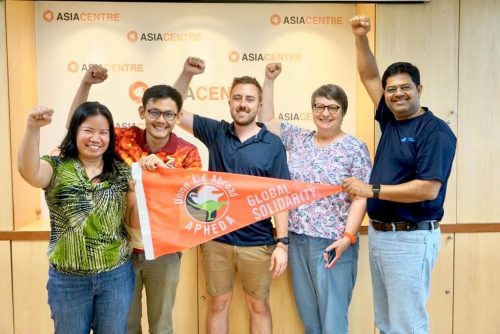
15 November 2018 – The return visit by Union Aid Abroad (APHEDA) Jill Biddington and Tom Addy to discuss collaboration marks Asia Centre successful outreach to activist networks in Australia. Dr. James Gomez, Chair, Board of Directors of Asia Centre visited Sydney and Canberra from 16 to 21 October 2018 where he gave several public talks and engaged with academics and activists to build solidarity as well as identifying opportunities for policy advocacy in Australia for issues affecting Southeast Asia. At the University of Sydney, co-hosted by Sydney Southeast Asia Centre and Malaysia and Singapore Society of Australia (MASSA), Dr Gomez spoke on developments in Singapore during the session the joint seminar in Political Contestations in Malaysia and Singapore. At the Sociology Department of Macquarie University, he gave his insights on “Fake News and Social Media: Freedom of Expression in S.E. Asia” At the Forum “Human Rights and Labour Rights in Singapore: Forum” hosted at Unions NSW Auditorium, Dr Gomez spoke on the need for international solidarity. Out in Canberra, Dr Gomez visited the Parliament of Australia with Luke Whitington, of SEARCH Foundation and Dr Nicholas Harrigan, Macquarie University, and had several informal meetings with senators. Asia Centre’s outreach Down Under, comes on the back of the Centre’s engagement in the last few years with academics from universities in Australia who have regularly participate in the Centre’s activities. This includes a Roundtable on the Rohingyas Crisis which was co-hosted by both Asia Centre and Monash University. This, in part, is connected to Dr. Gomez’ own association with Monash University first as a PhD student and latter as its Deputy Associate Dean (International Affairs) and Head of the Public Relations Department, Faculty of Arts. More recently, Asia Centre was the recipient of its first New Colombo Plan Scholar – Elise Schuster an undergraduate from the University of Queensland in Brisbane. Her internship at Asia Centre was supported by the through the Australian Government’s Department of Foreign Affairs and Trade (DFAT). Asia Centre will have a second incoming New Colombo Scholar, Oliver Thompson, will start its internship in 2019. Asia Centre, will continue engage with its Australian networks as part of its efforts increase the Centre outreach beyond Southeast Asia. ***
Asia Centre Participates in Workshop on Freedom of Religion or Belief
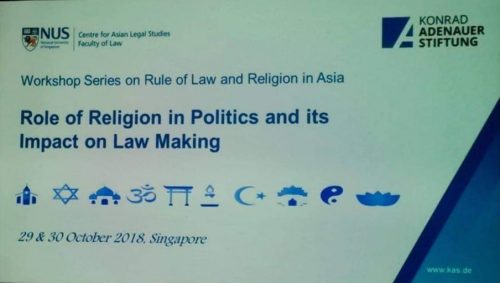
3 November 2018 – Dr. Robin Ramcharan analysed the role of youth interaction with religious leaders in constraining religious extremism during a workshop on freedom of religion or belief (FoRB), organised by the Rule of Law Program of the Konrad Adenauer Stiftung and its partners in Singapore, from 29 to 30 October 2018. He noted analysis worldwide that showed the impact of marginalization and of religious-dissonance on the progression of youth from their regular lives towards extremist thoughts and sometimes violence. Research has shown that religious leaders can play a vital role in youths’ search for theological consistency in their particular environments and in critically thinking about their own faiths, especially in a world awash with fake news on the internet. Globally, the international community’s peacebuilding experience has led to calls for the integration of religious leaders in post-conflict peacebuilding and in sustaining peace. The mere instrumentalisation of religious leaders in support of liberal goals is seen to be insufficient for laying the foundations for peace. Asia Centre thus continues to engage in regional discussions and with emerging networks on FoRB in Southeast Asia. It aims to produce an updated regional analysis on FoRB in the Universal Periodic Review process as revealed in the third cycle. FoRB and fake news is also set to feature in the Centre’s conference on Fake News and Elections in Asia, to be held from 10 to 12 July 2019 in Bangkok. Email contact@asiacentre.org to submit abstracts or to partner for the conference. ***
IFC #4: Asia Centre marks UN Day with debate on “Rice before Rights”
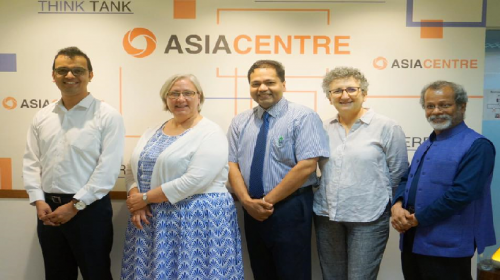
International Faculty Club (24 October 2018) – The argument that development priorities take precedence over civil and political rights threatens to upend the international human rights movement, which has advocated for the indivisibility of economic, social and cultural rights (ESCRs) and civil and political rights (CIVPOL). This argument is advanced by China and those attracted by its model of governance and growth. However, as Canadian Ambassador Donica Pottie noted pointed out during the roundtable on ‘Rice before Rights”, held on 24 October 2018, western countries share responsibility for this situation, as they chose to emphasize civil and political rights over ESCRs in their foreign policies. Experts at the event, held on UN day, noted the contributions of the UN but noted major challenges of defending human rights in the contemporary geopolitical context of a rising China, the disengagement of the US and Europe, and a resurgent Russia. In addition to the above normative challenge above, it was noted that the rules-based multilateralism required for advancing international human rights standards is also under threat. Furthermore, civil society faces a difficult task as it faces shrinking space for advocacy as well as financial constraints. Its ability to effect progressive change was questioned. The need for a reinvigorated humanism was noted, with all participants calling for a ‘new mandala’ that placed the well being and emancipation of the person at the centre of all thought and action. The roundtable discussion, attended by some 40 guests, took place during Asia Centre’s International Faculty Club (IFC) and featured Ambassador Pottie, as well as Dr. Imtiaz Ahmed from the Centre for Genocide Studies, University of Dhaka, Dr. Latifa Laghzaoui, Webster University Thailand and Mr. Dipendra K C, School of Global Studies, Thammasat University. The event enjoyed the support of the Taiwan Foundation for Democracy. Asia Centre will continue to engage on human rights and contemporary development, human rights and peace issues during the IFC, which is an innovative mechanism that brings together academics, civil society, graduates students, policy makers and other stakeholders together to share ideas and forge collaborations.
Asia Centre’s Japan Outreach
As part of Asia Centre’s regional outreach, Dr. James Gomez, Chair, Board of Directors, Asia Centre visited Tokyo, Japan during the first week of October 2018. This visit builds on a series of activities over the last three years the Centre has undertaken with Japanese academia, civil society and other supporting institutions. During the visit, on 2 October, Dr. Gomez was invited by Professor Yasushi Katsuma to lecture on “Fake News and Elections in Southeast Asia” for the graduate students at the Graduate School of Asia-Pacific Studies, Waseda University in Tokyo. One of the main discussion points was around the question “should mainstream media and it’s journalists be held legally accountable rather then getting away with apologies for publishing fake news?” The public lecture was part Asia Centre’s efforts to engage with Japanese academia on the issue of fake news in the run up to its 2019 conference. On the civil society front, 3 October, Dr. Gomez met with Mr. Hideki Wakabayashi, Executive Director, a tokyo-based Japan NGO Center for International Cooperation, and discussed Asia Centre’s participation in the G20 NGO summit for April 2019. Asia Centre is also a host to its first Japanese intern, Kasumi Shiraishi, a postgraduate student in International Relations at Waseda University, Japan who is undertaking a review of fake news and cyber security legislation in East Asia and corresponding with Japanese university on the Centre’s Fake News conference. Other visitors included Dr. Junko Nakajima, a dentist from Nagano, who wrote to Dr. Gomez about Singapore’s longest serving political prisoner Dr. Chia Thye Poh. Dr. Nakajima and her sister visited Sentosa some 27 years ago and had tea with Dr. Chia at his house in Fort Siloso. A poignant story, Dr. Nakajima shared her photos and letter with Asia Centre. Asia Centre’s outreach in Japan, comes on the back of its cooperation in 2017, with the Japan Foundation in Bangkok to host an intellectual exchange programme on Japan-ASEAN Relations which featured academic Dr. Takashi Tsukamoto and lawyer and Asia Centre Associate Akiko Sato. Earlier in the year, the Centre representatives visited and held discussion with the Japanese Society for the Promotion of Science Bangkok Director, Dr. Kunaiki Yamashita. In 2016, Asia Centre’s Dr. Robin Ramcharan facilitated a Focus on Life discussion and networking session New York-based Japanese photographer and anti-death penalty activist Toshi Kazama. The Japan outreach is part of a series regional activities undertaken by the Asia Centre to highlight its work and build partnerships.
Malaysia’s Fake News Bill Delay Chance to Manage Racial Disinformation
The politics of delay around the repeal of Malaysia’s Fake News Bill offers an opportunity to manage racial disinformation that can lead to social tensions. This is important as post-elections posturing in the country has brought ethnic politicking to the fore. While it has been argued that the promotion of falsehoods and hatred between communities can be dealt through existing laws such as MCMC Act 1998 – where publishers are mostly held accountable – content created and disseminated by individual producers over social media and extra-territorially beg consideration in any legal or other type of intervention. According to We Are Social, Global Digital Report 2018, from a population of 31,830,000 in Malaysia, 79% of Malaysians (25,080,000) have access to the internet and 76% of Malaysians (24,080,000) access it via mobile devices. Malaysia’s Statistics Department noted in March 2018 that smartphone usage for access to the internet increased to 97.7 per cent, from 97.5 per cent in 2015. In total, Malaysians spend an average of 8 hours 27 minutes per day online. In terms of social media, 75% of Malaysians (24,000,000) access it mostly via mobile devices and spend an average of 3 hours per day on it. The breakdown of Malaysians using different social media platform are as follows: Facebook 16,800,000, Facebook Messenger 11,280,000, WhatsApp 16,320,000, Twitter 7,200,000, YouTube 16,560,000, WeChat 9,600,000 and Instagram 11,760,000. These statistics show that in Malaysia, and elsewhere, information creation and consumption is taking place over social media platforms and accessed largely via mobile devices. Consumption of specifically news online in Malaysia is distributed as follows: Facebook (58%), WhatsApp (51%), YouTube (26%), WeChat (13%) and Instagram (13%) according to the Digital News Report 2017 (Reuters Institute for the Study of Journalism) In countries such as Malaysia, which tops the world rankings for WhatsApp usage according to the Digital News Report 2017, there is an increasing preference to circulate information and messages via this platform. Users enjoy a feeling of privacy and secrecy until the message circulating via WhatsApp spills onto publicly exposed platforms such as Facebook or Twitter. When the Fake News Bill was first introduced by the BN government, the disagreement to it was anchored around concerns that the new law will be used to curb the freedom of expression of political criticism, in particular of 1MDB. The definition of what is “fake news” and the Malaysian government’s position to define the “truth” unilaterally via the “fake news” law and applying it extra-territorially with sanctions of up to 6 years in jail and a maximum fine of USD 123,000 caused an alarm. Current attention is on the politics of delay surrounding the repeal of Malaysia’s Fake News Bill. Passed under the Barisan Nasional (BN) government on 2nd April 2018, the Bill was repealed by the Dewan Rakyat (House of Representatives) on August 2018 by the Pakatan Harapan (PH) government following its victory in the 9th May 2018 general election. However, the rejection of the repeal by the Dewan Negara (Senate) on 12 September 2018 could result in a delay of up to one year due to the re-tabling of the Bill’s further reading at the Dewan Rakyat (House of Representatives). Thereafter, at the third stage, the Yang di-Pertuan Agong has 30 days to consent. However, the repeal can come to force even without the Agong’s consent once the 30 days lapses, making the repeal inevitable. In the meantime, the PH government can consider declaring a moratorium on the law, convince BN senators to support its repeal or increase the number of PH senators in the Dewan Negara (Senate). Apart from repealing the Fake News Bill as part of its pre-election promise, the PH government would also have to make its stance clear on Malaysia’s signing onto the ASEAN Declaration of Fake News on 10 May 2018. The Declaration, among other non-legislative measures, seeks to support member states to adopt laws and regulations for their national situation to minimise the harmful effect of fake news. Notwithstanding concerns around the right to make political criticisms and freedom of expression, the primary challenge for Malaysia is how to manage viral disinformation around race related issues that might lead to social unrest. If the current legal tools, scattered across several pieces of legislation are unable to do the job, then solutions need to be considered without comprising the rights of the rights holders. These would also need to include non-legislative tools such as, critical thinking, fact-checking, media literacy, quality of journalism to name a few. The evolving efforts of technology companies and artificial intelligence to mitigate fake news need also be considered. Without an integrated legal, non-legal and technical intervention, Malaysian politics risks falling prey to manufactured disinformation in the country’s post-elections racial posturing. Given, Malaysia’s politically and culturally diverse makeup means updates of speech laws needs to be done in consultation and sensitive to the many stakeholders in society. In this way the quality of debate in Malaysia can be raised. ***** Dr. James Gomez is Chair, Board of Directors of the Asia Centre. He is also the convener of Asia Centre’s upcoming International Conference on Fake News and Elections in Asia, 10-12 July, Bangkok, Thailand. For more information about the conference email: contact@asiacentre.org
ASEAN’s non-interference policy hinders Rohingya justice
In spite of the United Nations (UN) Fact Finding Commission’s indictment on 28 August 2018, recommending Myanmar’s military officials “be investigated and prosecuted” for “genocidal intent” and crimes against humanity against the Rohingya and other minority groups in Myanmar, the pursuit of justice for the victims and accountability for crimes perpetrated will be hard to achieve at the regional level as ASEAN continues to provide Myanmar protective cover through the bloc’s non-interference policy. Add to this, regional commercial interests in Myanmar and a regional geopolitical climate that does not favour the protection of human rights, then justice for the Rohingyas slips away further. As regional bloc, ASEAN’s inability to influence Myanmar towards taking responsibility for atrocities it has committed shows that in this part of the world human life continues to be cheap and justice for victims is sidelined in favour of profitability and the ideology of non-interference. Despite the ASEAN Charter of 2007 and the subsequent regional human rights Commission, calls for justice have predictably emanated from beyond the region, notably from the UN and other inter-governmental mechanisms. ASEAN “engagement” behind the scenes thus far has had no concrete justice outcomes for the Rohingyas. The UN report, which is the latest and harshest indictment yet of the Tatmadaw, found conclusive evidence that the actions of Myanmar’s military forces amounted to the “gravest crimes under international law” not just against the Rohingyas but in Kachin and Shan states as well. The report comes a year after the Myanmar government escalated its violent crackdown against the Rohingya resulting in more than 700,000 fleeing to neighboring Bangladesh. The humanitarian crisis has been called the “worst” in decades. The Government of Myanmar has disputed the UN report claiming it observes “zero tolerance for human rights violations” and added that a Commission of Enquiry has been set up to respond to “false allegations made by the UN agencies and other international communities”. Given the complexity of the crisis, the difficulties in reaching an actionable resolution, the latest report by the UN and its rejection by Myanmar, ASEAN’s leadership is urgently needed to stand up for the rights of the oppressed and for human rights in general at the regional level and also support processes at the international level. “Constructive engagement” with Myanmar by ASEAN has proven ineffective in either preventing human rights violations and providing security and justice for Rohingyas and other minorities. With China, India and Japan wooing Myanmar for strategic interests and their ineffective behind the scene conversations on the Rohingya issue to date, only formal, resolute, collective and public engagement by ASEAN can have an impact on Myanmar. However, if ASEAN continues to be ineffective, then its people have to demand that their governments pursue a principled stand and seek a peaceful political resolution to the conflict in Rakhine. The citizenship and democratic rights of the Rohingya and other minorities have to be affirmed and asserted by Myanmar’s neighbours and partners, and the sanctity of these rights have to protected and defended by all. In this period of heightened nationalism and nativism, ASEAN’s policy of non-interference has literally resulted in non-action allowing for the wholesale brutalisation, removal and murder of the Rohingyas. This non-interference policy has resulted in a regional segregationist, “protectionism from human rights” approach that does not facilitate quick and effective relief from the millstone of atrocities. Hundreds of thousands have left their homes seeking refuge across borders to escape persecution, torture and death. There has been a prescient failure to acknowledge that genocide, atrocities and conflict in one country impacts the overall stability of the region, and robs it of its potential to be productive, peaceful and progressive. The post-colonial tragedies of the twentieth century that have afflicted countries in the Southeast Asia has shown us how conflict and genocide has spilled over national borders and had negative ramifications throughout the entire region. ASEAN, regrettably, continues to adhere to its stealthy non-inference policy, thus providing the Myanmar regime continued cover and effectively denying the Rohingya and other effected communities the justice they truly deserve. A clinical examination of responsibility for the Rohingya crisis in Myanmar by the UN and other international mechanisms must also consider ASEAN’s own culpability through its non-interference policy. *** Dr. James Gomez is Chair, Board of Directors of the Asia Centre. He is also the convener of Asia Centre’s upcoming International Conference on Fake News and Elections in Asia, 10-12 July, Bangkok, Thailand. For more information about the conference email: contact@asiacentre.org
The Rohingya Crisis: A Long, Tortuous Road to Security and Justice
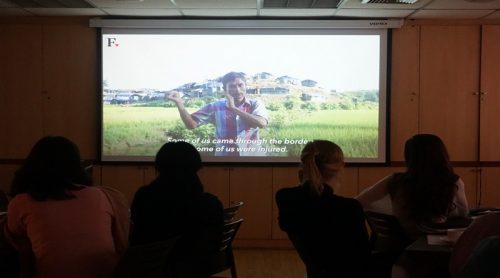
One year after the start of the latest mass exodus of Rohingya fleeing violence and persecution by the Myanmar Government and military, the prospects of a deepening humanitarian crisis and of achieving justice are prolonged indefinitely into the future. This is the grim conclusion drawn from Asia Centre’s one day conference on The Rohingya Crisis: A Multidimensional Tragedy, on 24 August 2018. Participants noted a number of salient points as follows. Very few of the refugees have returned to their homes in Rakhine state, despite an agreement between Myanmar and Bangladesh, which hosts around one million Rohingya ‘refugees’. Failing security and citizenship guarantees, the Rohingya people themselves will not return from fear for their security. The humanitarian needs – food, shelter, sanitation and other basic necessities – are dire. Valiant efforts and financing by the international community will be increasingly strained, while little or no humanitarian assistance impact by members of the Association of Southeast Asian Nations (ASEAN) was poignantly noted. The impact of the mass exodus to Bangladesh, including displacement of the latter’s indigenous communities, was discussed. The pursuit of justice for the victims and accountability for crimes perpetrated – “a classic case of ethnic cleansing” – will be hard to achieve as Myanmar enjoys the protective cover of ASEAN’s non-interference principle, regional commercial interests in Myanmar and a regional geopolitical climate that does not favour the protection of human rights. In this climate, the importance of creating a global repository of evidence of crimes was noted. National efforts, such as the United States’ Treasury Department’s use of its recently adopted ‘Magnitsky Act’, in mid-August 2018, to impose sanctions on four Myanmar security officials and two military units may bear fruit in the long run. The US State Department was considering whether the term “genocide” was applicable to what has occurred. It was noted at the conference that the use of the term “genocide” is problematic as the threshold for proving this is very high – performance of acts with “intent” to get rid of a group. The formal use of this term by the international community must trigger intervention. Abuse of the term followed by inaction serves to diminish its credibility and utility. The future of Rohingya in Myanmar, it was noted, required overcoming deep-seated prejudices of the majority’s ‘xenophobia’ against the Rohingya and other minority communities. The achievement of the Responsibility to Protect of the Myanmar government under international human rights law will only be achieved with a more positive attitude among younger generations towards the Rohingya. The impact of the crisis on youth – the destruction of young friendships between members of different communities – was brought home to participants in a screening of the film Sitwe (2017) by acclaimed filmmaker, Jeanne Hallacy. A strong role for education and deconstruction of negative stereotypes was posited by the Australia-based Asia-Pacific Centre for R2P. Experts participating in the conference came from around the world, including Australia, Bangladesh, Ireland, Japan, Norway, Switzerland, the United Kingdom and the United States. Local civil society, international organisations, graduate students and media also participated. Asia Centre will continue its engagement with the Rohingya crisis during its conference on Fake News and Elections in Asia, 10-12 July 2019, where the issue of the impact of hate, fake and partisan news on minorities and ethnic conflict will be featured.
ASEAN’s Fake News Declaration Neglects State Propaganda
ASEAN’s framework to minimize the harmful effects of fake news has a serious omission if we look at the issue of disinformation holistically. What is glaringly absent in the joint declaration signed on 10 May 2018 by ASEAN Ministers Responsible for Information is the neglect to mention the harmful effects of partisan propaganda of the member States. But why would the declaration do so? After all, governments in the region, even before the days of the internet, have historically been the purveyors of “fake news”, which includes partisan propaganda. They are the ones rolling out one-sided agenda-setting and socialization programmes via state owned media fenced in by a highly regulated media environment. The ability for ASEAN governments to monopolistically peddle this one-sided propaganda changed with the arrival of the internet into the region in 1995. It spawned web-based chat rooms or forums, mailing lists, alternative news sites and online advocacy groups that collectively challenged partisan state propaganda and delivered alternative economic, political and social narratives. As the internet penetration and bandwidth increased exponentially, users shifted gradually from desktops to mobile devices. At the same time websites gave way to social media platforms such as Facebook and Twitter with WhatsApp and LINE additionally becoming popular in selected ASEAN countries. In order to rein in the proliferation of diverse views on the internet, ASEAN governments have over the last two decades tried to legislate against each evolutionary phase of the internet, set up cyber crime units, contracted public relations firms, taken to internet platforms themselves and marshalled their political supporters to counter alternative online information. This latest offensive is ASEAN’s efforts to rein in “fake news” over social media. The thrust of ASEAN member states’ position, as expressed in the declaration, is that content providers over social media are not subject to “traditional regulation or journalistic standards”. ASEAN also expressed concern over misinformation transmitted via social media that can “undermine confidence in political institutions” and “erode social harmony of a country”. To this end, the member states have agreed to share policy experiences related to social media, promote media literacy and public awareness and adopt laws and regulations for their national situation to minimise the harmful effect of fake news. The proposed framework also plans to use civil society groups to run digital literacy campaigns and mobilise citizens to proactively report fake news so governments can clarify their positions. While the argument for social harmony can be easily won, the issue primarily rests around criticism of “political institutions”. Presently, ASEAN’s citizenry are frustrated by the bias, corruption, cronyism, elitism, lack of independence, restricted or absent competition, and nepotism in their political institutions and they are raising these concerns over social media. They are also concerned about government attempts to solidify and construct the truth via draconian regulations, repressive laws, state-influenced mainstream media, state-sponsored online political advertisements, state-aligned opinion writers, rebutters and media influencers, internet informers and anonymous trolls that suffocate freedom of expression. This explains why ASEAN audiences are turning to social media to access and share alternative sources of information. The ASEAN joint declaration on fake news is an attempt to determine what is true and what can be widely disseminated. However, that duty belongs to all the citizens, no matter how much governments try to scuttle citizens’ search for truth. Dr. James Gomez is Chair, Board of Directors of the Asia Centre. He is also the convenor of Asia Centre’s upcoming international conference on Fake News and Elections in Asia, 10-12 July, Bangkok, Thailand. For more information about the conference email: contact@asiacentre.org
Establish a Malaysian Democracy Foundation
Following Malaysia’s dramatic election in 2018, a range of efforts involving legal, institutional and cultural reforms are currently being initiated to consolidate democracy in Malaysia. However, the establishment of a ‘Malaysian Democracy Foundation” or MDF presents a unique opportunity to further institutionalize democracy in the country as well as act as a catalyst in Southeast Asia and beyond. It would be the first such Foundation in Southeast Asia. The proposed MDF could be modeled on other such institutional mechanisms, notably in South Korea and Taiwan. Their experiences in conceptualizing, institutionalizing, funding and operationalizing the Korean Democracy Foundation (KDF) and the Taiwan Foundation for Democracy (TFD) hold invaluable lessons for consolidating and advancing democratic gains made in Malaysia. The KDF was established by the passing Korea Democracy Foundation Act (Act 6495) in 2001 in the National Assembly. It was initiated with 82 signatures of members of the ruling and opposition parties in 2000 as part of the democratic reforms following the election of Kim Dae Jung as president of South Korea in 1998. Ideas for setting up the TFD were marshaled by the Taiwanese Ministry of Foreign Affairs in 2002 following the country’s successful transfer of power in 2000 when the Democratic Progressive Party won the presidential elections. TFD was officially established in 2003 after all political parties in the legislature supported the budget for the Foundation. Both these Foundations were established to consolidate and commemorate the democratic transitions in their respective countries. Both run a range of programmes related to capacity building of civil society and political parties as well as public education and memorializing historical timelines leading up to the democratic transition in each country. Specific activities include organizing democracy-themed events such as conferences, seminars and workshops; undertaking research, providing fellowships and grants both for local individual and organisations as well as those from the region and internationally. Following on from the experiences of South Korea and Taiwan, Malaysia could be the first country in Southeast Asia to establish a democracy foundation. Should it decide to do so, in the first instance a relevant government ministry or appointed representative needs to take the lead in building stakeholder support. Next an appropriate set of laws outlining the structure and governance of the proposed foundation need to be drawn up and passed as law in parliament. Following which a budget needs to be allocated so that staff and advisors can be brought into place to design a programme of work for implementation. In establishing such democracy foundations there are challenges that arise following their implementation when the government in each country changes. When this happens often the governance and focus of the programme of work is affected, recruitment and retention of staff with the relevant expertise is also a challenge, while governmental priorities and budgetary constraints will be an ongoing encounter. In the context of ASEAN, Malaysia would also need to deal with the notion of “non-interference” among member states should it choose to roll out this idea. Such a bold initiative, however, will distinguish Malaysia on the international scene as not all democratic countries in Asia have established such foundations. India and Indonesia are some examples, even though they participate and are included in Asia-Pacific democracy forums and meetings. One country that has been actively courted to establish a democracy foundation is Japan. Although a range of governments, diplomats and civil society activists have called on Japan to create a Japan Foundation for Democracy, to date it has not done so. Preferring to be non-interventionist or opting instead for United Nations led multilateral platforms. Japan has refused political leadership in this area. Notwithstanding this exception, Malaysia can use its recent experience to consolidate democracy internally and contribute to democratization in the region. By establishing the Malaysian Democracy Foundation and being active in regional and global democracy forums, Malaysia stands to gain domestically and internationally as a catalyst for democracy. It need not heed the naysayers, who will undoubtedly quibble over the wisdom or timing of such a proposal. Such an initiative by Malaysia would be farsighted and would be well received and generously supported by all democrats. Dr. James Gomez is Chair, Board of Directors of the Asia Centre. He is also the convener of Asia Centre’s upcoming International Conference on Fake News and Elections in Asia, 10-12 July, Bangkok, Thailand. For more information about the conference email: contact@asiacentre.org
3rd International Conference (2018): Business and Human Rights: Holding Governments Accountable in Asia
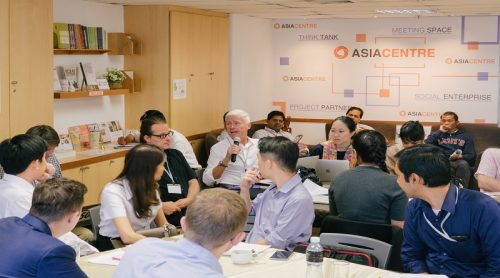
The duty of the State to protect human rights and regulate the behaviour of business organizations was the focal point of discussions at Asia Centre’s International Conference on Business and Human Rights: Holding Governments Accountable in Asia (BHR Conference), held on 12 and 13 July 2018 in Bangkok. The focus on the duty of the State was deemed important by the conference participants as Asian countries increasingly consider the development of national action plans (NAPs) on BHR. Experts from around the world analysed the multifaceted linkages between business operations and international human rights norms but circled back to point to the duty of the State to protect. They highlighted policy and legislative challenges affecting the capacity of states to uphold such norms as stipulated in Pillar One of the UN Guiding Principles (UNGPs) on Business and Human Rights. Asia Centre Conferences: Designed for Discourse The conference hosted over 50 participants from a variety of organisations including universities, NGOs and INGOs. The conference’s program can be found here. During the nine panels, a variety of interconnected topics in relation to business and human rights were presented, questioned and discussed. Watch the conference’s video here. The compiled conference procedure is available here. Day one The first day’s presentations discussed BHR perspectives on a regional basis, national strategies and policies, the interaction of Multinational Corporations, and accountability in infrastructure, development and consumer-oriented business. While NAPs on BHR by Governments are welcome, Dr. Seree Nonthasoot, Thailand’s representative to the ASEAN Intergovernmental Commission on Human Rights (AICHR), reminded participants in his guest appearance, NAPs should not provide a means for States to neglect their existing obligations under international law. Likewise, participants pointed out that voluntarist corporate social responsibility (CSR) undertakings by business organisations are not the same as a human rights based approach in the UNGPs. Many at the two day conference felt that on occasions CSR was just a publicity tool that companies used for branding purposes and not a commitment to human rights principles. Day two On the second day, the accountability of labour rights violations and indigenous and land rights were noted. The conversations continued over environmental protection as well as technologies and innovation in the business sector. Presentations were made by over 40 specialists on a broad range of issues such as the interdependence of the three pillars (protect, respect and remedy) of the UNGPs. They also discussed violations of land rights, indigenous peoples’ rights, mining, environment and labour rights. The increasing impact of Chinese business interests in Southeast Asia was also raised. Wrapping up – Humanity at the centre of discussions To wrap up the proceedings, a closing panel considered innovative, cutting edge research on the relationship between human rights and architecture, artificial intelligence and smart cities. Participants discussed the need to place the human being at the centre of all discussions as society becomes dominated by innovation and technology. The BHR Conference, in partnership with Forum Asia and Thammasat University ASEAN-China program and supported by the Taiwan Democracy Foundation, is the third human rights conference by Asia Centre that reviewed the contemporary challenges in Southeast Asia and the wider region through evidence-based research. The conference inspired Asia Centre’s publication Business and Human Rights in Asia: Duty of The State to Protect. It examines the State’s duty to protect amidst rising concern over the human rights impact of business organisations in Asia.
Dissecting the 2018 Election in Malaysia: The End of Cronyism?
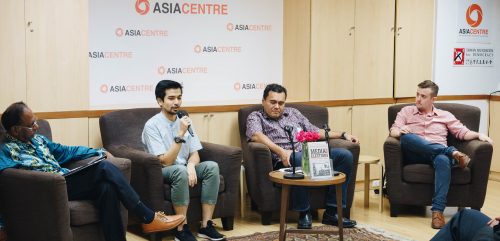
The key challenge of undoing six decades of cronyism, patronage and money politics was a central point highlighted during Asia Centre’s roundtable discussion on the Malaysian elections held in May 2018. Despite the political earthquake, the end of Barisan Nasional’s (BN) rule in Malaysia after 61 years and the defeat of former Prime Minister Najib’s government, fundamental change is not guaranteed. All speakers at the roundtable, held on 22 June 2018 at Asia Centre, observed this critical point. It remains to be seen if the new government of Pakatan Harapan (PH) can usher out the politics of ‘money, race and patronage’. After all, PH is led by a member of the old guard, 92-year old PM Mahathir, who had mentored former PM Najib and helped to build up that system. PM-in-waiting, 70-year-old Anwar Ibrahim, has forged an alliance of convenience with his former mentor and tormentor, Mahathir. Should Anwar be designated PM, is he likely to bring fundamental change? The desire for change among a large percentage of the youth was raised as a factor tipping the balance in favour of PH, which appeared on the political scene at the perfect time. Another key immediate factor was the disaffection of voters with the well-documented corruption scandals rocking former PM Najib, which resulted in a drift towards authoritarianism and harassment of political opposition to his Government. Creeping authoritarianism, including recent attempts to stifle freedom of expression through hastily passed ‘fake news laws’ prior to the election, was a noticeable feature of the Najib’s rule over the past decade, amidst other longer term factors affecting the election. Already in the 2013 election, it became apparent that minority groups, notably Malaysian Chinese,were less willing to accept the national affirmative action plan that has privileged the Bumiputra. Indigenous peoples, such as the Orang Asli, also have become wary of their routine treatment by politicians as ‘second class’ citizens. Splits in the BN coalition had begun to appear well before May 2018. In addition, the new administration will need to contend with an economy that has featured rising costs of living in recent years. Resolute action to tackle these deeper problems will be a drawn out affair, especially in the uncertain leadership transition that is set to take place in two years, with Anwar assuming the mantle of Prime Minister, while his family presumably gives way as he succeeds. The rich discussion was moderated by Dr. Robin Ramcharan of Asia Centre. The discussion was animated by expert commentators from Malaysia and the UK: Dr. Mohd Azizuddin Mohd Sani (PhD), Professor of Politics and International Relations at the School of International Studies, Universiti Utara Malaysia (UUM); Mr. Lutfi Hakim, independent consultant and an associate of IMAN Research, where he was previously a research lead; Dr. Victor Karunen, lecturer and former UN official with UNICEF; and Mr. Scott Edwards, doctoral candidate at the University of Birmingham’s Institute for Cooperation, Conflict, and Security (ICCS). The roundtable set the scene at Asia Centre’s third anniversary celebrations, where Asia Centre announced its new branch in Malaysia. The second Centre in Johor Bahru will be rolled out over 2018-2019. All expressions of interest for collaboration in Malaysia can be sent to contact@asiacentre.co.th. Left to Right: Asia Centre co-founder and Chairman, Board of Directors Dr. James Gomez; Dr. Victor Karunan; Mr. Lutfi Hakim; Prof. Dr. Mohd Azizuddin bin Mohd Sani; Mr. Scott Edwards; Asia Centre co-founder and Executive Director Dr. Robin Ramcharan Photos from the event are available here. This event was held with the support of the Taiwan Foundation for Democracy.
Asia Centre announces Malaysia branch
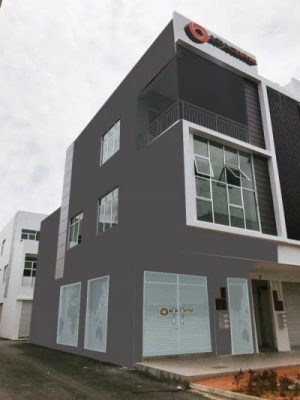
Asia Centre has initiated plans to establish a second branch in Johor Bahru, Malaysia. The new branch will complement and extend the reach of programmes currently organized by Asia Centre Thailand in Bangkok. The announcement of Asia Centre Malaysia was made by Dr. James Gomez, Chairman, Board of Directors of Asia Centre, on the occasion of the Centre’s third anniversary in Bangkok. He noted that the timing for a second Centre in Malaysia is ripe, as the political developments in the country point to opportunities for more robust conversations. Johor Bahru was selected as the preferred location for the Centre’s second branch because of its strategic location, 330 kilometers from Kuala Lumpur and 18 kilometers from Singapore’s Second Link Bridge. Within Johor Bahru, the new branch will be situated less than two kilometres from EduCity at Iskandar Puteri, four kilometers from Puteri Harbour, and 25 kilometres from the old city centre and the Woodlands Causeway to Singapore. By locating in Johor Bahru, Asia Centre Malaysia aims to be part of the ecosystem of higher education institutions in EduCity, Kuala Lumpur, and Singapore, as well as the not-for-profit sector in both Malaysia and Singapore. Asia Centre Malaysia will be housed in a new shop lot complex in the Medini township of Iskandar Puteri in Johor Bahru. The three-storey building has a total floor area of 300sqm, and sports a contemporary design and large balcony on the third floor. Prospective plans for Asia Centre Malaysia include a café, bookshop, co-working spaces, a meeting room and an administrative hub to support the organising of conferences, seminars, workshops, exhibitions and film screenings. Dr Gomez noted that the hard infrastructural developments in Johor Bahru were insufficient for establishing a truly international city, and that a social dimension with robust intellectual conversations is needed. He said that Asia Centre intends to contribute to the intellectual and cultural life of the city through regionally-themed activities and working with local, regional and international partners. Asia Centre Malaysia will be established over the next two years. From July to December 2018, work will involve registration and associated legal compliance. In 2019, outreach in Malaysia will be undertaken, a concept note will be developed, some advisers will be appointed and an interior design firm will be contracted to begin work. Renovation work is expected to continue through into 2020 with the start of some activities to roll out the Centre. This will lead to the appointment of a coordinator and a regular activities at the Centre in Malaysia. While independent, with its own programme of work and governance structure, Asia Centre Malaysia will work with Asia Centre Thailand for economies of scale to further the organisation’s long-term goals of serving as a Think-Tank, Meeting Space, Project Partner and Social Enterprise in the region. The establishment of a second branch in Malaysia signals strong, steady growth for the Asia Centre social enterprise brand first established in 2015. We welcome expressions of interest for collaboration and partnership for activities in Malaysia, Thailand and elsewhere in the region. To explore avenues for potential collaboration, do reach out to us at info@asiacentre.org Front side First floor 2nd floor 3nd floor
Asia Centre recruits new talent at Webster University’s Career and Internship Fair
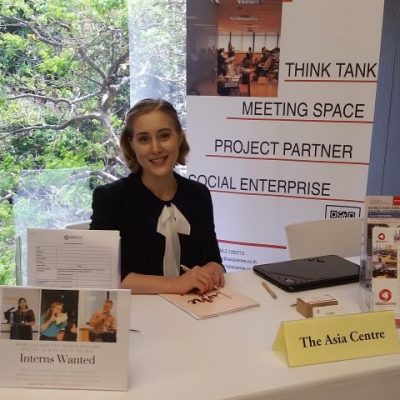
Asia Centre had the opportunity to showcase its internship programme at the annual Webster University Thailand Career and Internship Fair on 4 April 2018. Asia Centre offers two forms of internship: Research, which focuses on researching and preparing evidence to inform reports, articles and conference papers; and Communications, which involves social media promotion, business planning, and creating marketing strategies. Both kinds of internship were met with enthusiasm, and several Webster University students submitted applications at the Fair. Further information on the programme, including the application form, is available here. Students from the Master of Arts in International Relations and Master of Business Administration showed a keen interest in pursuing internships at Asia Centre and in learning more about its work on human rights in Southeast Asia. Our Conference Manager, Elise Schuster, from Australia, was Asia Centre’s representative at the Fair. She introduced the Centre to the students, explained its ongoing human rights program, highlighted its forthcoming events, and emphasised the key role that both research and communications interns play in undertaking all these activities. Elise is herself a research intern, and was able to share her own experiences with potential applicants, including her research and planning for the upcoming International Conference on Business & Human Rights: Holding Governments Accountable in Asia, to be held on 12-13 July 2018. Asia Centre thanks Webster University Thailand for once again hosting a highly successful and enjoyable Career and Internship Fair.
The Rohingya Crisis: Asia Centre Deliberates Solutions to the Crisis at Conference in Bangladesh
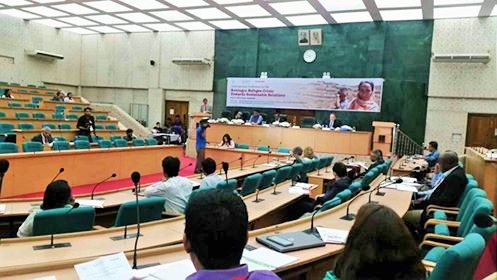
Asia Centre contributed to the search for solutions to the humanitarian crisis in Myanmar and Bangaldesh during the International Conference on the Rohingya Refugee Crisis: Towards Sustainable Solutions, held in Dhaka from 2-3 April 2018. The conference revealed Bangladesh’s pressing search for assistance with the humanitarian crisis, its concern over the implications – economic, ecological, political and social – of hosting over one million Rohingya for the long term, and its search for durable solutions (e.g. safe repatriation), which ultimately lie in Myanmar. In this context, Dr. Robin Ramcharan examined the role of ASEAN in the crisis. He noted the challenges for ASEAN in addressing the humanitarian tragedy that has unfolded as over 700,000 Rohingya have fled Myanmar into neighbouring Bangladesh since August 2017. He noted that while some ASEAN leaders were quite concerned with the plight of the Rohingya, ASEAN’s response has been timid, limited to statements at ASEAN Summits and hosting some of the refugees. He noted that for ASEAN to make more decisive contributions to resolving the crisis, it needed to overcome its adherence to non-interference, to move towards a new decision-making model for such crisis situations, and to live up to the norms adopted in the ASEAN Charter, namely, good governance, rule of law and human rights. The Bangladeshi government, think-tanks and civil society representatives at the conference all raised the issue of compensation to the host state occasioned by hosting large-scale refugee movements. One Bangladeshi legal scholar sought to make the case for ‘State responsibility for compensation’ to the host state resulting from such large scale refugee movements. Additional salient points made by participants at the conference were: 1) The right of return of the Rohingya will likely remain unfulfilled for a long time since the conditions for safe return to Myanmar are not present; 2) The Rohingya in the camps need full assistance from the international community; 3) Bangladesh also needs full support as they deal with the massive influx of refugees, their various needs and the environmental impact; 4) A full understanding of the crisis requires an appreciation of the geopolitics of the region, featuring competition between China and India for influence in Myanmar; 5) The need to address the root causes of the crisis, among which is the issue of citizenship for the Rohingya; and 6) The need for accountability for violations of human rights in Myanmar. Asia Centre contributed to the drafting of the Dhaka Declaration issued at the end of the Conference on 3 April, which was organised by the Centre for Genocide Studies of the University of Dhaka, the Centre for Peace and Justice at BRAC University and ActionAid Bangladesh. It called for, inter alia, the “UN and the international community to use diplomatic channels to provide sufficient humanitarian assistance and other support to ensure protection and rights of Rohingya women, children and other vulnerable groups”. The Declaration also called on the international community to comprehensively investigate the ongoing acts of genocide, mass atrocities, crimes against humanity and ethnic cleansing in Myanmar. It called for the prosecution and punishment of those offenders responsible for such violations. Asia Centre will continue to address the above issues during its forthcoming conference, The Rohingya Crisis: A Multidimensional Tragedy, on 24 August 2018. Researchers at this conference will examine the deeper roots of the current crisis in Myanmar.
3rd Benedict Anderson Memorial Roundtable: Gender and Nationalism in Asia
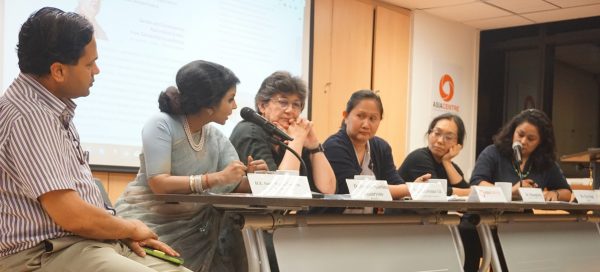
In discussions on contemporary South-East Asian politics, a gap exists between the growing discourse on nationalism and national leadership and the gendered perspective on Benedict Anderson’s narrative on nationalism. To address this gap, a diverse and experienced panel, together with an audience of around 35 attendees, held a ‘conversation’ on multiple interconnected issues surrounding feminism, nationalist expression, political control, and women’s leadership in the post-modern political landscape. The occasion was the annual Benedict Anderson Memorial Roundtable, held on 19 January 2018. Asia Centre hosts the annual Benedict Anderson Memorial Roundtable to honour the significance of the late professor’s contribution to studies of nationalism and South-East Asia, and to continue the debate around nationalism in its contemporary contexts. The inaugural Roundtable was held on 30 January 2016, with the theme Debating Imagined Communities: A Tribute to Benedict Anderson. The second Roundtable, held on 18 January 2017, centred on the topic Nationalism, Citizenship and Statelessness: Current Issues and Developments in Asia. The third Roundtable, entitled Gender and Nationalism in Asia: from Scholarship to Leadership, provided the forum to articulate and critically examine the separation of discussions on nationalism and Benedict Anderson’s work on nationalism, as seen through a gendered lens. The event was moderated by Ms Puja Singh, a teacher, speaker and doctoral candidate. She opened with a gendered reflection on Imagined Communities, Benedict Anderson’s landmark work on nationalism, inviting the audience to consider women’s identity in relation not only to men, but also to ‘nation’. Ms Emerlynne Gil, the senior international legal advisor on South-East Asia at the International Commission of Jurists’ Asia and Pacific Regional Office, argued that in post-colonial contexts, women’s political emancipation often lags behind emancipation from foreign oppression, despite the efforts of feminists within anti-colonial struggles. She argued that this disconnect remains an ongoing feature of the Congress of the Philippines, where the relatively high proportion of female politicians obscures the patriarchal forces that place them in positions of leadership and, thus, hinders the promotion of a feminist agenda. Dr Duanghathai Buranajaroenkij, a professor at Mahidol University’s Institute of Human Rights and Peace Studies, discussed her research on the growing political activism of pro-monarchist women in Bangkok and Muslim women in Thailand’s Deep South. While their entry into the political sphere is facilitated by the adoption of identities “approved” by male leaders and family members, such as overt patriotism or conservative Islamic dress, women continue to find new ways to exercise power and agency in creating space for their political participation. Dr Rosalia Sciortino Sumaryono, Associate Professor at Mahidol University’s Institute for Population and Social Research, highlighted the absence of a gendered perspective in not only Benedict Anderson’s work, but in national governments, human rights agendas, and discourses on power and nationalism. She argued that the election of more female leaders is insufficient to further the feminist agenda; these female leaders must also possess a new vision for the future, while democracy and women’s leadership within the family must be promoted. Her Excellency Saida Muna Tasneem, Ambassador of Bangladesh to the Kingdom of Thailand, noted that although numerous female leaders in South-East Asia are elected through their family connections, many have inherited nationalist sentiments from their fathers and husbands, who had themselves used nationalism to mobilise public opinion against imperial powers. She highlighted the success of Bangladeshi Prime Minister Sheikh Hasina, daughter of Bangladesh’s founding father Sheikh Mujibur Rahman, in balancing nationalism and ethnic identity through encouraging ethnic minorities to use their own languages but to use Bangla in schools. In the following discussion, the panel debated the symbolism of the hijab, its contested meaning in the context of pan-Islamic fundamentalism, and its exemplification of a broader equation of nationalism with an imposition of ‘sameness’ and growing intolerance of diversity. The panel reflected on the contributions of women in leadership roles to the promotion of feminism and women’s rights. They explored and emphasised the importance of ensuring that gender perspectives are not crowded out by emerging issues, such as the Rohingya crisis or the urgency of post-conflict statebuilding, but are instead utilised to examine these issues in greater depth. Through this continued application of a feminist agenda, the gap between discourses on rising nationalism, gendered understandings of national identity and women’s leadership can be bridged. This year’s Roundtable continued Asia Centre’s ongoing commitment to facilitating gender-centred discussion and debate around the human rights agenda. Previous events have focused on Entering Femininity: Reporting Rituals and Violations, which examined practices of female genital mutilation, and Celebrating Women in Law, featuring a panel of female lawyers who discussed access to justice in Southeast Asia. .