
Digital Rights Programme for Civil Society Organisations Kicks Off
More than 30 representatives from civil society organisations (CSOs) and international non-governmental organisations (INGOs) attended the Kick-off Information Session of the Digital Rights Programme for Civil Society Organisations. Held online on 19 December 2023, participants represented 18 CSOs and 9 INGOs. Co-convened by Asia Centre and Google, the programme aims, over a 12 month period, to strengthen the capacity of CSO to respond to legislation that impacts digital rights in the Asia-Pacific region. Since 2015, the region has been experiencing a rise in regulatory frameworks across national jurisdictions that restrict freedom of expression and impede freedom of assembly. This has led to the erosion of civic spaces and democracy within which CSOs operate. The session started with a poll: What topic do you find most important to the work of your organisation? The four options were: Mis/Disinformation, Laws and Regulations, Digital Security, and Artificial Intelligence. Among the 24 people who took part, Laws and Regulation received 9 votes, Mis/Disinformation received 6 votes, Digital Security received 5 votes and AI received 4 votes. Miriam Estrin, Google’s Global Lead on Content Regulation, welcomed the participants. She spoke of how, in a fast-evolving environment where digitalisation has become a significant facet of our lives, and that Google is pleased to support the activism work of CSOs through programmes such as these with Asia Centre. Participants then introduced themselves, sharing their challenges and expectations for the programme. Their expectations ranged from wanting greater networking opportunities and learning how to mitigate digital security issues, to combatting disinformation online and offline, to knowing how to obtain the resources required to carry out their activities and programmes. Dr James Gomez, Regional Director of Asia Centre, then gave an overview of the programme. He outlined the key challenges arising from increased digitalisation – fake news, curbed electoral integrity, fears of foreign interference, and perceived threats to social harmony, cultural values and national security. He pointed out that governments by enacting new laws or expanding the reach of existing ones, however, infringed on the rights of activists, CSOs and netizens across the region. He said urgent action is required to ensure that internet laws are used to promote online safety. Hence, Dr. Gomez explained that the Asia Centre-Google programme have the following objectives: Identify regulatory frameworks and their impacts on civil society and human rights work. Collect and share knowledge of lived experiences of CSO activists, in order to create new strategies to respond to digital threats. Work with technology companies, INGOs and their local CSO partners to formulate actionable policy recommendations and to build capacity for CSOs to address the most urgent issues. In terms of a breakdown, he explained further that the Digital Rights Programme for Civil Society Organisations is a year-long programme consisting of: 8 online topical meetings. a face-to-face regional meeting held in Bangkok, Thailand. a half-day country meeting each in Taipei, Taiwan, and in Phnom Penh, Cambodia. an end-of-programme meeting in Johor Bahru, Malaysia to plan and reflect on the next stage. The kick-off session ended with an announcement of the next session, to be held on 18 January 2024, 5 PM – 6:30 PM (Bangkok Time, GM+7), when Asia Centre will launch its report: “Online Content Regulations in the Asia-Pacific”. This will be followed by a discussion with experts about the scope of the regulations in the region and their impact on CSOs. Please see here for more information regarding the online session. To register for the session, click here. Asia Centre is a civil society research institute in Special Consultative Status with the United Nations Economic and Social Council. It serves as a knowledge partner and undertakes evidence-based research as well as provides capacity-building training for end beneficiaries. If you would like to collaborate with the Centre, please send an expression of interest to contact@asiacentre.org.

Restrictive Laws Spur Self-censorship and Euphemisms in Journalism
Highly restrictive laws have spurred self-censorship and the use of euphemisms in journalism. Meanwhile, business sustainability issues have forced media organisations to engage in advertorial and service-based revenue generation. Transformative changes and the ability to address these challenges, however, need to occur with multiple stakeholders, including the media and journalists. These and other challenges for news outlets and journalists in the Asian region were brought up by many participants at the “Asia Media Forum: Let’s Talk Equality” event held in Bangkok, Thailand on 11-12 December 2023. The event was co-convened by Asia Centre and Oxfam in Asia and was attended by over 35 journalists, editors and communications specialists from Oxfam, national and regional media and publications. They came from Bangladesh, Cambodia, India, Indonesia, Laos, Myanmar, Nepal, Pakistan, the Philippines, Thailand, Timor-Leste and Vietnam. All of these media practitioners write on issues of human rights, equality and/or climate change. The event’s welcome address was given by John Samuel, Oxfam in Asia Regional Director. Following this, Mustafa Talpur, Asia Regional Head of Advocacy & Campaigns presented an overview of Oxfam’s work. Thereafter, Dr James Gomez, Regional Director of Asia Centre, gave a presentation on the state of media freedom in the region. Over the course of two days, the Forum highlighted challenges arising from shrinking space for media freedom, often impacted by governmental actions. One main issue was the increasing difficulty for news organisations to find loyal audiences and subscribers. Participants shared that the general public was not consuming news as much as before because of the unpleasantness of many current affairs issues such as wars, conflict and crime. This has been exacerbated by the unpleasantness of much of the news being broadcast or reported, and repeated frequently throughout news cycles. Participants also noted that the general public’s trust in the media has decreased because of the proliferation of fake news, misinformation, and strong biases from some mainstream media, fringe websites and other content creators. Instead, audiences were moving towards entertainment and the types of “news” that lull readers or viewers into apathy and complacency regarding human rights issues and politics – a consensus shared by the diverse group of participants. Further, when reporting on political news, journalists and news organisations run a high risk of being prosecuted through repressive laws in the longer term. The developments arising from a closing media space have led to widespread self-censorship among journalists and media organisations. Others rely on a heavy usage of euphemisms and indirect references in reporting as observed and even used by many of the participants attending the Forum. Participants shared that the media companies they work for struggle to attract advertisements which have largely gone to online platforms. At the same time, media companies’ quest for subscribers has increasingly become an uphill challenge. As a result, advertorials are thus heavily adopted as the dominant business model. Some media organisations also now offer editorial services, training and other public relations services. Journalists at the Forum said these developments impact journalistic integrity and remove certain issues such as climate change from editorial priority. Thus, there is scant attention being paid to it by most major news outlets, with few exceptions such as in Timor-Leste. The Forum participants lamented that this has led to climate issues being generally “unpopular” until massive environmental and climate disasters strike. At the end of the two-day event, the participants agreed they had discussed the current issues affecting the media industry. They agreed to stay connected to formulate strategies for credible storytelling and ethical news reporting. The Asia Media Forum is an event organised by Asia Centre in partnership with Oxfam in Asia . This media partnership started in 2019 with the Thailand launch of the Journalism for an Equitable Asia Award in Bangkok in November 2019. To learn more read the Award click here. For articles that covered the Award in the years 2020, 2021 and 2022, see here for 2019-2020, here for the 2020-2021 Award, and for the 2021-2022 Award here and here. Asia Centre is a civil society research institute in Special Consultative Status with the United Nations Economic and Social Council. It serves as a knowledge partner and undertakes evidence-based research as well as provides capacity-building training for end beneficiaries. If you would like to collaborate with the Centre, please send an expression of interest to contact@asiacentre.org.
Navigating the Digital Space: Challenges and Strategies in Contemporary Activism
In the heyday of digital activism, the online realm held promise as a dynamic battleground for social change. The openness and lack of border restrictions seemed to provide fertile ground for activists to orchestrate campaigns, as seen in the transformative movements like the Arab Spring and Taiwan’s Sunflower Movement. However, the optimism surrounding the efficacy of online activism has proven short-lived, especially in the face of increasing restrictions imposed by authoritarian regimes across Asia. Examples abound of repressive tactics, from judicial harassment to internet shutdowns, online censorship, information warfare, and digital surveillance. These measures have significantly curtailed the effectiveness of digital activism compared to its initial potential. To address these challenges head-on, Asia Centre and Oxfam in Asia jointly organised the Digital Activism Workshop in Bangkok from 13 -15 December. The workshop aimed to establish a collaborative space for knowledge sharing and collective reflection on leveraging digital spaces for social mobilisation. Thirty activists from South and Southeast Asia participated, collectively reevaluating the narrative surrounding digital activism. Over the three days, activists showcased the tactics they have adopted, with a focus on social media platforms such as TikTok, Facebook, and Instagram. Short videos dominate the current and the immediate foreseeable future, demanding an awareness of social media trends in digital activism. Despite efforts to tailor content to each platform’s policies and audience, campaigns often face minimal engagement. Activists suspect that algorithmic curation by big technology companies favours government content, undermining the reach of activist campaigns. To overcome these challenges, activists have turned to collaboration with online content creators and influencers. However, this approach comes with its own set of issues, including high costs and potential credibility challenges when influencers do not align with campaign values Another significant hurdle faced by activists is the onslaught of trolls and bots during online campaigns. These entities flood critical social media posts with disinformation and abusive language, creating a hostile environment. Activists, constrained by limited platform responses to these issues, resort to adopting a more ambiguous tone during online campaigns, a strategy broadly termed “using euphemisms.” The use of euphemisms involves activists softening their language and diluting rhetoric to navigate around online obstacles. While this tactic may help sidestep censorship, it risks compromising the emotional appeal that drives people to take up the call to action. Additionally, the use of local languages can limit a campaign’s reach, hindering its ability to connect with a broader audience Beyond social media, messaging applications are crucial tools for digital activism, facilitating operational communication among activists. However, governments in the region exploit spyware and collude with tech companies to monitor these communications. Activists must employ digital security tools, but this comes at the expense of efficiency, as the constant preoccupation with security compromises their effectiveness. Repressive laws further impede transborder efforts to mobilise online. Laws restricting the scope of international non-governmental organisations (INGOs) funding, national operations and partnerships with local partners often force them to operate under restrictive conditions, such as through remote working, use of consultants, the absence of legal status and thereby forcing them to limit their visibility. Although this strategic approach allows advocacy to persist in restrictive environments, it comes at the cost of the INGOs’ overall relevance, apart from sub-granting and capacity transfer. The Digital Activism Workshop concluded with a stark realisation: digital activism is increasingly restricted through platforms’ algorithms. The path forward involves refining online and offline advocacy tactics to suit each occasion and keeping in pace with political and technological developments. Activists must strike a balance between social media adaptability and the essence of their campaigns, ensuring that activism retains its emotional appeal even if elements of it need to now include offline tactics. The era of large-scale audience targeting for mass mobilisation via social media is over. Activists should shift from blanket approaches to campaigns designed for niche audiences with the momentum to drive social change using both online and offline approaches. For INGOs, maintaining a low profile during certain campaigns is understandable, but they must recognise that their role is increasingly in the background. In navigating this evolving digital landscape, activists must remain adaptable, recognizing that the dynamics of online activism demand constant evolution and strategic innovation. The challenges are formidable, but as activists refine their approaches, the hope for meaningful change in the digital sphere endures. Asia Centre is a civil society research institute in Special Consultative Status with the United Nations Economic and Social Council. It serves as a knowledge partner and undertakes evidence-based research as well as provides capacity-building training for end beneficiaries. If you would like to collaborate with the Centre, please send an expression of interest to contact@asiacentre.org.
Asia Centre Presents the Preliminary Results of Cambodia’s Media Landscape Assessment
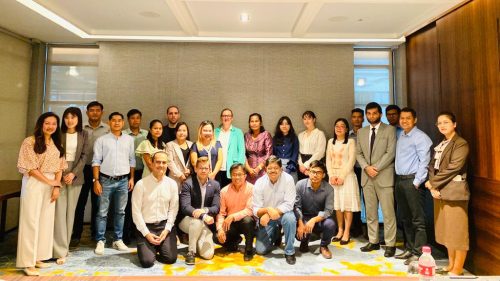
On 27 October 2023, Asia Centre convened the second meeting of the multi-stakeholder advisory board to present the preliminary findings of its study for the “Assessment of Media Development in Cambodia”. The meeting took place at the Hyatt Regency Hotel in Phnom Penh and was attended by 23 participants, including representatives from the relevant ministries, diplomatic missions, media-related CSOs, journalists, and media professionals. Sardar Umar Alam, UNESCO Representative to Cambodia, and Dr James Gomez from the Asia Centre gave the welcome remarks, outlining the importance of using UNESCO’s media indicators to assess the media landscape in the country and also provided an overview of the progress achieved so far in doing such an assessment. In the second part of the session, Dr Marc Pinol Rovira, from Asia Centre, presented the preliminary findings in five parts, one for each category of indicators: media-related regulation; plurality and diversity of the media sector; the role of media as a platform for democratic discourse; professional capacity building and supporting institutions for media professionals; and infrastructural capacity. Then, a question and answer session took place, in which participants could seek clarifications and also had the opportunity to provide their input for the research team at Asia Centre to complete the report. The session concluded with the closing remarks by Mikel Aguirre Idiaquez, UNESCO’s Project Officer, which also included a brief outline of the project’s next steps. After this meeting, the primary data collection process will continue, followed by the drafting of the report. Asia Centre will convene a validation meeting in December, also in Phnom Penh, to present the findings of the report to the members of the advisory board. Upon completion of the project, the report will provide a policy toolkit for government agencies, such as the Ministry of Information and the Ministry of Posts and Telecommunications, and media practitioners to contribute to the development of the media landscape in the country in light of the ongoing developments like the constant and rapid evolution of the digital sphere and the increasing importance role of artificial intelligence. The Centre undertook the assessment in partnership with UNESCO and the Department of Media and Communication (DMC) of the Royal University of Phnom Penh (RUPP) with the support of the Swedish International Development Cooperation Agency (SIDA). Asia Centre is a civil society research institute in Special Consultative Status with the United Nations Economic and Social Council. It serves as a knowledge partner and undertakes evidence-based research as well as provides capacity-building training for end beneficiaries. If you would like to collaborate with the Centre, please send an expression of interest to contact@asiacentre.org.
IFSEA End-of-Project Partners’ Meeting Prepares for New Challenges, Strategises for Phase II
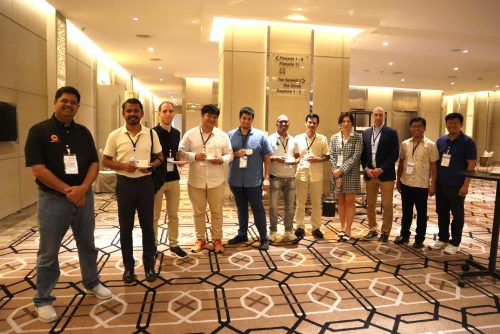
At the Internet Freedoms for Southeast Asia (IFSEA) End-of-Project Partners’ Meeting held in Kuala Lumpur, Malaysia, there was broad consensus among the more than 20 participants that more still need to be done to protect digital rights. Three focus areas identified were: advocacy with governments, building coalitions in the region with other like-minded stakeholders, and implementing capacity-building activities. The partners’ meeting took place from 1–3 November 2023, co-convened by Asia Centre and the International Center for Not-for-Profit Law (ICNL). It was attended by representatives from the Cambodian Journalists Alliance Association (CamboJA), Open Development Cambodia (ODC), KRYSS Network, Hadomi Timor Foundation–FONGTIL, and the Timorese Association for Progressive Media and Technology. The meeting marked the conclusion of the IFSEA project that started in 2021, undertaken by ICNL with the support of Asia Centre as the regional partner, and Southeast Asian country partners from Cambodia, Malaysia, and Timor-Leste between 2021 and 2023. The End-of-Project Partners meeting built upon the IFSEA Regional Conference in May 2023 where there were some discussions on forming coalitions and networks. The opening remarks were delivered by Dr. James Gomez, Regional Director of Asia Centre and Zach Lampell, Senior Legal Advisor at ICNL, who then presented a recap of the IFSEA project. Both stressed the successes of the IFSEA project, and the need to sustain the impact through continued collaboration. Asia Centre’s collaboration with ICNL has included four baseline studies on internet freedoms in Myanmar, Timor-Leste, Cambodia and Malaysia, published between 2021-2023. Using these findings, the partner organisations undertook research, assessed the current legal frameworks, gave recommendations and carried out other advocacy activities to influence policies in their respective countries. Over two and a half days, the partners discussed their project designs, challenges encountered, lessons learnt, and the impacts achieved. This included reflections on how, where, and whom their projects had impacted. The meeting also looked forward in terms of stating broad objectives, setting priorities and discussing strategies to achieve them. To that end, partners also considered financial resources, expert knowledge, and regional networks to facilitate future project implementation. Concluding the meeting, three key ideas emerged which would frame future activities: Firstly, continued advocacy to revise restrictive legislation and to enact data privacy protection laws, as well as to promote greater – and more inclusive – internet access. Secondly, building a coalition that could facilitate a regional-level engagement. Thirdly, capacity-building activities – for the public, in the form of digital media information literacy; and for civil society organisations (CSOs) to effectively promote internet freedoms and digital rights. This meeting was complemented by a side event on 2 November 2023, a one-day roundtable discussion on “Internet Freedom and Digital Rights in Timor-Leste” organised for Timor-Leste participants. It was attended by representatives from over half a dozen diverse organisations from that country, and aimed to promote dialogue between Timorese CSOs, media, youth activists, and public institutions. Participants discussed the current challenges and practices pertaining to law, institutions and journalism in Timor-Leste. They also addressed the obstacles and strategies concerning information and communication technology, the telecommunications market, and the digital divide within the country. The End-of-Project Partners’ Meeting brought the three-year IFSEA project officially to a close. Partners from Cambodia, Malaysia, and Timor-Leste remained committed to developing and expanding their coalition and agreed to work on joint activities in the future. Asia Centre is a civil society research institute in Special Consultative Status with the United Nations Economic and Social Council. It serves as a knowledge partner and undertakes evidence-based research as well as provides capacity-building training for end beneficiaries. If you would like to collaborate with the Centre, please send an expression of interest to contact@asiacentre.org.
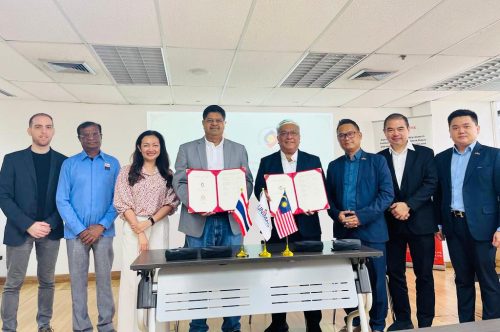
Asia Centre Signs MoU with Universiti Malaysia Sarawak
On 20 October 2023, Asia Centre and Universiti Malaysia Sarawak (UNIMAS) signed a Memorandum of Understanding (MoU) to strengthen their existing cooperation and explore opportunities for future collaboration in media and communications-related activities, research and training developments. The signatories were Dr James Gomez, Regional Director of Asia Centre, and Professor Datuk Dr Mohamad Kadim Suaidi, Vice Chancellor of Universiti Malaysia Sarawak. The MoU signing ceremony included an introduction to Asia Centre, and an overview of Asia Centre covering its scope, programme areas, and partners, which were presented by Dr. James Gomez and Dr. Marc Piñol Rovira. Professor Datuk Dr Mohamad Kadim Suaidi, Vice Chancellor of Universiti Malaysia Sarawak, who represented UNIMAS, gave a brief introduction to the university and the faculty of Education, Language and Communication. The Memorandum of Understanding is the outcome of a positive partnership between Asia Centre and the Faculty for the ASEAN Digital Literacy Programme (ADLP) Training of Trainers, which took place this year on 11 March 2023 at the Faculty’s premises. This programme is supported by Google and, in partnership with the ASEAN Foundation, is implemented to promote Media Information Literacy (ToT) training for trainers in Malaysia. This training aims to produce competent trainers on digital and media literacy by providing them with resources on information disorders and tools to combat disinformation. Details of these in-person Master Trainer Trainings can be accessed in this article. Under the supervision and support of the faculty’s Dean, Prof. Dr Ambigapathy Pandian, the ADLP training of Trainers with UNIMAS has successfully produced 15 trainers eligible to become master trainers for the programme, who, in turn, trained more than 2,000 End Beneficiaries this year. The Asia Centre-UNIMAS MOU is part of the Centre’s continuous engagement with Malaysia. Since 2016, the Centre has collaborated with many local universities in Malaysia, as well as academics and human rights activists, to organise roundtable discussions and seminars on Malaysian affairs. A roundtable discussion was held in June 2018 on that year’s general elections in Malaysia, an event that was supported by the Taiwan Foundation for Democracy. In April 2019, Asia Centre jointly organised a seminar “Fake News Industry: Developments in SEA & Malaysia”, with the University of Nottingham Malaysia and Gerakbudaya Bookshop. In December of the same year, Asia Centre and Oxfam in Asia held the Malaysia launch of the Journalism for an Equitable Asia Award, supported by local partners Gerakbudaya and Orchan Consulting Asia. In October 2021, the Centre co-convened with the School of Media and Communication of Taylor’s University Malaysia a webinar on “Media Ethics and Journalism in Malaysia”, supported by the Taiwan Foundation for Democracy. In 2022, following the release of Asia Centre’s and Google’s report Youth and Disinformation in Malaysia: Strengthening Electoral Integrity, the Centre signed a Memorandum of Understanding (MoU) with Taylor’s University Malaysia’s Faculty of Sciences & Leisure Management in September. This was the first MoU with a Malaysian tertiary institution, and was signed prior to the launch of the Youth and Disinformation in Malaysia report, hosted by the university’s School of Media and Communications. The event attracted over 100 attendees. In March 2023, Asia Centre held a few activities to launch its latest Malaysia report, Internet Freedoms in Malaysia: Regulating Online Discourse on Race, Religion, and Royalty. First released online to the public and media in January, it was covered by several media publications and accompanied by an op-ed by Dr, James Gomez, and two podcasts. In addition, the Centre has held consultations and presentations related to Malaysia. In 2017, 11 country reports, including one for Malaysia, were jointly produced with the International Panel of Parliamentarians for Freedom of Religion or Belief (IPPFoRB). They were released at the IPPFoRB conference for ASEAN Parliamentarians in Bangkok, Thailand in October 2017. The baseline study Harmony Laws in Southeast Asia: Majority Dominance, Minority Repression was released online in November 2021 as part of the 7th annual Southeast Asian Freedom of Religious Belief (SEAFoRB) Conference. This study reviewed how “harmony” and similar laws in Malaysia and three other Southeast Asian states have limited freedom of religion or beliefs, and also accentuated racial discrimination. Asia Centre’s studies on Malaysia have also been featured in Malaysian and other media such as Malaysiakini, Mashable SE Asia, and the Malay Mail; op-eds by Dr. James Gomez in theVibes.com and the Malay Mail; and podcasts such as on BFM 89.9. Catch the highlights of the ADLP training with UNIMAS in this TikTok video at our Asia Centre TikTok page. If you are interested in collaborating with the Asia Centre, do send an email to contact@asiacentre.org.
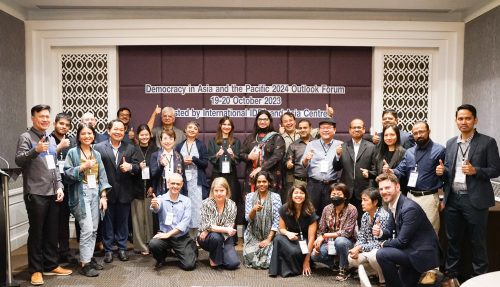
Asia Centre & International IDEA: Forecasting Democratic Futures in the Asia-Pacific for 2024
Asia Centre and The International Institute for Democracy and Electoral Assistance (International IDEA) co-convened the Democracy in Asia and the Pacific 2024 Outlook Forum in Bangkok, Thailand on 19-20 October 2023. This was the 2nd Outlook Forum organised by International IDEA, and was attended by more than 20 participants from various INGOs and NGOs, academic institutions, as well as researchers and activists. The Forum sought to explore uncertainties and emerging issues, using foresight methodologies, that may impact the future of democracy in the Asia-Pacific. The welcome and opening remarks were delivered by Leena Rikkilä Tamang, Director for Asia and the Pacific at International IDEA, and Dr. James Gomez, Regional Director of Asia Centre. Leena Rikkilä Tamang thanked the participants, acknowledging the range of expertise gathered to discuss the likely futures for democracy in the region. She said that most changes were slow and incremental, but sometimes there were moments in history that were hard to predict but possible to imagine. Dr. James Gomez spoke on the need to work more with local communities and organisations, rather than have over-reliance on international experts and specialists for policy advice. He also recommended that organisations work with selected partners to build continuity and maintain strong relationships, rather than becoming part of broad coalitions that are witnessing decreasing utility and benefit for their members. Dr. Seema Shah, Head of Democracy Assessment Unit at International IDEA, presented an overview of the organisation’s “The Global State of Democracy 2023” report with these key findings: 2022 was the sixth consecutive year in which overall democratic performance declined; at the same time, participation in democratic processes have increased, which is a hopeful signal. There have also been gains in the fight against corruption. Although there has been stability across the Asia-Pacific from 2017-2022, there was a low level of democratic performance. Respect for civil liberties has continued to decline, and the rule of law has varied greatly across the region. Nevertheless, democratic participation has continued to thrive. This Forum examined five main areas: the future of elections, gender and democracy, protection of civic space, and climate change through the lens of PESTLE factors: politics, economics, social, technological, legal, and environmental. On the first day of the Forum, the participants engaged in mapping signals of change, including exploring how signals “collide” to determine possible futures. The final objective was to interpret which signals were more important than others, and to place them into different categories for further analysis. The second day saw participants delve deeper into the signals and drivers that create change. They then came up with scenarios in order to communicate to others and inform decision-makers about potential changes, risks and opportunities for democracy in the region. This 2024 Outlook Forum was the first time in which in which IDEA and Asia Centre used foresight methodologies to better inform decision-making and agenda-setting processes, with the aim of forecasting and transforming the future of democracy. The concrete outcome of the Forum’s deliberations is envisaged to be in the next Democracy in Asia and the Pacific 2024 Outlook report, to be published by International IDEA. This two-day event continued Asia Centre’s engagement with International IDEA. During International IDEA’s inaugural Outlook Forum in Bali, Indonesia in December 2022, Dr. James Gomez delivered a presentation on the rise of disinformation. For more information on International IDEA’s 1st Democracy in Asia and the Pacific 2023 Outlook Forum, please visit this link here. Shortly after, on 8 December 2022, in Bangkok, Thailand, the two organisations held a closed-door consultation on ‘Digital Authoritarianism in Southeast Asia’, gathering more than 20 participants from diplomatic missions, UN agencies, INGOs, CSOs and new media experts. At this meeting, Asia Centre and International IDEA also signed a Memorandum of Understanding (MoU) establishing a formal partnership. The MoU paved the way for International IDEA to become a title partner at Asia Centre’s 8th International Conference on Democracy and Elections in Asia, held in Bangkok from 23-25 August 2023. International IDEA hosted two panels and a demonstration session, with opening remarks given by Leena Rikkilä Tamang. Asia Centre and International IDEA will continue their work together. The two organisations are discussing joint research ideas and will further deepen their partnership over the course of this year and 2024. Some of this work is aimed to contribute to Asia Centre’s 9th International Conference on Shrinking Civic Space in Asia: Stories of Resistance and Pushback, to be held in Bangkok, Thailand from 21-23 August 2024.
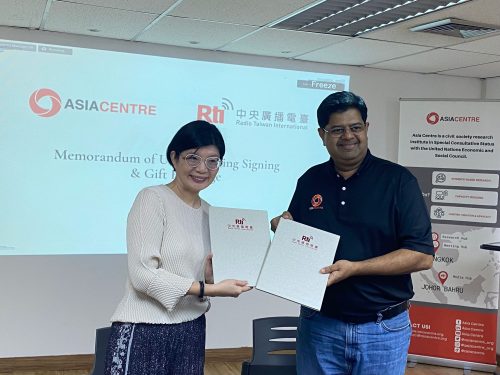
Asia Centre-Radio Taiwan International MOU to Further Media Collaboration
On 25 September 2023, Asia Centre and Radio Taiwan International (Rti), signed a Memorandum of Understanding (MoU). The aim is to establish a framework to engage in future media collaboration. The signatories were Dr James Gomez, Regional Director of Asia Centre, and Ms Cheryl Lai, Chairperson of Rti. The MoU signing ceremony included short introductions to Asia Centre, its research activities, and the upcoming 9th International Conference. These were presented by Dr. James Gomez, Dr. Marc Piñol Rovira, and Ms Lina Salim, respectively. Mr Carlson Huang, Rti Manager of International Languages, introduced Rti to the attendees. Rti is the only international broadcaster representing Taiwan, broadcasting news and programmes in 20 languages globally. In Southeast Asia, it first established a Thai-language service in 1957 and has, over the years, expanded into the region. The Rti partnership with Asia Centre signals a move to go beyond traditional media partners and engage with a regional focal point such as the Centre and reach out to other stakeholders. The MoU was signed following Dr Gomez’s initial visit to Rti’s headquarters in Taipei, Taiwan, on 11 September 2023, together with Chris Liu, head of the Taiwan office of Westminster Foundation for Democracy (WFD). The visit was a meet-and-greet session for both organisations to get acquainted with each others’ work. The meeting quickly led to the first partnership with Asia Centre’s co-convening of Rti’s Taiwan Forum in Bangkok on 22 September 2023. The Forum’s theme, “Post-Pandemic Asia’s Prospects”, focused on the best ways to combat the spread of disinformation and information warfare. Dr. Gomez, in his opening remarks at the event, outlined how Artificial Intelligence stands to flood social media platforms with software-generated content, which in turn can spur an exponential rise in disinformation. He said organic and verified content will increasingly become rare and has to be defended. The Asia Centre-Rti MOU is part of the Centre’s long-time engagement with Taiwan. In 2019 Asia Centre had a series of meetings with Taiwanese institutions. These activities included events and meetings to strengthen relationships with Taiwanese think-tanks, universities, and other institutions and to present the Centre’s research on disinformation in Taipei. For his engagement with Taiwan, in 2020, Dr. James Gomez was awarded Taiwan’s Ministry of Foreign Affairs Fellowship, to undertake research at National Cheng Chi University. These engagements have continued through 2023. In July, a Taiwanese team participated in the joint Asia Centre-Friedrich Naumann Foundation Hackathon, and in August, the Taiwan Foundation for Democracy (TFD) was for the 8th time a title partner for Asia Centre’s 8th International Conference on Democracy and Elections in Asia, held in Bangkok, Thailand. A photo album of the signing ceremony is available on Asia Centre’s Facebook page. If you are interested in collaborating with the Asia Centre, do send an email to contact@asiacentre.org.
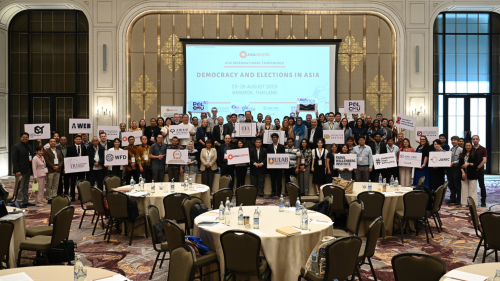
8th International Conference (2023): Democracy and Elections in Asia
From 23 to 25 August 2023, Asia Centre convened its 8th International Conference on “Democracy and Elections in Asia”. The conference marked a return to fully on-site participation, with over 130 attendees hailing from more than 20 countries. Asia has been buzzing with elections since 2022 with the Presidential Election in the Philippines, South Korea, and Sri Lanka, the Chief Executive Election in Hong Kong, General Elections in Malaysia and Nepal, and Gubernatorial Elections in Japan. 2023 continued with the Presidential Elections in Bangladesh, China, and Singapore, General Elections in Cambodia and Thailand, and State Elections in Malaysia. More elections will take place in 2024 in India, Indonesia, and Taiwan. Hence, the conference was timely to examine the relationship between democracy and elections and exchange experiences from Asia. For the 2023 conference, Asia Centre established title partnerships with The International Institute for Democracy and Electoral Assistance (International IDEA), The Taiwan Foundation for Democracy (TFD), The International Development Research Center (IDRC), Chiang Mai University, and Google; panel partnerships with 13 organisations and institutions: Badan Keahlian DPR RI – Expertise Agency of The Indonesian House of Representatives (BKD), The Council of Asian Liberals and Democrats (CALD), Destination Justice, Thuraisingam International, Hashtag Generation, The International Republican Institute (IRI), The Association of World Election Bodies (A-WEB), Graduate School of Letters, Osaka University, Pacifica G.K., The Asia Foundation, Media Studies and Journalism Department, University of Liberal Arts Bangladesh (ULAB), Westminster Foundation for Democracy (WFD), and The National Democratic Institute (NDI). Additionally, the Japan NGO Center for International Cooperation (JANIC) and Raoul Wallenberg Institute of Human Rights and Humanitarian Law were two organisations that engaged as participant partners. Across 21 panels, 90 speakers engaged with the audience, with 53% male and 47% female presenters. Throughout the three days, the following major themes were discussed: the role and activism of youth, women, minority groups and social movements in democratic political participation; the impact of law, money, technology and social media towards electoral behaviours and processes; and on the competency of electoral institutions in pursuing accountability and implementation of anti-corruption measures. Additionally, six country panels covered Myanmar, Thailand, Japan, Indonesia, Sri Lanka and Bangladesh, providing an insider look into these nations’ experiences in building democratic resilience. The inaugural evening featured a warm welcome to Thailand from Dr. James Gomez, Asia Centre’s Regional Director, and Leena Rikkilä Tamang, Director for Asia and the Pacific at International IDEA. The opening panel, hosted by International IDEA, explored a range of issues regarding elections under the current junta regime and prospects of democratic elections for Myanmar’s future. The panel of distinguished country experts and activists unanimously agreed that civil society actors should withhold support for the forthcoming elections until the junta regime can guarantee fair and equitable elections for all of its citizens. Thus they highlighted the need for a more inclusive political participation for ethno-religious communities, women, and youth. The second day started with official welcome remarks from Dr. James Gomez, followed by remarks by representatives of the conference’s title partners: Markham Erickson, Vice President of Google’s Government Affairs and Public Policy, Leena Rikkilä Tamang, Director for Asia and the Pacific of International IDEA, Caroline Ford, Director of International Development Research Centre (IDRC)’s Democratic and Inclusive Governance Division, and Associate Professor Dr. Pailin Phujeenaphan, Dean of the Faculty of Political Science and Public Administration, Chiang Mai University. Dr. James Gomez informed the audience on how the annual conference has evolved over the years to become a strategic space for INGOs and their partners to not just convene to discuss key democracy and human rights issues, but also to engage in networking with representatives from civil society organisations, diplomatic missions, international institutions, parliaments, technology companies, and universities (see speech here). In its eighth year, Asia Centre’s international conference has become a premier regional event. Markham Erickson of Google provided an overview of how this technology company contributes to supporting democratic electoral processes by making official information about elections easily accessible to the voters on its platforms, protecting electoral information against disinformation online, building free products to enhance cybersecurity protection, and supporting political parties in managing their digital presence online through its various platforms. Caroline Ford of IDRC highlighted the need to build and protect a vibrant and inclusive civic space to support democratic values. Acknowledging the threats of disinformation disorders and electoral violence, IDRC is determined to provide its support for transformative research on democracies to not only strengthen the civic space but also to ensure continuous engagement with the public mandate throughout the electoral process. Leena Rikkilä Tamang of International IDEA remarked on the importance of addressing both traditional and modern challenges to election integrity happening across the Asian region, and International IDEA strives to address two of the core issues: the disenfranchisement of migrants towards political suffrage and the usage of technology to facilitate accessible electoral processes in its two other panels in the conference. Associate Professor Dr. Pailin Phujeenaphan of Chiang Mai University underlined the importance of having a safe and open platform for academics and ground actors to convene and discuss issues on democracy, to enable knowledge sharing and mutual learning from each others’ experience in dealing with the regression of electoral integrity. The welcome remarks were then followed by a Memorandum of Understanding (MOU) signing ceremony between Asia Centre and Japan NGO Center for International Cooperation as represented by Patcharee Rattanarong, Centre Manager of Asia Centre and Asako Haga, Manager of THINK Lobby/JANIC. JANIC has been a partner of Asia Centre for many years, having collaborated in producing reports and digital media content, most recently on the report “Foreign Interference Laws in Southeast Asia: Deepening the Shrinkage of Civic Space in February 2023. Alongside the report, this collaboration produced a podcast series, a collection of infographic posters and an informative infographic video to disseminate further the report’s findings to the larger public. On the second day, speakers from across eleven panels addressed challenges to democratic integrity in the region threatened by authoritarian regimes, lack of accountability
CMU POL: Thailand’s Democracy Remains in a Quagmire after the 2023 General Election
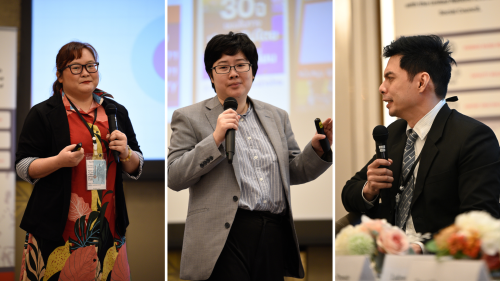
Chiang Mai University, a title partner for Asia Centre’s 8th International Conference “Democracy and Elections in Asia” on 23 to 25 August 2023, through its welcome remarks and panel analysed the outcomes of Thailand’s 2023 General Election and whether the polls would actually return the kingdom to democracy. Dean of the Faculty of Political Science and Public Administration, Chiang Mai University, Asst. Prof. Dr. Pailin Phujeenaphan, in her welcome remarks, observed that despite the expectation that digital technologies would serve as an accelerator to democratisation – Thailand’s politics remains in a quagmire. The same message was delivered on the next day, 25 August, during the Chiang Mai University speakers for the plenary session, “Institutions, Agency and Democracy in Southeast Asia”, were Asst. Prof. Dr. Panuwat Panduprasert and Asst. Prof. Dr. Chanintorn Pensute from Chiang Mai University and Asst. Prof. Dr. Ladawan Khaikham from Kasetsart University. Moderated by Professor Tanet Charoenmuang from Chiang Mai University, the panel speakers pointed out that after Thailand’s 2023 general elections, significant challenges remain for the kingdom’s democratic transition. The panel presentations provided an insight to these challenges. Dr Khaikham drew attention to the impediments encountered by environmental protection policies in Indonesia, the Philippines, and Thailand. She pouted out that Thailand has developed several plans to solve environmental issues using international frameworks, however, the country’s democratic deficit has obstructed it from effectively implementing the plans. Against the backdrop of Thailand’s 2023 election and the victory of the Move Forward Party, Dr Pensute argued that the party’s adoption of digital technologies played a significant role in their remarkable success in acquiring parliamentary seats, genuinely connecting with voters and winning crucial electoral endorsements. Dr Panduprasert examined the military’s role within Thailand’s hybrid regime framework, characterised by growing calls for increased democracy and greater oversight of royal and military powers. The youth-led movement from 2021 posed a significant threat to the preponderance of the military and the monarchy. However, with military-affiliated senators still in the parliament and the Internal Security Operations Command (ISOC) having overly-broad power, the military is expected to continue dictating Thai politics. Although opposition parties such as Move Forward in Thailand and activists in other Southeast Asian countries have leveraged on digital technologies and social media to make some gains, entrenched regimes are still able to create obstacles to the use of new media for democratic expression, through laws and extra-constitutional practices. This panel was organised as an outcome of the Memorandum of Understanding between Asia Centre and the Faculty of Political Science and Public Administration, Chiang Mai University (CMU), signed on 26 August 2022 at Asia Centre’s 7th International Conference. Earlier that month, Dr. James Gomez spoke at CMU’s panel “ASEAN in the Changing Regional Dynamics”, where Asia Centre also visited the Faculty of Mass Communication and the University Academic Service Center of CMU. In June 2022, Dr. Narut Charoensri moderated the panel on “Trade” at the conference “ASEAN-EU Relations in light of the War in Ukraine”, co-convened by Asia Centre and Friedrich Naumann Foundation for Freedom (FNF), Southeast & East Asia. In July 2023, leading up to the 8th International Conference, Associate Professor Surachanee Sriyai and Dr. Charoensri from CMU participated as the mentors in The #Reshaping Europe: Hackathon on the ASEAN-EU Relations, also co-convened by Asia Centre and FNF. To view the main conference article, articles on individual title partners who convened panels, as well as the TikTok video and photo album, go to the main conference piece here. The International Conference is Asia Centre’s annual event where it brings together its partners to share the outcomes of their programmes and network for future collaborations. Over the years, the conference has become a platform for a range of actors to meet and discuss key human rights issues. If you would like to become a Conference partner for Asia Centre’s 9th International Conference “Civic Space in Asia: Stories of Resistance and Pushback” or explore other collaboration opportunities, email us at contact@asiacentre.org. For more information on the 9th Conference, click here.
Google: Authoritative Information Important for Electoral Integrity
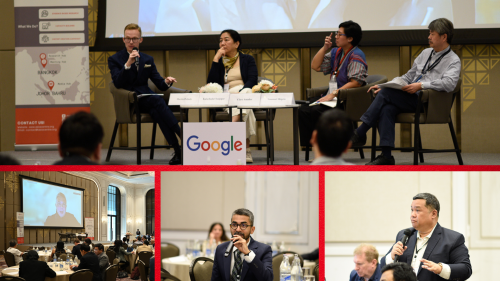
Google, title partner for Asia Centre’s 8th International Conference “Democracy and Elections in Asia” on 23 to 25 August 2023, through its welcome remarks and panel outlined how the technology company and its partners seek to address some of the negative online influences on election integrity. Vice President of Google’s Government Affairs and Public Policy Markham Erickson in his welcome remarks on 24 August 2023 said the technology company supports electoral integrity by engaging users to disseminate authoritative information about their elections; protecting online electoral information and combating disinformation; and supporting elections campaigns by managing their digital presence, alongside trainings for long-term capacity building. Later that same day, Google convened a panel, “The Role of Online Platforms in Elections”. The speakers were: Dr Yasu Shigeta, Policy Advisor, Japan NGO Center for International Cooperation (JANIC)/THINK Lobby; Dr Martin Petlach, Assistant Professor, Mendel University Brno, Czech Republic; Clare Amador, Head of Public Policy (Philippines & Thailand), Meta; Kulachada Chaipipat, Cofact Thailand. The overarching message was that civic spaces, including digital spaces, are crucial for any healthy democracy to function, and more so during election periods. Given that these spaces are now being inundated with fake news – youth, as well as CSOs, through their engagement with technology companies, can combat disinformation and ensure that the integrity of electoral processes is maintained. Dr Yasu Shigeta spoke about narrowing civic spaces, a decreasing press freedom ranking, declining voter turnout, a “hereditary” parliamentary system, and very small numbers of female legislators in Japan. However, this is occurring alongside the rise of online engagement, where groups organise petitions, advocacy for changing certain electoral laws, and other forms of civic action. This evolution of civic spaces in Japan is spearheaded by the youth, especially young women. This is in contrast to Southeast Asia, which has varying degrees of digitalisation during election periods, explained Dr. Martin Petlach. There is no clear link between the levels of the online population and degree of democracy in Southeast Asia, and we cannot surmise that the internet is a tool for positive change. Governments in the region have learnt to navigate the online environment to shape public opinion. To continue building such spaces online, there needs to be more fact-checking to combat disinformation, said Kulachada Chaipipat. The 2023 Thailand general elections were a “social media elections” with more active citizens online. Disinformation has also become more sophisticated and generated online through social media, political statements, messaging apps, and online mainstream media. There is cooperation between Cofact Thailand and platforms like Meta, Google, and TikTok to provide training on digital literacy to help promote authoritative and accurate information online. According to Clare Amador, Meta works with academic and law enforcement agencies to determine the nature and extent of disinformation networks. Numerous Asian countries have held or are set to hold elections, such as Cambodia, Thailand, and Indonesia in 2024. The value of elections in democratic systems is vital, demanding commitment to safeguarding their integrity. Combating misinformation and disinformation is a pressing challenge faced by many, requiring substantial efforts. This underscores the urgency and significance of technology companies such as Google’s role at the Asia Centre’s event. The 2023 conference collaboration builds upon the 2022 conference collaboration where Google co-convened a panel titled “Rights-Friendly Content Regulation in APAC”. The partnership between Asia Centre and Google since 2022 includes a partnership on a Malaysian baseline study, Youth and Disinformation in Malaysia: Strengthening Electoral Integrity, being appointed implementing partner in Malaysia and Thailand for the ASEAN Digital Literacy Programme to train master trainers, and being selected for the 2023 APAC Digital Transformation Program. There are also discussions in the pipeline for future partnerships on other projects. To view the main conference article, articles on individual title partners who convened panels, as well as the TikTok videos and photo album, go to the main conference piece here. The International Conference is Asia Centre’s annual event where it brings together its partners to share the outcomes of their programmes and network for future collaborations. Over the years, the conference has become a platform for a range of actors to meet and discuss key human rights issues. If you would like to become a Conference partner for Asia Centre’s 9th International Conference “Civic Space in Asia: Stories of Resistance and Pushback” or explore other collaboration opportunities, email us at contact@asiacentre.org. For more information on the 9th Conference, click here.
International IDEA: Support Needed for Democratic Actors in the Region
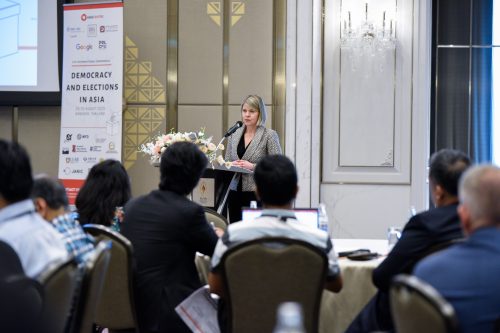
The International Institute for Democracy and Electoral Assistance (International IDEA), a title partner for Asia Centre’s 8th International Conference on “Democracy and Elections in Asia”, hosted two panels and a demonstration session. During the three-day conference, panel speakers convened by International IDEA emphasised the importance of offering support and fostering solidarity with democratic actors in Asia. This importance was underscored during the opening remark on 23 August by Leena Rikkilä Tamang, International IDEA’s Director for Asia and the Pacific. She emphasised that, given the numerous challenges to democracy posed by electoral manipulation, the importance of solidarity and cooperation among civil society actors has become even more critical. International IDEA’s opening panel of the conference titled “Perspectives and Prospects for Future Democratic Elections in Myanmar.” Moderated by Marcus Brand, Head of the Myanmar office, the panel delved into the range of issues surrounding the election to be conducted under the junta regime. The consensus among the panellists was that civil society and democratic actors should withhold legitimacy and institutional support for the forthcoming election until the junta guarantees a free and fair electoral process for the citizens of Myanmar. Three speakers discussed inclusivity issues and democracy in Myanmar. Debbie Stothard, Coordinator/Founder of Alternative ASEAN Network on Burma (ALTSEAN-Burma), pointed out that there is a lack of inclusivity of young people and ethno-religious minorities – who play a huge role in the democratisation efforts – during the transitionary period. These actors are crucial for a future electoral model that is free and fair. Thinzar Shunlei Yi, Deputy Director of the Anti-Sham Election Coordination Committee (ASECC) and Human Rights Advocate added that civil society actors have to be properly included in the process to develop a post-coup regime that is truly democratic and responsive to the needs of the citizens of the country. Igor Blaževič, Head of Prague Civil Society Center, speaking from the vantage point of the international community, emphasised that INGOs should use their positions to discourage giving legitimacy to the election and instead provide needed support to key civil society organisations in the country. On the second day and in the second International IDEA panel “Leaving No Voters Behind: Facilitating The Right to Suffrage of Migrants”, moderated by Senior Programme Manager of International IDEA’s Asia and the Pacific Regional Programme, Adhy Aman, panellists – experts from India, Nepal, and the Philippines – highlighted the inconsistent treatment of migrants’ electoral rights as a major roadblock to enhancing voting accessibility and inclusiveness in Asia. Dr Banasmita Bora, independent researcher, illustrated the situation in India. The country has a significant migrant population facing disenfranchisement, with fewer than a quarter actually using their right to vote due to the financial constraints of having to vote in-country. This issue extends to internal migrants, who constitute a substantial portion of the migrant population and are also significantly disenfranchised in local elections. Commissioner Marlon Casquejo, Commission of Elections, Philippines, noted that civil society should advocate for a holistic approach towards overseas voting, which includes easier voter registration, more opportunities for Filipino nationals to vote from other countries, as well as study the possibility of internet voting. Dr Gopal Siwakoti, INHURED International (Nepal), pointed out that the lack of provisions for out-country voting or online voting in many countries further disenfranchises the migrant population who already lack political and financial leverage. This is particularly the case in migrant-sending countries such as Nepal. Antonio Spinelli, International IDEA, built on the points made by other speakers and concluded that a lack of mechanisms to facilitate absentee voting jeopardises the right to universal suffrage which lays a foundation for the right to self-determination. Overall, the panel showed that those advocating for absentee voting have not been properly supported and have not been given a platform to speak up on the issue. It is therefore important that more focus be given on the topic. The International IDEA, on the third day of the Conference, also showcased its “Electoral Redistricting App (ERA)”. Developed on the backdrop of unfair gerrymandering of electoral districts worldwide, the App makes it easier to create electoral redistricting maps that conform to international principles and best practices. Facilitated by International IDEA’s Senior Programme Manager Adhy Aman, conference participants tried out the App themselves and came up with various ideas of how a better electoral district could look like in their respective countries. Civil society can also use the redistricting app to advocate against gerrymandering with their respective governments. This conference helped strengthen the two organisations’ partnership which was already a year in the making. In the lead-up to this conference, Asia Centre and International IDEA signed an MOU in December 2022 to formalise their partnership. The two organisations also co-convened a closed-door consultation on “Digital Authoritarianism in Southeast Asia” with representatives from diplomatic missions, UN agencies and civil society actors based in Bangkok, Thailand. Earlier in December 2022, Dr. Gomez delivered a presentation on the rise of disinformation and its relation to the distrust in media in an International IDEA-hosted event, “Democracy in Asia and the Pacific 2023 Outlook Forum”, in Bali, Indonesia. In October 2023, the two organisations will co-convene this year’s edition of the “Democracy in Asia & the Pacific 2023 Outlook Forum” in Bangkok, Thailand. To view the main conference article, articles on individual title partners who convened panels, as well as the TikTok videos and photo album, go to the main conference piece here. The International Conference is Asia Centre’s annual event where it brings together its partners to share the outcomes of their programmes and network for future collaborations. Over the years, the conference has become a platform for a range of actors to meet and discuss key human rights issues. If you would like to become a Conference partner for Asia Centre’s 9th International Conference “Civic Space in Asia: Stories of Resistance and Pushback” or explore other collaboration opportunities, email us at contact@asiacentre.org. For more information on the 9th Conference, click here.
IDRC: Strengthen Inclusivity & Research Capacity in Asia
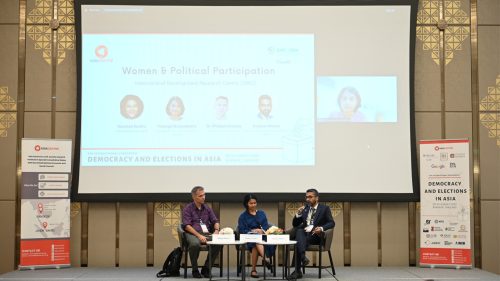
IDRC, as title partner for Asia Centre’s 8th International Conference “Democracy and Elections in Asia” from 23 to 25 August 2023, called for greater inclusivity and the strengthening of research capacity in Asia. IDRC made these calls through the two panels it convened at the three-day conference, in which speakers discussed the key challenges women in Asian countries face to engage in politics and how researching democracies can be improved. These calls were framed by the opening remarks of Caroline Ford, Director for Democratic and Inclusive Governance at IDRC, who said that civic spaces serve as a vital platform for representing communities and marginalised groups but are vulnerable to challenges like misinformation. Thus, safeguarding civic spaces is essential for upholding democratic legitimacy and preventing violence, particularly in post-conflict settings such as Myanmar and Afghanistan. Within this framework, democracy is perceived as a value system grounded in a peaceful, inclusive, and dynamic civic context, closely interconnected with values like inclusion, justice, human rights, equality, and equity. Ms. Ford emphasised IDRC’s support for Asia Centre’s conference on democracy and elections, which aligns with their broader mission to strengthen civic spaces, promote democratic knowledge, and foster collaboration among research communities. On 24 August, in the first of the two panels, titled “Women and Political Participation in Asia,” the plenary session featured three speakers: Saumya Surbhi, Youth Environmental Human Rights Defenders Protection Coordinator at the UNDP Bangkok Regional Hub; Viyanga Gunasekera, a PhD candidate at the Australian National University and a researcher at the International Centre for Ethnic Studies in Sri Lanka; and Dr Philippe Doneys, Associate Professor in Gender and Development Studies at the Asian Institute of Technology in Thailand. Moderated by Kundan Mishra, Senior Program Officer at IDRC, the session was a platform to underscore the intricate challenges impeding women’s engagement in politics across distinct contexts. Viyanga Gunasekera and Dr Philippe Doneys outlined how the convergence of identities becomes a barrier, particularly for women from ethnic minorities, in participating in political spheres within post-conflict societies like Sri Lanka and Myanmar. Building on this, Saumya Surbhi stressed the need for capacity building for young women in the context of climate protests, given the lack of inclusion of this group in traditional decision-making processes. After the input shared by all three speakers and insights provided by the moderator, panel attendees raised questions and articulated their views. The questions covered a range of topics and delved into various key factors that hinder women’s participation in politics and how to overcome them. A key point that was discussed during the interaction between panelists and participants was that Active political participation by women is an enduring concern within the political landscapes of Asia, underscoring the fact that politics continues to be predominantly male-dominated. This dynamic, panelists explained, significantly undermines democratic governance and requires urgent attention. To address the problems undermining the role of democratic governance, speakers highlighted the importance of developing political communication strategies at the grassroots level, conducting more research to understand and compare the challenges faced by women at national and local levels, the necessity of parliamentary quotas, and the establishment of solidarity networks to empower women. Finally, despite the likelihood of persisting challenges, the panelists emphasised the importance of providing appropriate educational tools to enhance awareness and foster more inclusive political spaces, enabling equal participation. On 25 August, the second panel organised by IDRC, titled “Researching Democracies” featured three presenters: Joel Mark Baysa-Barredo, Strengthening Human Rights and Peace Research and Education in Southeast Asia (SHAPE-SEA); Prof Puja Kapai Paryani, Hong Kong University; and Rahul Verma, Centre for Policy Research in India. The panel was moderated by IDRC’s Kundan Mishra. During this session, the speakers delved into the intricacies of democracy research beneficiaries. They distinguished between those who possess the capacity to actively apply research findings to the democratic process and those who merely exhibit a passive interest. This differentiation shed light on the existing power asymmetries within the realm of democracy, underscoring the unequal distribution of influence and resources among participants. These insights underscored the challenges in translating research into actionable democratic practices and highlighted the need for more equitable access to research-driven tools and knowledge for a more inclusive and effective democratic engagement. The speakers also explored the nuanced challenge of adapting international recommendations for democracy enhancement to fit local contexts. They emphasised the importance of ensuring that these recommendations are not only applicable but also sensitive to the unique needs and dynamics of specific regions. Additionally, there was a critical examination of the “foreign interference” narrative, with speakers pointing out its shortcomings in adequately representing minority interests. This perspective sheds light on the complexities of balancing the implementation of global recommendations with the imperative to maintain inclusivity and prioritise the concerns of marginalised groups within the democratic framework, underscoring the need for more context-aware and inclusive approaches to democracy promotion. In this context, the panellists put forward several recommendations aimed at strengthening democratic governance. They stressed the need to translate research into actionable steps to ensure that voices from all social groups are heard and that the political landscape becomes more inclusive. Furthermore, they highlighted the importance of developing specific, context-tailored indigenous frameworks for each country. This approach was seen as crucial for understanding democracy in ways that align with national needs, advocating for a departure from uniform approaches in favour of nuanced, localised perspectives. The speakers also underscored the significance of creating deliberative democratic platforms to engage various segments of society, including women and youth. The panel concluded with a question-and-answer session in which participants sought further clarification on the insights shared by the panellists. IDRC’s participation at Asia Centre’s 8th International Conference is its second showing. In 2022, at the Centre’s 7th International Conference, IDRC convened the panel “Knowledge Systems and Fragility in South and Southeast Asia – The Faraway Future” to discuss the unique challenges faced by knowledge systems and scientific research in South and Southeast Asia, particularly in fragile contexts. Currently, Asia Centre and IDRC are
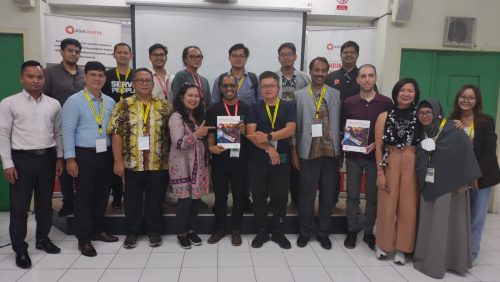
Asia Centre Panel Discussion at ASEAN Civil Society Conference / ASEAN Peoples’ Forum Side Event 2023
Emergency measures imposed by governments across Southeast Asia during the COVID-19 pandemic negatively impacted human rights and democracy in the region, leading to the shrinking of civic spaces and repression of human rights activists, CSOs, independent journalists, and other civic actors. Although most of these measures were initially and publicly meant for public health and safety, these governments, in practice, used these to curb civic freedoms. These include laws that criminalise protestors, silence calls for public accountability, restrict electoral campaigning, and closely surveil the population. In this context, Asia Centre, in partnership with the International Center for Not-for-Profit Law (ICNL), published a report entitled “Moving Beyond COVID-19 Restrictions in Southeast Asia: Pushing Back Against Authoritarian Pandemic Governance” and two policy briefs, Moving Beyond COVID-19 Restrictions in South Asia: Pushing Back Against Authoritarian Pandemic Governance and Moving Beyond COVID-19 Restrictions in East Asia: Pushing Back Against Authoritarian Pandemic Governance in early 2023 to explore how governments used state powers during the COVID-19 pandemic to derogate rights and extend these powers post-pandemic. The report and policy briefs provide recommendations for governments, international organisations, and CSOs to improve democratic governance after the pandemic. The SEA report and country studies on Indonesia and Thailand were presented in a panel at the ASEAN Civil Society Conference/ASEAN Peoples’ Forum 2023 in Jakarta, Indonesia, on 2 September 2023 by the Asia Centre team consisting of regional director Dr James Gomez, research manager Dr Marc Piñol Rovira, research associate Ekmongkhon Puridej with Advisory Board Member Nukila Evanty. Following the ACSC/APF 2023 theme “Reclaiming safe spaces, restoring democracy and equity in Southeast Asia!”, the one-and-a-half-hour session gave the audience an overview of the COVID-19 restrictions in Southeast Asia, with a special focus on Indonesia and Thailand. Dr James Gomez opened the panel by providing a background overview of the impact of COVID-19 in ASEAN countries and noted that much of the impacts from the implemented restrictive laws lasted and prevailed into the post-COVID-19 pandemic era today. Dr Marc Rovira continued by assessing how governments in the region implemented the emergency measures and the laws used to curb the civic freedoms of its citizens in the name of national security against the spread of the disease. For the case study of Indonesia, Nukilla Evanty delineates how the emergency measures in Indonesia have resulted in an increased number of attacks towards those who are critical of government policies. In the case of Thailand, Ekmongkhon Puridej explained the power and the misuse of the Emergency Decree which resulted in restrictions on freedom of assembly and the chilling of free speech. He also gave a brief overview of the advocacy efforts by the civil society in the region and discussed the need to include rights-protecting provisions in a possible international pandemic treaty. To further promote the findings of the report to the larger public, Asia Centre also held a booth at the ACSC/APF 2023, providing digital copies of the report for the attendees of the conference. Many of the conference participants, which include civil society actors from across Southeast Asian countries and beyond, took interest in the report, which sparked engaging conversations at the booth. The ACSC/APF 2023 also provided the Asia Centre delegates the added opportunity to meet and present and discuss the report to the head of the Expertise Agency of The House of Representatives of The Republic of Indonesia (BKD), Dr. Inosentius Samsul. Asia Centre has previously signed a 5-year MoU with The Expertise Agency (BKD) in 2022 to establish a partnership between both organisations to jointly undertake and support the publishing of research outputs, execute teaching and training programmes, and develop course outlines and materials. Earlier this year, in April 2023, the policy brief on East Asia, “Moving Beyond COVID-19 Restrictions in East Asia: Pushing Back Against Authoritarian Pandemic Governance,” was presented by Dr James Gomez at the Tokyo Democracy Forum meeting, which was organised on the sidelines of the C7 Summit in Japan. By disseminating these insights and engaging with a diverse audience at the conference and beyond in Indonesia, Asia Centre continues to play a pivotal role in advocating for democratic principles and upholding human rights in Southeast Asia. For more information on the report and its findings, please visit the provided link. For more photos of Asia Centre’s involvement in the ACSC/APF 2023, please visit Asia Centre’s Facebook page here. Asia Centre is a civil society research institute in Special Consultative Status with the United Nations Economic and Social Council. It serves as a knowledge partner and undertakes evidence-based research as well as provides capacity-building training for end beneficiaries. If you would like to collaborate with the Centre, please send an expression of interest to contact@asiacentre.org.
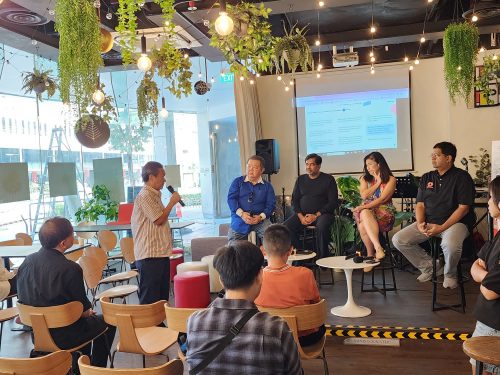
Asia Centre Launches Report on Political Hate Sites in Singapore
On 8 July 2023, Asia Centre held a discussion panel for the launch of its newest report, Political Hate Sites in Singapore: Flourishing without Repercussions. The event, jointly organised with two Singapore-based independent media platforms: The Independent Singapore and Wake Up Singapore, gained over 30 participants. To promote the launch event, Asia Centre released two promotional videos on its social media platforms introducing what are political hate sites in Singapore. Additionally, The Independent Singapore, one of the organising partners, published a promotional pre-event article, and The Online Citizen, a regional news platform based in Taiwan, released an audio post of Dr James Gomez, Asia Centre’s regional director, providing a summarised definition of political hate sites. Shortly after its release on 8 July 2023, Agencia EFE, a Spanish international news agency, reported the findings of the report in its article “Aumentan los discursos de odio contra opositores y activistas en Singapur, según estudio” (Hate speech against opponents and activists on the rise in Singapore, study finds) with SWI swissinfo.ch – the Swiss news and information platform. This is followed by another article published by The Online Citizen, a regional news platform based in Taiwan on 9 July 2023, “Asia Centre report highlights the proliferation of unchecked hate sites in Singapore” to share its findings. Besides, the key research findings were also promoted via an online campaign with infographics and infographic video posted on Asia Centre’s social media platforms, Facebook, Linkedin, Instagram, Twitter and Tiktok. The event, held at Palms Bistro, Singapore, was attended by lay Singaporeans, members of the opposition political parties, media activists and journalists of independent media platforms. Dr James Gomez, Asia Centre’s regional director, delivered the presentation about the report’s findings and highlighted how many Singaporeans often overlook the existence of such political hate sites due to the normalisation of hate speech in political discourse and debate in Parliament and the mainstream media. Through the 3 phases of internet control and various laws and legislations, the state has controlled and regulated political discourse and participation of the opposition parties, media advocates, independent journalists and media platforms, thereby narrowing the space of critical political discourse both offline and online. The report has identified the proliferation of hate content and hate sites online as the fourth phase of internet control, whereby Dr James expounded on the traits, tactics and targets of political hate sites by presenting 4 case studies as identified by the report. Moderated by Craig Teo of Reverse Auction & Financial Services Consultant, the findings were further discussed by Wendy Low of Eldan Law LLP, Jeannette Chong-Aruldoss, a prominent lawyer with 30 years of experience and a former politician, and Kumaran Pillai of The independent Singapore. Wendy Low presented over a pre-recorded video the strategies that victims of online hate speech can utilise to seek legal justice against their perpetrators through four main strategies; identifying the hater before taking legal actions, building one’s narrative through independent news platforms to amplify one’s side of the story, remaining above board by exercising transparency in the investigation process and using existing laws on harassments (such as POHA) against the perpetrators of hate. Jeannette Chong Aruldoss pointed out that the public has generally accepted certain behaviours and speech which disable them from identifying the hate narratives contained within them. Hate speech is a dangerous, divisive tool to society and must be curbed not just by legislation but also by civic actions from the members of society. Bringing in the insider’s perspective as an independent media practitioner, Kumaran Pillai asserts that the incumbent political party has distorted the online landscape for political discourse and restricts the space for different political parties and the general public to contest for the best ideas through constructive debates on policies and to call for accountability of public officials. In the report, Asia Centre recommends the international community, UN bodies, Singapore parliament, political parties, tech companies, and civil society organisations to 1) monitor, document, and call out cases of online hate speech in Singapore; 2) use UN mechanisms to engage with the Singaporean government to address political hate speech and commit itself to international standards of freedom of expression; 3) advocate for the amendment of laws restricting freedom of expression; 4) develop new technology solutions to improve the detection of online hate speech; and 5) work cooperatively to consider everyone’s views in the development of new strategies to address online hate speech. This small cluster of critical voices is a manifestation of a larger, suppressed and silent resistance to the ruling regime in Singapore. Improved internet freedoms and safety to voice criticisms will provide the necessary valve to express democratic aspirations in Singapore without risking unnecessary and abrupt political upheavals. Read the full report here. You can also watch the TikTok video of the report launch event here, as well as the infographic video here. This report is Asia Centre’s first report on Singapore. The Centre has published four other reports on internet freedoms in Southeast Asia: Internet Freedoms in Malaysia: Regulating Online Discourse on Race, Religion, and Royalty (2023) Internet Freedoms in Cambodia: A Gateway to Control (2021) Timor-Leste: Internet Freedoms Under Threat (2021) Myanmar: Dismantling Dissent – Crackdowns on Internet Freedoms (2021) Asia Centre is a civil society research institute in Special Consultative Status with the United Nations Economic and Social Council. It serves as a knowledge partner and undertakes evidence-based research as well as provides capacity-building training for end beneficiaries. If you would like to collaborate with the Centre, please send an expression of interest to contact@asiacentre.org.
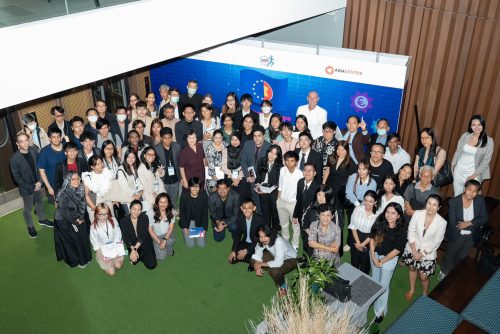
Team Malaysia Wins Hackathon on ASEAN-EU Relations: Will Travel to Germany
Between 21 and 23 July 2023, the Asia Centre and Friedrich Naumann Foundation for Freedom Southeast & East Asia jointly organised the #Reshaping Europe: Hackathon on the ASEAN-EU Relations. The primary objective of the Hackathon was to provide young leaders with an opportunity to propose initiatives aimed at enhancing the relationship between ASEAN and the EU. During the event, ten teams of two participants each from Southeast and East Asia worked on developing and presenting their project ideas to a wider audience. Participants were required to align the goals of their initiatives with trade and economic cooperation between ASEAN and EU or the promotion of human rights and democracy. The ten teams were selected from a pool of 175 applications originating from various East and Southeast Asian countries. After several rounds of evaluations conducted by the Asia Centre, FNF Regional Office, and FNF Country Offices, these were the ten participating teams in the Hackathon: Indonesia A: Muhammad Ridho Izzulhaq and Aryo Bagas Indonesia B: Muhammad Ananda Maulana and Chendy Pusputa Malaysia: Nurilly Rania Jusly and Dean Delaina Denis Ejoh Myanmar: Myat Thu and Eaindray Myint Mo Philippines: Prince Ernest Eugene Ronson D. Sabado and Crizelle Quiniquini Joya South Korea: Ha Neul Kim and Truston Yu Taiwan: Hui En Chang and Ting Yu Sun Thailand A: Pakornwit Wiangsripanawan and Apisara Haingsa Thailand B: Narisara Charoensap and Kamonchai Chalee Vietnam: Nhi Dung Hoang and Trang Minh Nguyen The Hackathon activities spanned three days and included an introduction, keynote speeches, hacking sessions and project presentations. On the first day, the Hackathon kicked off with opening remarks by Dr James Gomez, Regional Director of Asia Centre, and Mr Moritz Kleine-Brockhoff, Head of the Regional Office of Southeast and East Asia of Friedrich Naumann Foundation. Following the opening remarks, Dr Marc Pinol Rovira, Research Manager of Asia Centre, introduced the policy report “EU-ASEAN Relations in Light of the War in Ukraine”, highlighting the potential benefits and challenges of deeper integration between the two blocs. The keynote speeches were delivered by Dr Vachararutai Boontinand from Mahidol University and Dr Suwannarat Meesomboonpoonsuk from Thammasat University. Dr Boontinand’s speech focused on human rights and democracy in the ASEAN-EU integration, while Dr Meesomboonpoonsuk discussed existing economic cooperation between ASEAN and EU and provided examples of economic and institutional limitations faced by both blocs. On the second day, teams were assigned to one of the four mentors: Associate Professor Surachanee Sriyai and Associate Professor Dr Narut Charoensri from Chiang Mai University and Dr Marc Piñol Rovira and Lina Sakina Salim from the Asia Centre. Each team thereafter had several hacking sessions to develop their projects and separately consulted with their assigned mentors to identify potential challenges and come up with solutions. In the afternoon of the third day, the teams showcased their projects to over 40 members of the public. The judging panel consisted of Dr James Gomez from Asia Centre, Asst. Prof. Dr Natthanan Kunnamas from Chulalongkorn University, and Ed Legaspi, former Executive Director of SEAPA (Southeast Asian Press Alliance). These were the presentations by the ten teams: Indonesia A: DemocraSEA Indonesia B: ASEAN-EU Strategic Partnership on Critical Raw Materials Malaysia: Connecting Futures: ASEAN-EU Changemaker Ambassador Myanmar: Garmify Philippines: Bridging the Gap of Educational Inequalities South Korea: Programme on EU-ASEAN Connectivity Taiwan: Med It Together Thailand A: Foodscape Thailand B: Identity Diversity Vietnam: EduStation After each presentation, the three judges had the opportunity to ask questions to all presenters, allowing the teams to elaborate further on their projects. The combined scores of the three judges resulted in Team Malaysia being declared the winner of the regional hackathon. As a result, Team Malaysia will present its project at the upcoming FNF Annual Conference in Berlin, Germany, in October 2023. Watch the highlights of the Hackathon
Oxfam Young Leaders Fellowship Programme 2023 Kicks Off
A total of seven speakers, one facilitator, three project coaches, and two field visits made up the programme activity for Induction Meeting for eight Oxfam Fellows from 10 to 14 July 2023 in Bangkok, co-convened by Asia Centre and Oxfam. The Induction Meeting was part of the Oxfam Young Leaders Fellowship Programme 2023, which aims to provide tools to empower young people with hands-on training and close mentorship to strengthen their capacity to make social change happen. The eight fellows, constituting the inaugural cohort of the fellowship programme, who participated in the event are Lamia Mohsin from Bangladesh, Sanjana Chettri and Soumya Mishra from India, Chikita Edrini Marpaung from Indonesia, Wajid Zahid from Pakistan, Ellenor Bartolome and Gerald John C. Guillermo from the Philippines, and Ricardo Valente Araujo from Timor-Leste. Fellows were selected from a diverse pool of over 400 candidates from Asia by the judginging panel consisting of Oxfam, Asia Centre, and external judges. Together, they represent a group of individuals with a strong determination to bring about positive change within their respective societies. They have devised innovative ideas aimed at improving their communities and have taken steps towards implementing them. Their projects are focused on addressing pressing global issues, such as climate justice, women’s rights, and the preservation of civic space. The induction meeting consisted of five leadership modules: “Development Challenges of Our Era,” “The Role of CSOs,” “Global Development Actors and their Legitimacy,” “Gender Justice in Today’s World,” and “Youth Leadership and Advocacy and Campaigning Tools.” These modules were specifically designed to equip the fellows with the essential skills required for their project implementation. Both the Asia Centre and Oxfam had their staff participate as lecturers for these modules. Representing the Asia Centre were Dr James Gomez, the Regional Director, and Dr Marc Pinol Rovira, the Centre’s Research Manager. Joining them from Oxfam in Asia were John Samuel, Regional Director, and Mustafa Talpur, Head of Advocacy and Campaigns. Eight speakers who work on a wide range of global issues were invited to share their knowledge and experiences with the fellows: Minh Tran, from Stockholm Environment Institute. Wilfried Herrmann, from Human Development Forum Foundation Hnin Wut Yee, form Corporate Accountability Myanmar Poramet Tangsathaporn, from Bangkok Post Wipaphan Wongsawang, from Thaiconsent Kewalin Sa-ngapet, from Friedrich Naumann Foundation for Freedom Saijai Liangpunsakul, from Myanmar Witness And Matt Yutthaworakool, from ASEAN Youth Advisory Group. The Fellows made two site visits, one to the Foreign Correspondents’ Club of Thailand (FCCT) and another to Google Thailand. At FCCT, they interacted with renowned journalists such as Fransesca Regalado, Bangkok correspondent of Nikkei Asia, Rebecca Ratcliffe, Southeast Asia correspondent of Guardian News and Media, and Jonathan Head, Southeast Asia correspondent of BBC News. This encounter shed light on how media can play a crucial role in implementing the fellows’ projects under the fellowship programme. At Google Thailand, the Fellows participated in a workshop on Digital Verification, learning about information disorders and tools to verify online information. Throughout the sessions that were organised during the induction meeting, the fellows had the opportunity to present their project to other fellows as well as to Asia Centre and Oxfam. Chettri’s initiative is to build political consciousness among first-generation learners in India’s northeast region. Zahid’s project aims to train journalists and online content creators on fair and inclusive representation of marginalised groups. Mishra’s podcast will chronicle the stories of queer-disabled individuals in India. Mohsin’s presentation focused on training young people living in disaster-prone areas of Bangladesh. Valente Araujo proposed a virtual community platform for Gen Z to express their views on social issues. Marpaung planned to provide legal education to young people about their fundamental human rights. Guillermo aimed at creating opportunities for Filipino youth to participate in formal political and governance processes. Bartolome’s presentation was on training aspiring young public servants and youth leaders through five different modules. The presentations were followed by constructive Q&A sessions involving the fellows and members of Asia Centre and Oxfam. The fellows also received valuable feedback from Asia Centre and Oxfam to enhance their project planning. Towards the end of the meeting, the fellows shared their impressions and reflections. 67 percent of the fellows think the meeting has significantly increased their knowledge on the implementation of their project, according to the survey. One fellow noted that “the feedback received from coaches, particularly regarding innovation and social entrepreneurship models for sustainability, will undoubtedly assist me in making my initiatives more effective and sustainable”. One conclusion shared by the fellows is that the fellowship programme has not only taught them how to become leaders but will also inspire others to become leaders and make social changes. Over the course of the next nine months, under the guidance and mentorship of Asia Centre and Oxfam, these fellows will carry out their transformative initiatives in their home countries. Get to know the eight fellows and their projects Watch the highlights of the induction meeting
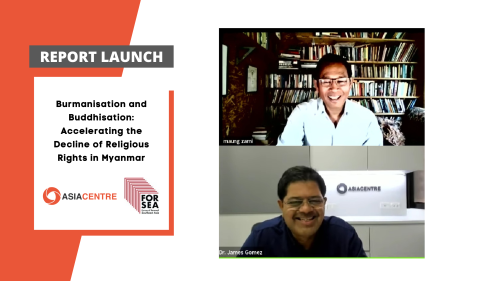
Asia Centre Launches Report on Burmanisation and Buddhisation
On 13 June 2023, Asia Centre and FORSEA held a virtual launch and discussion of Asia Centre’s latest report Burmanisation and Buddhisation: The Coup’s Impact on Religious Minorities. The event, which was hosted on FORSEA’s Youtube channel, received over 60 views within the first night. The report was first released online to the public and the media on 8 June 2023. The next day, The Online Citizen published an article, “Asia Centre highlights Myanmar’s alarming erosion of religious rights in new report.” Asia Centre was also invited to present the report at a closed-door meeting with representatives of INGOs and local partners interested in the state of FoRB in Myanmar. This meeting not only discussed the impacts of the 2021 coup on the state of Freedom of Religion or Belief (FoRB) in Myanmar and the ideologies of Burmanisation and Buddhisation, but also included a discussion about the impact of FoRB violations on indigenous peoples and their commitment to environmental protection. The key research findings were additionally promoted via an online campaign with infographics posted on Asia Centre’s social media platforms, Facebook, Linkedin, and Instagram. In less than a week of releasing the report online, there have already been over 1,500 downloads. In the report launch event, Dr. Gomez elaborated on the definitions of “Burmanisation and Buddhisation”, framing these two concepts as political ideologies of the Military in its pursuit of combatting terrorism and national security threats posed by the diverse ethno-religious communities of the nation. The discussion also brought comparisons between the situation in Myanmar with neighbouring countries such as Sri Lanka and Malaysia on the politicisation of national and religious identities to serve the aims of the ruling governments. The report launch also highlighted the recommendations that can be adopted by the international community, INGOs, and CSOs to reduce the impact of the coup on Religious Freedoms in Myanmar. While the government is strongly urged to review, repeal and amend laws that are discriminatory, NGOs and CSOs have an active role to monitor and report the infringement of rights by the state. The report aims to provide a baseline study on the state of freedom of religion or belief, and how developments related to the 2021 coup have impacted the rights of ethno-religious minorities. The policy report is part of Asia Centre’s FoRB Knowledge Hub efforts to publish evidence-based research and increase advocacy for the religious rights of people in Southeast Asia. Read the full report here. Watch the YouTube livestream recording here. Asia Centre is a civil society research institute in Special Consultative Status with the United Nations Economic and Social Council. It serves as a knowledge partner and undertakes evidence-based research as well as provides capacity-building training for end beneficiaries. If you would like to collaborate with the Centre, please send an expression of interest to contact@asiacentre.org.
Asia Centre and Oxfam Announce Fellows for the Oxfam Young Leaders Fellowship Programme 2023
Asia Centre and Oxfam in Asia are pleased to announce the fellows for the Oxfam Young Leaders Fellowship Programme 2023! The fellowship will provide tools to empower young people with hands-on training and close mentorship to strengthen their capacity to make social change happen. These individuals have been carefully chosen from a diverse pool of over 400 candidates hailing from Asia. These eight fellows represent a group of remarkable individuals who possess the vision and determination to bring about positive change within their respective societies. They have devised innovative ideas aimed at improving their communities and have taken steps towards implementing them. Their projects are focused on addressing pressing global issues, such as climate justice, women’s rights, and the preservation of civic space. Over the course of the next nine months, under the guidance and mentorship of Asia Centre and Oxfam, these fellows will carry out their transformative initiatives in their home countries. Dr James Gomez Regional Director, Asia Centre Congratulations to all the talented young people who have been selected for the Oxfam Young Leaders Fellowship Programme 2023! Your passion, innovative ideas, and commitment to social justice are commendable. This fellowship is a remarkable opportunity to make a real impact in addressing pressing issues such as inequality, climate change, and gender justice. Through mentorship, training, and international exposure, you will gain invaluable skills and connections to bring about positive change. Asia Centre eagerly looks forward to witnessing the incredible contributions you will make. Best of luck on this exciting journey! To know more about the fellows, download and read the Oxfam Fellowship – Meet The Fellows Booklet here.
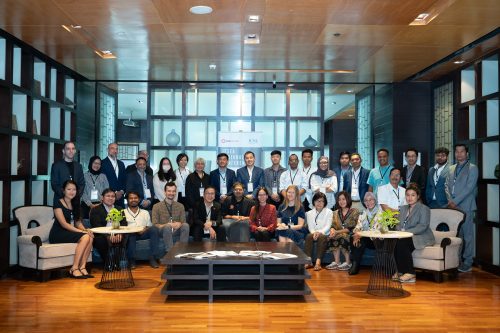
Coalitions, both regional and national, needed to promote and improve internet freedoms in Southeast Asia through legislative reform and media literacy training.
Advocacy for reforming key restrictive legislations and capacity-building, especially on media literacy, and the formation of regional and national coalitions are the top strategy choices to improve internet freedoms in Southeast Asia. These were the practical approaches identified by over 30 parliamentarians, UN agencies, representatives from CSOs and media associations across Southeast Asia who attended the “IFSEA (Internet Freedom in Southeast Asia) Regional Conference” co-convened by Asia Centre and the International Center for Not-for-Profit Law (ICNL) between 9–10 May 2023, in Bangkok, Thailand. The regional conference is a part of the wider IFSEA project undertaken by Asia Centre with the support of ICNL to assess the situation of internet freedoms in the region and improve digital rights through advocacy work, public engagement, UN human rights mechanism engagement and network-building. The Regional Conference was organised for the following purposes: to assess the situation of internet freedoms in the region; identify key trends; and find new solutions to improve freedoms of people in accessing and using the internet. To frame the conference and identify key trends of internet freedoms in the region, Asia Centre set the scene by outlining the overarching themes across its four reports on internet freedoms in Myanmar, Timor-Leste, Cambodia and Malaysia published between 2021-2023. Common themes across the reports were: the inclusion of “internet” as a human right; compliance with international standards of internet freedoms; measures taken by state authorities that violate and restrict internet freedoms; and the joint role of parliamentarians and CSOs in drafting rights-based legislation and establishing oversight mechanisms. The two-day conference included four panel discussions. The first panel “Internet as a Human Rights in Southeast Asia” assessed the necessary conditions for the use of the internet including infrastructure, fair access and affordability. In the second panel “International Standards of Internet Freedoms”, panellists and participants identified the gaps between international and national legislations in Southeast Asia. In the third panel – “Impacts of Internet Freedoms in Southeast Asia – speakers from CSOs pointed out that individuals, as well as organisations in Southeast Asia, are subjected to prosecution, censorship, and online harassment. In the last and fourth panel, parliamentarians and CSOs jointly spoke to the challenges facing their partnership and outlined how they can work better together. Following the panel discussions, the conference moved to group discussions to identify and prioritise strategies to ensure internet freedoms in Southeast Asia both at the regional and national levels. Guided by these discussions, a roadmap was plotted. At the regional level, the possibilities to undertake four main actions were established. First, CSOs shall form national and regional coalitions to arrive at a common understanding of access to the internet being a human right, to mutually learn from each other, and to mobilise stakeholders for policy intervention. Second, as individual organisations or as national and/or regional coalitions, CSOs should advocate and encourage governments to: (1) enhance monitoring mechanisms, (2) build human capacity to raise digital literacy, (3) invest in physical infrastructure expansion and lower prices, (4) localise community guidelines reflect positive cultural norms and (5) encourage context-specific and participatory content moderation practices by social media platforms, while acknowledging local languages and contexts. Additionally, when engaging MPs with these topics, CSOs should draft bills which can be presented to parliamentarians in order to increase the likelihood of parliamentarians taking them up for the necessary action. Third, discussants also noted the lack of political will to promote internet freedoms across the region. Thus, government representatives and MPs were urged to agree on access to the internet as a human right. Furthermore, parliamentarians were cajoled to openly collaborate with CSOs in the course of drafting relevant laws. In doing so, it was noted that it might be beneficial to foster cross-ministerial initiatives to design the laws in a holistic manner. In this way, the drafting process contributes to a sound legal system that improves internet freedoms. Fourth and finally, the participants agreed to national multi-stakeholder committees, situated outside the government, which include lawyers, journalists, CSOs and HRDs. Their task would be to exercise oversight over governmental actions and to raise awareness on internet freedoms. The regional conference brought the three-year IFSEA project nearer to its close. In the next 6 months, before the project officially ends, the Asia Centre IFSEA country project partners (CamboJA and Kyrss Network) will make UPR submissions and meet one last time to brainstorm possible future alliterations of the project. To find out more about the event and see more pictures, please see event pictures here and a TikTok Video. Asia Centre is a civil society research institute in Special Consultative Status with the United Nations Economic and Social Council. It serves as a knowledge partner and undertakes evidence-based research as well as provides capacity-building training for end beneficiaries. If you would like to collaborate with the Centre, please send an expression of interest to contact@asiacentre.org.
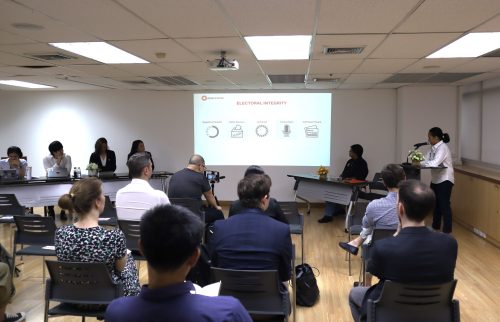
State-sponsored Disinformation To Impact Thailand’s Election Integrity
On 28 April 2023, Asia Centre held a discussion panel for the launch of its latest report “State-Sponsored Online Disinformation: Impact on Election Integrity in Thailand”. The discussion panel assesses how state-sponsored disinformation or Information Operations (IOs) impact Thailand’s electoral integrity. A week after releasing, Bangkok Post, an English-language daily newspaper, published an opinion piece, State Lies Hurt Election Integrity written by Dr James Gomez and Korbkusol Neelapaichit. Besides, the key research findings were also promoted via an online campaign with infographics posted on Asia Centre’s social media platforms, Facebook, Linkedin, Instagram, and Tiktok. The event, at the Centre’s Meeting Hub, was attended by representatives from diplomatic services, civil society organisations, human rights activists, lawyers, journalists and those from the tech sector. Korbkusol Neelapaichit, Researcher, Asia Centre who led the research for the report, highlighted four key impacts of state-sponsored disinformation on Thailand’s electoral integrity. First, using state resources to promote a positive image of the establishment undermines the integrity of elections since the government uses its incumbent advantage over opposition parties for positive electoral messaging. Second, IOs are weaponised to harass politicians and activists from marginalised groups such as women, LGBT+ and ethno-religious minorities, obstructing their meaningful electoral participation. Third, they distort information related to the electoral process and discredit selected political parties and their policies, depriving voters of verified alternative information for their decision-making. Fourth, state-sponsored disinformation stir hatred and exacerbate existing ideological divisions within society leading to extreme political polarisation. Moderated by Asia Centre’s Dr James Gomez, the findings were further discussed by Kunthika Nutcharut, Attorney from Krisadang Law and Accounting Office, Dr. Sipim Sornbanlang, Lecturer from Srinakharinwirot University, Akarachai Chaimaneekarakate, Legal Fellow from Thai Lawyers for Human Rights (TLHR) and Pornpen Khongkachonkiet, Director of Cross-Cultural Foundation. Kunthika Nutcharut pointed out how disinformation campaigns have been sponsored by the state from time to time to stir hatred in society. In the past, disinformation campaigns were disseminated via state-owned radio stations. Today, IOs are carried out online especially to attack human rights defenders and political activists. From a cyber security perspective, Dr. Sipim Sornbanlang provided insight into why the state sponsors IOs. She explained that the state agencies, especially the military, run IOs as part of their mission to protect the monarchy and state institutions. This stems from a perception that democratisation threatens national security. In line with the report findings, Akarachai Chaimaneekarakate described that IOs are strategised to attack both individuals and organisations. He validated his statement by sharing several legal cases, where there was evidence of state-supported information operations. However, he noted, there is no attempt to hold the state to account. Using examples from Thailand’s South where there is ongoing ethno-religious conflict, Pornpen Khongkachonkiet explained that IOs form part of state suppression of expression in the South. Such actions, she said, curtail meaningful political participation. In the report, Asia Centre recommends relevant stakeholders take the following key actions: restrain from undertaking information operations; identify state agencies and report the type and targets of information operations; focus on providing voters with reliable and verified electoral information; and take measures to ensure electoral integrity through free and fair elections. These and other measures will help cast a light on state-sanctioned information operations with a view to addressing their impact on election integrity and political participation. Read the full report here. You can also watch the TikTok video of the report launch event here. This report is Asia Centre’s third baseline study on Thailand. In June 2022, the Centre released its first report entitled Thailand Computer Crime Act: Restricting Digital Rights, Silencing Online Critics which reviews the provisions of the 2007 Computer Crime Act (CCA) and its 2017 amendment, as well as their impact on digital rights in Thailand. Later in August 2022, the Centre released its second report on Internet Freedoms in Thailand which reviews and analyses legislation that impacts internet freedoms in Thailand. Asia Centre is a civil society research institute in Special Consultative Status with the United Nations Economic and Social Council. It serves as a knowledge partner and undertakes evidence-based research as well as provides capacity-building training for end beneficiaries. If you would like to collaborate with the Centre, please send an expression of interest to contact@asiacentre.org.
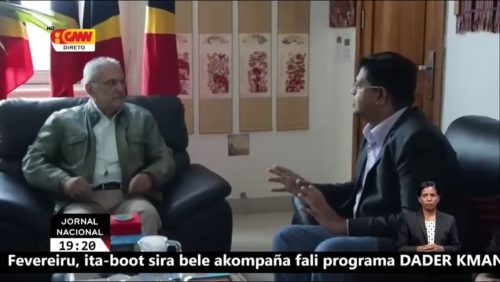
Asia Centre Engages Timor-Leste’s Political Leadership Over Internet Freedoms
From 13-17 February 2023, Dr. James Gomez, Asia Centre’s Regional Director, visited Dili, the capital city of Timor-Leste to engage with Timor-Leste’s political leadership, parliament and other stakeholders on the findings from Asia Centre and International Center for Not-for-Profit Law (ICNL)’s report Timor- Leste: Internet Freedoms Under Threat and to boost future collaboration with local stakeholders. Dr. Gomez kicked off his visit on 13 February 2023 with a bilateral meeting with President of the National Parliament, Aniceto Guterres Lopesthe. He handed over the report and discussed how the parliament had a role in improving Timor-Leste’s internet freedoms. While at the Parliament, Dr. Gomez was pleasantly surprised to learn from Pinto Cardoso, Director of Parliamentary Research and Advisory Office that the Asia Centre and ICNL report and Asia Centre’s op-ed in the Jakarta Post, “Timor-Leste’s Internet Freedoms at Risk”, was cited in a briefing note on the cyber security law to Parliament. From 14-16 February 2023, Dr. Gomez called on MP Antonio Tilman, Deputy-Secretary of the Board and member of the Kunto Party, Isabel Maria B.F. Ximenes (President of the Bench, Frente Mudanca), Antonio Benevedious, (President of the Bench, United Party for Development and Democracy (PUDD) and David Dias Ximenes, President of the Revolutionary Front for an Independent East Timor (FRETILIN) to discuss Asia Centre’s report on internet freedoms in Timor-Leste. The message was political parties and parliamentarians have a role in improving internet freedoms. The highlight of the trip was a meeting with the President of the Republic, Dr. José Manuel Ramos-Horta, at the Presidential Palace. The meeting was a closed-door meeting in which several issues were discussed including the findings from the Asia Centre and ICNL report. Following the meeting, Dr.Gomez addressed a media door-stop, in which he shared with journalists some public information on Asia Centre’s plans to engage with Timor-Leste’s universities and think-tanks. The meeting with President Ramos-Horta was widely covered over local media. During this trip, Dr. Gomez also visited Universidade da Paz (UNPAZ), a local private university and discussed with its representative possible future activities. Other stakeholders, Dr. Gomez met Virgilio da Silva Guterres Lamukan, Ombudsman, on 16 February 2023. All in all, Asia Centre’s engagement with the political leadership of Timor-Leste and other stakeholders set the framework of future cooperation with political parties, parliamentarians, the parliamentary secretariat and its research and policy unit, the government ombudsman, and representatives of Timorese think-tanks and universities. The report, in partnership with International Center for Not-for-Profit Law (ICNL), analyses the state of internet freedoms against the background of emerging national legislation pertaining to online content and privacy of data. Read the full report here. Asia Centre is a civil society research institute in Special Consultative Status with the United Nations Economic and Social Council. It serves as a knowledge partner and undertakes evidence-based research as well as provides capacity-building training for end beneficiaries. If you would like to collaborate with the Centre, please send an expression of interest to contact@asiacentre.org.
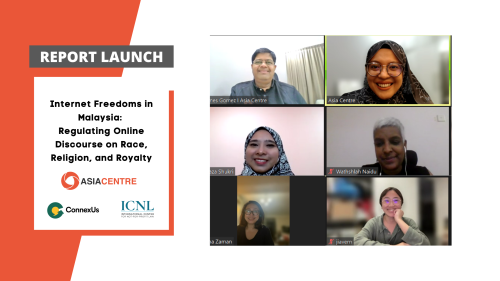
Asia Centre Launches Report on Internet Freedom in Malaysia
On 1 March 2023, Asia Center held a virtual launch and discussion of its latest report Internet Freedoms in Malaysia: Regulating Online Discourse on Race, Religion, and Royalty. The event drew over 60 participants and included members of academic institutions, representatives from civil society organisations, human rights activists, lawyers and journalists. The report was first released online to the public and the media on 16 January 2023. The next day, the Malay Mail published an article, Study: ‘Ultranationalist’ groups gaining traction in Malaysian online space following Umno’s defeat in 2018 polls | Malay Mail by Keertan Ayamany. In the afternoon, it also published an opinion piece, Internet freedom, an essential human right — James Gomez | Malay Mail by Dr James Gomez. The Vibes, published another opinion piece, Race, religion, and royalty to shape M’sian politics – James Gomez | Opinion | The Vibes also by Dr James Gomez. There were also two podcasts on the report. On 25 January 2023, Dr Gomez recorded a podcast discussion with Dina Zaman (a Malaysian commentator) moderated by ABC News journalist Ali Moore. The podcast was for a programme, Ear to Asia, produced by the Asia Institute, Melbourne University, that is also syndicated to the Jakarta Post. Similarly, on questions related to the findings of the report, on 28 January 2023, Dr. Gomez recorded a podcast interview with journalist Philip See for BFM’s podcast Pressing Matters: BFM: The Business Station – Podcast How Has Online Discourse Shaped Conversation On Sensitive Topics In Malaysia? that was published on 30 January 2023. The key research findings were additionally promoted via an online campaign with infographics posted on Asia Centre’s social media platforms, Facebook, Linkedin, Instagram, and Tiktok. This included an animated infographic video summarising the key arguments and recommendations of the report, and it was premiered during the report launch. When presenting the report during the launch, Dr. Gomez outlined Asia Centre’s recommendations that can be adopted by relevant government agencies, parliamentarians, the Human Rights Commission of Malaysia and NGOs, as well as tech companies to mitigate the obstruction of internet freedoms in Malaysia. While the government is strongly urged to review, repeal and amend laws that are detrimental to internet freedoms, parliamentarians, human rights advocates and NGOs have an active role to monitor and report the infringement of rights by the state. Tech companies are also urged to increase their transparency in dealing with the state to mitigate the biased removal of content on their platforms. Following the presentation during the report launch, the findings were discussed by Tham Jia Vern, Independent Researcher, #TrackerBenci Lead, Dr Syaza Shukri, Assistant Professor, IIUM, Dina Zaman, Co-founder, Iman Research, and Wathshlah Naidu, Executive Director, Center for Independent Journalism. The panel was moderated by Lina Sakina Salim, the centre coordinator of Asia Centre Malaysia. Tham Jia Vern discussed how approaches towards curbing hate speech online should be diversified beyond activating legal measures. By introducing her work in developing #trackerbenci, an AI-driven tracker identifying hate speech on Twitter, Jia Vern shared how technologies can be used positively to counter dangerous narratives online. Next, Dr Syaza elaborated on how GE15 was impacted by the different ideological views held by the Malays, namely – conservatism and populist Islam. She further added that while freedom of expression in the country has progressed over decades after Malaysia’s independence, it does not guarantee internet freedom for all. In her elaboration, Dina Zaman provided insights towards understanding the voting patterns of the majority Malays. Although social media has both negatively and positively mobilised the community during the election period, she opinionated that curbing dissenting voices through legal mechanisms may pose more significant harm than good. Sharing the results of CIJ’s social media monitoring of GE15, Wathshlah Naidu, showcased how hate speech and disinformation can be manifested in various forms online and addressed the need to provide better digital literacy which is accessible by all members of society. The report, in partnership with International Center for Not-for-Profit Law (ICNL), aims to provide a baseline study on the state of internet freedoms in Malaysia, and how socio-political developments related to race, religion and royalty has impacted the freedom of expression of its citizens. Read the full report here. Watch the Zoom recording of the event on our YouTube channel here. Asia Centre is a civil society research institute in Special Consultative Status with the United Nations Economic and Social Council. It serves as a knowledge partner and undertakes evidence-based research as well as provides capacity-building training for end beneficiaries. If you would like to collaborate with the Centre, please send an expression of interest to contact@asiacentre.org.
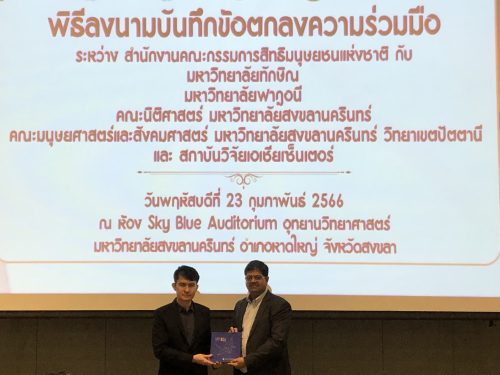
Asia Centre and National Human Rights Commission of Thailand Sign Cooperation Agreement
Sign Cooperation Agreement On 23 February 2023, Asia Centre and 4 other Southern Thailand academic institutions – Fatoni University, Thaksin University, Faculty of Humanities and Social Sciences, Prince of Songkla University (Pattani Campus), Faculty of Law, Prince of Songkla University – each signed a Memorandum of Cooperation (MoC) with the National Human Rights Commission of Thailand (NHRCT). Held at the Science Park, Prince of Songkla University and coordinated by NHRCT’s southern region office, the joint signing ceremony was witnessed by Assistant Professor Suchart Setthamalinee, National Human Rights Commissioner of Thailand and Professor Sirirurg Songsivilai, Permanent Secretary of the Ministry of Higher Education, Science Research and Innovation. The event was attended by key stakeholders in the southern of Thailand such as students, faculty members, media, Internal Security Operations Command (ISOC) and the Southern Border Provinces Administrative Centre (SBPAC). Asia Centre was represented by its regional director Dr. James Gomez, Centre Manager Patcharee Rattanarong, who was a witness to the MoC signing and Researcher Korbusol Neelapaichit who interpreted and coordinated the Centre’s participation at the event. All signatories, including Asia Centre, hosted a booth that showcased their work. After the signing ceremony and to kick-off the MoC implementation, a panel discussion was held with all the signatories to brainstorm possible ways of collaboration. All panellists agreed to utilise their strengths and capacities to drive the collaboration on promoting human rights works. Speaking for Asia Centre, Dr. James Gomez said the Centre can use its Southeast Asian expertise and networks to provide a regional perspective to addressing issues both in Southern Thailand and the country in general. Dr. Gomez, additionally announced that the Centre will be prepared to sign bilateral agreements with the other signatories to further strengthen cooperation in Southern Thailand. The MoC was signed following several years of prior collaboration between Asia Centre and NHRCT. In 2021, Asia Centre’s representatives participated in “The Official Launch of the Regional Center for Human Rights Study and Coordination” at the Faculty of Political Science, Ubon Ratchathani University. As a follow up, Dr. Gomez paid a courtesy call on Ms Prakayrat Tonteerawong, the National Human Rights Commissioner to exchange views on possible collaborations. As part of Asia Centre-NHRCT continued engagement, Ms. Pornprapai Ganjanarintr, Chairperson of the National Human Rights Commission of Thailand spoke at the Centre’s report launch of “Infodemic and SDGs: Internet Freedoms in Southeast Asia”. In October 2022, Asia Centre held a consultation session with the Office of NHRCT Southern Region office to understand the key human rights issues affecting Southern Thailand. These activities led to the signing of the MoC between Asia Centre and NHRCT. Given the strong interest, it is expected that the Centre will also sign further MoUs with other partners in Southern Thailand. A video of the signing ceremony is available on Asia Centre’s Facebook Page. Asia Centre is a civil society research institute in Special Consultative Status with the United Nations Economic and Social Council. It serves as a knowledge partner and undertakes evidence-based research as well as provides capacity-building training for end beneficiaries. If you would like to collaborate with the Centre, please send an expression of interest to contact@asiacentre.org.
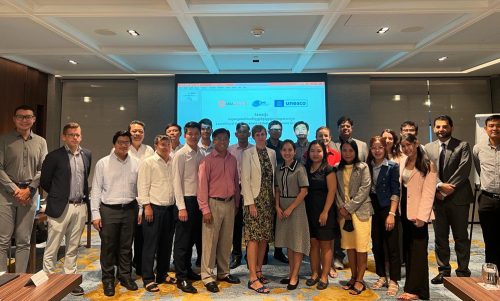
Asia Centre Leads UNESCO Media Assessment in Cambodia
On 3 February 2023, Asia Centre’s Dr. James Gomez presented the research plan for the project “Assessment of Media Development in Cambodia” to officials from the Royal Government of Cambodia, representatives and journalists from media organisations and representatives of civil society organisations who are part of a National Steering Committee (NSC) set up to support the assessment effort. The Assessment, led by Asia Centre, is being undertaken in partnership with the UNESCO Office in Phnom Penh and the Department of Media and Communication (DMC) of the Royal University of Phnom Penh (RUPP). It is an evaluation of Cambodia’s media development landscape that examines the legal framework and challenges media professionals face in their day-to-day tasks. The Assessment is supported by the Swedish International Development Cooperation Agency (SIDA). Asia Centre will apply UNESCO’s Media Development Indicators (MDIs) for the assessment. The MDIs were developed to provide a framework to evaluate the role media contributes in good governance and the democratic development of a country. There are 50 indicators and hundreds of sub-indicators arranged into five categories that take into account all aspects of the media development environment. The five categories are (1) the system of media-related regulation; (2) the plurality and diversity of the media sector; (3) the role of media as a platform for democratic discourse; (4) professional capacity building and supporting institutions for media professionals; and (5) infrastructural capacities. Convened at the Hyatt Regency Phnom Penh Hotel, participants of the “Inception Meeting of the NSC” were welcomed by Sardar Umar Alam, UNESCO Representative to Cambodia and Camilla M. Ottosson, Minister Counsellor and Head of Section Office, Embassy of Sweden in Phnom Penh. This was followed by a presentation on the UNESCO Media Development Indicators by Toby Medel, Executive Director, Centre for Law and Democracy. As the Lead Expert for the project, Dr. Gomez presented the research approach and work plan, including the significance of the MDI assessment in Cambodia and past Centre expertise and experience working on related issues in Cambodia and the region. Asia Centre’s MDIs Assessment for Cambodia builds on its previous media-related work on Cambodia. This includes Asia Centre’s baseline study Internet Freedoms in Cambodia: A Gateway to Control, an interview piece “Journalists’ Freedoms Can Be Re-Ignited” (March 2022) and an op-ed “Data Protection Can Address Online Self-Censorship” (September 2019) for Cambodianess, among many more. The Centre has also made an oral statement to the UN Human Rights Council (2022) on the human rights situation in Cambodia based on its evidence-based research. Following the presentation of the research plan, Asia Centre will commence research for the assessment. This includes initial desk research and will be followed by fieldwork in Cambodia – surveys conducted among the Cambodian public, interviews with key informants in the country’s media sectors and a number of focus group discussions with relevant stakeholders. The report will be launched in late 2023. As cooperation with Cambodian partners is essential in the Centre’s projects in the country, the Centre has also initiated a series of MoUs to collaborate on research outputs and capacity-building in Cambodia. Cambodian organisations with whom the Asia Centre is in discussion include the Cambodian Journalist Alliance Association (CamboJA), the Cambodian Center for Independent Media (CCIM), and Transparency International Cambodia. Asia Centre is a civil society research institute in Special Consultative Status with the United Nations Economic and Social Council. It serves as a knowledge partner and undertakes evidence-based research as well as provides capacity-building training for end beneficiaries. If you would like to collaborate with the Centre, please send an expression of interest to contact@asiacentre.org.
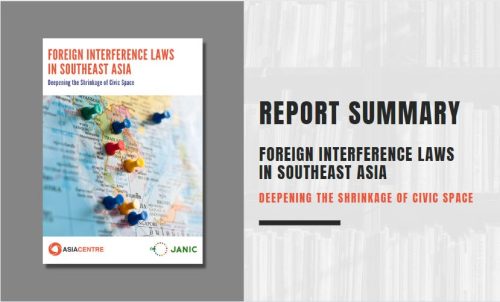
Report Summary — Foreign Interference Laws in Southeast Asia: Deepening the Shrinkage of Civic Space
Foreign Interference Laws (FILs) have a legitimate use in safeguarding democracy. Authoritarian regimes, however, tend to abuse FILs and employ the rhetoric of ‘foreign interference’ to shrink civic space, control ideas and perpetuate regimes’ status quo. This is the case for Southeast Asia. The threat of international actors calling out Southeast Asian countries’ democratic and human rights lapses by supporting the work of national CSOs is leading to the introduction of FILs to counteract such efforts. In light of this, Asia Centre, in collaboration with Japan NGO Center for International Cooperation (JANIC), released Foreign Interference Laws in Southeast Asia: Deepening the Shrinkage of Civic Space. The report reviews developments in laws in Southeast Asia that seek to curb the role of international actors and their support for CSOs that work on democracy and human rights issues. FILs are emerging in Southeast Asia as part of a larger move among authoritarian countries to curb the activities of civil society working on democracy and human rights. Chapter 1 ‘Introduction’ of the report examines the rhetoric of ‘foreign interference’ and the global emergence of FILs and characteristics of FILs that are increasingly common in authoritarian countries. Several authoritarian countries in Southeast Asia already have in place laws that restrict the operation of CSOs that work on issues related to democracy and human rights. However, none of these laws explicitly makes most use of the rhetoric of ‘foreign interference’ like Singapore’s Foreign Interference (Countermeasures) Act 2021. Chapter 2 ‘Foreign Interference Laws in Southeast Asia’ argues that the Act provides a blueprint for Non-Interference Laws that authoritarian regimes in the region are developing. It reviews the existing NGO laws and the ongoing legal developments of FILs in the region. The abuse of the foreign interference provisions and laws have impacted cross-border collaboration and partnership. The impacts are reviewed in Chapter 3 ‘Impact on Cross-border Collaboration and Partnerships.’ They include: shutting down INGOs and NGOs; blocking international funding; engaging in public rebuke of foreign governments, INGOs, CSO and individuals; the shift by international actors to government partnerships; and relocating their offices to other countries and adopting remote working. Overall such measures have led to a shrinking of civic space in Southeast Asia. To mitigate such impacts, Chapter 4 ‘Recommendations’ lists a number of recommendations to pre-emptively counter potential damage of these laws on the existence of cross-border collaboration. It suggests that governments should end unsubstantiated and negative rhetoric of ‘foreign interference’, repeal, amend, or clarify FILs. Additionally, UN human rights mechanisms should seek clarity from member states regarding FILs. INGOs and CSOs should call out transgressions of foreign interference laws and strive to become self-sustainable. Asia Centre’s report Foreign Interference Laws in Southeast Asia: Deepening the Shrinkage of Civic Space was produced in partnership with the Japanese NGO Center for International Cooperation (JANIC) under the initiative ‘Defending Democracy and Civic Space in Asia’. This project includes partners from across Asia: Asia Centre, Pakistan Development Alliance, Voluntary Action Network India, Centre for Human Rights and Development Mongolia and INHURED International. To read the full report, click. For any inquiries regarding the report and collaboration on research, please contact research@asaicentre.org.
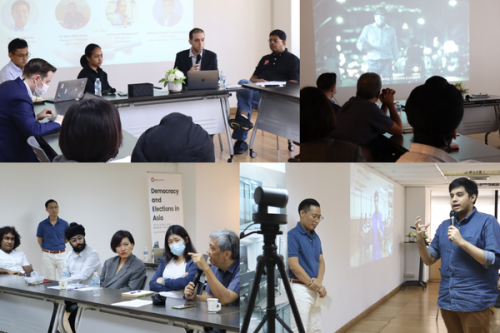
Internet Freedoms in the Asia-Pacific Region are Under Threat
On 14 January 2023, Asia Centre organised the Asia-Pacific Digital Rights Forum in partnership with EngageMedia to discuss the state of internet freedoms in Asia-Pacific and why they are shrinking as a result of legal and non-legal measures taken by governments and non-state actors alike. The forum was attended by 29 people – including participants and speakers – from various sectors, including online media organisations and journalists, lawyers, representatives of INGOs, UNDP representatives, researchers, and members of academic institutions. The forum kicked off with an Asia Centre panel Internet Freedoms in Southeast Asia and Thailand, moderated by Dr Marc Piñol, Research Manager at Asia Centre. The panellists included Asia Centre’s Regional Director Dr James Gomez and Korbkusol Neelapaichit, Researcher at Asia Centre. Dr Gomez pointed to a set of legal and non-legal mechanisms adopted by governments that are undermining internet freedoms in the region and, consequently, are making democracy backtrack in Southeast Asia. He also highlighted how some governments are increasingly using fake news laws to criminalise the actions of political opponents, human rights activists, journalists and media organisations, and how that leads to self-censorship. Focusing on Thailand, Neelapaichit added that the discriminatory measures introduced by Dr Gomez are also being used by non-state actors, such as private companies, to attack human rights defenders, journalists and civil society organisations. Neelapaichit predicted that the use of these measures will persist in 2023, and its impacts will increase. Saittawut Yutthaworakool, a PhD candidate from the Asian Institute of Technology, commented on Dr Gomez and Neelapaichit’s inputs, highlighting the impact that internet laws in Thailand, like the Computer Crime Act, Strategic Lawsuit Against Public Participation (SLAPP) and the non-legal military-led Information Operations (IOs), have on gender. The panel concluded with a fruitful Q&A session that triggered a lively discussion among participants in the session. Following the panel discussion, four short films or ‘tech tales’ produced by EngageMedia in collaboration with filmmakers across the Asia-Pacific were screened. The films touched upon digital rights issues in Cambodia, Indonesia, Myanmar, and Thailand. After the screening, participants joined a regional virtual regional with participants from Bangladesh, Indonesia, Malaysia, and the Philippines. Asia Centre’s Research Associate Ekmongkhon Puridej and danah boyd, a partner researcher at Microsoft Research, founder and president of Data & Society Research Institute, visiting scholar at New York University, joined the rapporteurs from the other four countries in sharing the outputs from the session held in Bangkok. They also discussed the future trends of digital authoritarianism in Asia. The event concluded with a networking session for all participants in the forum to exchange their views with one another and expand their networks. Asia Centre is a research institute in Special Consultative Status with the United Nations Economic and Social Council. It was founded in Bangkok, Thailand, in 2015 and a second office was established in Johor Bahru, Malaysia, in 2018. Asia Centre serves as a knowledge partner and undertakes evidence-based research to publish baseline studies and policy toolkits. It also provides training and capacity-building programmes for end beneficiaries such as government officials and universities.
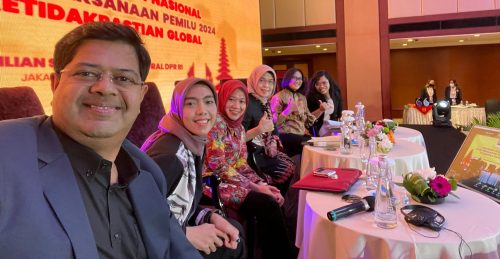
Asia Centre at Indonesia’s Parliamentary Seminar
On 27 January 2023, Dr James Gomez delivered a presentation at the “National Economic Prospects & Preparation for 2024 General Election in Indonesia Amidst Global Uncertainty” seminar hosted by the Parliamentary Expert Agency, Republic of Indonesia for its Memorandum of Understanding (MoU) stakeholders. Speaking on the topic “Southeast Asia’s Recovery Amidst Global Uncertainties: The Role of Tertiary Institutions”, Dr Gomez reflected on how tertiary institutions in Southeast Asia risk losing their relevance as they face a decline in quality and enrollment in a post-pandemic era today. A shift of approach is needed through active collaboration and innovation across all sectors of society in addressing the fundamental questions, “who contributes to the development of the individual? – Are we looking for an effective member of society or the economy?”. Asia Centre engagement with The Expertise Agency of The House of Representatives of The Republic of Indonesia is based on a 5-year MoU signed on 14 March 2022 to jointly undertake the publishing of research outputs, execute teaching and training programmes, develop course outlines and materials, and support each other to promote joint activities. The MoU was signed following some initial years of engagements between the two organisations. The current Head of Parliamentary Expertise Agency at the Nusantara, Dr Inosentius Samsul S.H, M. Hum, first participated in Asia Centre’s 3rd International Conference on Businesses in Human Rights in 2018 and later in Asia Centre’s 6th and 7th Conferences in 2021-2022 as a panel partner. To read more about the MoU Signing with The Indonesian Parliament’s Expert Agency, please visit the link here.
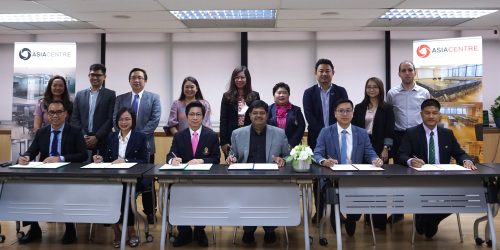
Asia Centre signs MoU with 5 Thai Universities
On 12 January 2023, Asia Centre and 5 Thai universities including Maejo University, Rajamangala University of Technology Suvarnabhumi, Chulalongkorn University, Prince of Songkla University and Uttaradit Rajabhat University signed an Memorandum of Understanding (MoU) to strengthen their cooperation on ASEAN Digital Literacy Programme and explore opportunities for future collaboration including other joint activities and research outputs. The signing was witnessed by Google’s Asia-Pacific Information Policy Lead, Jean-Jacques Sahel and the Head of Programme at ASEAN Foundation, Mahmudi Yusbi. The MoU was signed following the completion of the first part of ASEAN Digital Literacy Programme which was launched in partnership with ASEAN Foundation and with the support from Google.org since August 2022. In December 2022, the Centre and the 5 university partners successfully held in-person Master Trainer Trainings across Thailand and trained over 120 master trainers of diverse backgrounds on information disorder and tools to combat disinformation. (Details of these in-person Master Trainer Trainings can be accessed in this article on the Centre’s website.) Following the signing of the joint MOU, and to achieve the prorgamme’s objectives, the Centre and the universities will be working closely to deliver media and information literacy training for 8,000 end beneficiaries. With the partner institutions’ expertise, strategic location and strong connection with local communities, the end beneficiaries will comprise not only their undergraduate students and staff but also high school students and vulnerable individuals across the country. A photo album of the signing ceremony is available on Asia Centre’s Facebook Page. If you are interested to collaborate with the Asia Centre or access its expertise in the area of disinformation and media literacy, do send an email to contact@asiacentre.org.