
Asia Centre Delivers Digital Literacy to over 100 Master Trainers
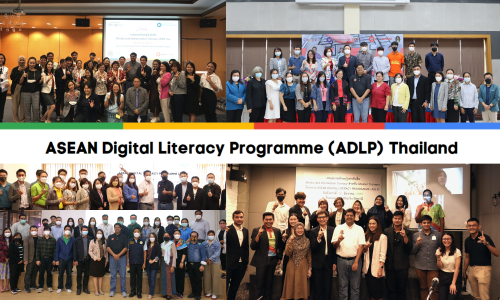
In December 2022, Asia Centre successfully delivered 5 training sessions to over 100 Master Trainers in Thailand. The thrust of the training involved helping Thai participants to go beyond click-bait disinformation, recognise other types of disinformation that encompass hate speech, political and state-sponsored fake news and use the appropriate tools (fact-checking, quality journalism, media literacy and ethics) to deal with them. To this end, Asia Centre, in collaboration with ASEAN Foundation and with support from Google.org, formed a consortium with Uttaradit Rajabhat University, Rajamangala University of Technology Suvarnabhumi, Prince of Songkla University, Maejo University, and Chulalongkorn University to deliver the “ASEAN Digital Literacy Programme (ASEANDLP). The Programme is part of a region-wide effort to produce capable trainers who can raise awareness and take action against disinformation and fake news. The first training (see TikTok and Photo Album) kicked off on 9 December 2022 at Uttaradit Rajabhat University in Uttaradit province in northern Thailand, joined by 23 participants that included academic staff of the university, teachers from neighbouring primary and secondary schools, government officers from provincials public health office and Uttaradit Shelter for Children and Families under the Ministry of Social Development and Human Security and youth leaders. The following week on 12 December 2022, the second training session (see TikTok and Photo Album) was held at Rajamangala University of Technology Suvarnabhumi(RUS) and attended by 24 participants from the institute of research and development, department of student affairs and various faculties, including agricultural, education, engineering and architecture, liberal arts and science and technology. Few were based in Rajamangala University of Technology’s other nearby campuses, such as Wasukri, Suphanburi and Nonthaburi. The overview of the training was also reported in the news section of RUS’ official website. The trainings picked up pace from 20 December when the third training session (see TikTok and Photo Album) was convened by Prince of Songkla University (PSU) (Pattani). Comprised of 18 people, 15 onsite and 3 online participants from Phatthalung and Narathiwat provinces. They included lecturers, primary school teachers and heads of student organisations and heralded largely from PSU’s Faculty of Education and Walailak University. A number of participants were Muslims reflecting the religious demographic of the Thai South. On the next day, on 21 December, the fourth training session with 23 participants (see TikTok and Photo Album) was held at the Central Library of Maejo University (Chiang Mai) and joined by academic staff from the Faculty of Information & Communication, Faculty of Science, Faculty of Fisheries Technology and Aquatic Resources, Faculty of Liberal Arts, and Faculty of Nursing. The training session also attracted academics from Maejo University’s other provincial campuses, such as Maejo University Phrae Campus and Maejo University Chumphon Campus. 22 December was the last MT training session in Thailand, and it was held at Chulalongkorn University (Bangkok) (see TikTok and Photo Album) for 27 participants. Hosted by the Faculty of Communication Arts, apart from its own academic staff, others included participants from other universities and academic institutes in Bangkok and other provinces such as Nakhon Pathom, Nakhon Si Thammarat (Southern Thailand) and Nonthaburi. Rangsit University, Dhurakij Pundit University, Phranakhon Rajabhat University, Nakhon Si Thammarat Rajabhat University, Panyapiwat Institute of Management, Thammasat University, Nakhon Pathom Rajabhat University, Suan Sunandha Rajabhat University, Mahidol University International College, Ramkhamhaeng University. The training also attracts attendees from the governmental Digital Economy Promotion Agency, media sectors such as the Thai Journalists Association and Thai PBS, and the business sector, especially tech companies. With these on-site training sessions completed, the Master Trainers will move on to deliver training for approximately 100 end beneficiaries each to complete the programme and receive their certificate of completion. An outcome of this consortium approach to delivering the training sessions is that Asia Centre and the five universities will sign a joint MoU on 12 January 2023 in Bangkok, Thailand. The aim is to explore further partnerships to undertake joint media literacy and other related activities. If you are interested to collaborate with the Asia Centre or access its expertise in the area of disinformation and media literacy, do email contact@asiacentre.org
Asia Centre and International IDEA Sign MoU
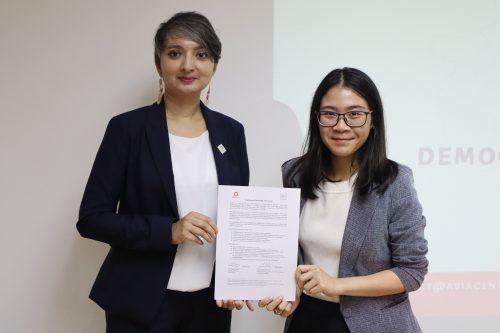
On 8 December 2022, Asia Centre and International IDEA signed a Memorandum of Understanding (MoU). The MoU established a formal partnership between the two organisations and facilitated a specific agreement to be partners for Asia Centre’s International Conference on Democracy and Elections in Asia, to be held in Bangkok, 23-25 August 2023. Click here to learn more about the 8th International Conference. Nalinrat Tingoum, Programme Coordinator of Asia Centre, and Seema Shah, Head of Democracy Assessment Expertise of International IDEA, exchanged the agreement for the two organisations to co-partner for Asia Centre’s 8th International Conference. The “exchange” took place during the 8 December 2022 Asia Centre and International IDEA closed-door consultation on ‘Digital Authoritarianism in Southeast Asia’. The consultation gathered more than 20 participants from diplomatic missions, UN agencies, INGOs, CSOs and new media experts who track digital authoritarianism in the region. Among the issues discussed were the trend towards segregating the internet, the type of digital attacks authoritarian regimes mount on the internet, the weaponisation of internet-related laws against individuals and CSOs and the increasing surveillance of online activities. The consultation members also noted that the issues of digital authoritarianism through the use of internet laws, internet shutdowns, single gateway and state-sponsored disinformation have become more critical in Southeast Asia as the region heads toward elections in 2023 and 2024. One key recommendation was the need to build a coalition of stakeholders from different sectors to devote more effort to keeping the internet as a “free space”. Hence, it was noted as timely that both Asia Centre and International IDEA are partnering for the Centre’s 8th International Conference on Democracy and Elections in Asia, 23-25 August 2023. This partnership was seen as the starting of future collaborations and the expansion to include more partners. One of the activities leading up to the MoU was Asia Centre’s Dr. James Gomez’s participation in the Democracy in Asia and the Pacific 2023 Outlook Forum held by International IDEA and the Association for Elections and Democracy (Perludem) on 5-6 December 2022 in Bali, Indonesia. In the Forum’s Session 5 ‘Disinformation and Media Integrity’, Dr. Gomez delivered a presentation on the rise of disinformation and its relation to the distrust in media. The idea to explore collaboration between the two organisations began when Leena Rikkila Tamang, Director of Asia and the Pacific Programme of International IDEA visited Asia Centre on 7 October 2022 to discuss plans for possible joint projects including baseline studies, seminars and partnering on Asia Centre’s 8th International Conference. International IDEA is Asia Centre’s 2nd title partner to co-convene the 8th International Conference. During the 7th International Conference, Asia Centre signed a co-convening agreement with the Faculty of Political Science and Public Administration, Chiang Mai University. Click here to read the write-up of the MoU with Chiang Mai University. If you would like to collaborate with Asia Centre and sign an MoU, email us at contact@asiacentre.org.
Asia Centre Kicks-off Media and Information Literacy (MIL) Trainings in Malaysia
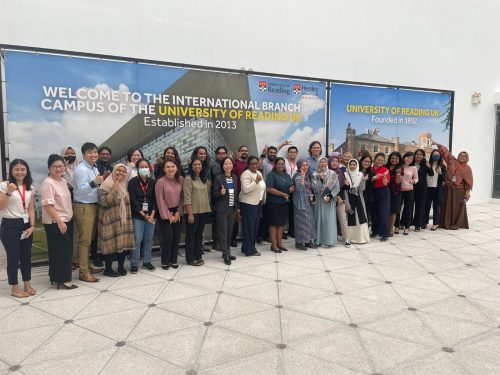
Asia Centre has begun convening Media and Information Literacy (MIL) Trainings for Master Trainers in Malaysia. In collaboration with Google and ASEAN Foundation, these trainings, which make up the “ASEAN Digital Literacy Programme (ADLP)”, seek to build resilience against disinformation among underserved communities in Malaysia. Aiming to train around 200 people, the first training session was held on the 23rd of November 2022 for 32 academic staff of the University of Reading Malaysia (UoRM), followed by another joint session with the International Islamic University of Malaysia (IIUM), UniKL and Taylor’s University Malaysia for its 15 students and lecturers. The training were led by Asia Centre’s regional director Dr James Gomez, who is a communication academic and policy expert and supported by the Centre’s team that included Nalinrat Tingoum, Program Coordinator, Korbkusol Neelapaichit, Research Coordinator and Lina Sakina Salim, Asia Centre Malaysia Coordinator. The Master Training comprises two parts: part 1 constitutes a total of 20 hours of instruction and learning, and part 2 constitutes the delivery of 3 hours of training to 100 end beneficiaries per master trainer. The 20 hours of instruction are delivered both online and on-site; Fourteen hours are online including the prerequisite 3 hours of pre-training readings, 1 hour of pre-evaluation, followed by 5 hours of online self-study, 3 hours session of preparation for EB Training and last 2 hours of evaluation as well as 6 hours of onsite training. The 6 hours on-site allows Master Trainers to acquire insights and skills in tackling disinformation through two instruction sections: Media and Information Literacy Evolving perception of mass media and the rising popularity of social media Malaysia’s statistics on social media presence and usage Advantages and Disadvantages of Internet and Social Media Platforms Types of information disorders, with a special focus on Disinformation Online Safety Types of Disinformation Tactics of Disinformation; algorithms, filter business, coded messaging and deep fakes Ways of Tackling Disinformation The on-site training also includes interactive sessions where participants identify real-life examples of disinformation in Malaysia, examine how such incidents impact the public, assess any weakness in current measures to combat disinformation and propose solutions to improve the situation. During the training, participants from the University of Reading Malaysia, in their interactive sessions, cited examples of the false ‘Melaka Disneyland news’, ‘Poodle and Romance Scams’ and conflicting reports by Astro Awani and CNA regarding the appointment of Anwar Ibrahim as the new Malaysian Prime Minister’. Meanwhile, the joint session between IIUM, UniKL and Taylor’s University cited examples of the Tiktok viral videos circulated during the 15th General Election and false COVID-19 testing methods and reflected upon strategies political parties and their supporters used for campaigning through social media, particularly in reaching out to the younger demographics. The training sessions ended with a briefing on the delivery of End Beneficiaries Training, informing participants of the expected deliverables post-training, mainly to conduct a 3 hours programme for 100 end beneficiaries, consisting of 1 hour Pre-Reading, 1 hour online training and 1 hour post evaluation. Following the two trainings and to pitch more master training sessions, the Asia Centre team visited Tunku Abdul Rahman University of Management and Technology (TAR UMT) and INTI International University & Colleges (Nilai Campus) on 25 November 2022 to discuss potential partnerships for the MIL (ToT) training. TAR UMT has expressed interest in partnering with Asia Centre to provide MIL training for Trainers to its (i) academic staff under the Centre for Continuing and Professional Education (CPE) and (ii) student leaders through the Student Career Development Centre (SCDC). Meanwhile, INTI has indicated its preference to partner with Asia Centre in hosting the MIL training for Trainers for the university campuses within Nilai, Negeri Sembilan, such as the Islamic Science University of Malaysia (USIM) and Manipal International University (MIU). Both institutions have also offered to connect Asia Centre to their respective branches around Malaysia to assist in expanding the outreach. Asia Centre looks forward to delivering more master training sessions in the next few months and supporting these trainers to deliver their End Beneficiaries Training within their communities. If you are personally interested in this training or want to bring this training to your institutions, sign up to indicate your interest here, or visit our Facebook page.
Regional Parliamentary Network on BHR ‘Important’, Say Lawmakers
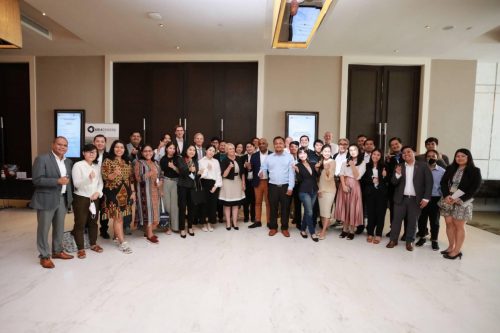
A regional network where lawmakers and political party representatives could undertake research, coordinate advocacy, exchange best practices and develop capacity among one another will contribute to the duty of the state to protect human rights as set out by the UN Guiding Principles on Business and Human Rights (BHR). This has not yet existed. This was the gap identified by parliamentarians across Southeast and East Asia in the training ‘Business and Human Rights for Parliamentary and Political Party Representatives’ organised by Asia Centre with the support of Friedrich Naumann Foundation (FNF) Southeast and East Asia from 28–30 November 2022. Following through the findings of the book Business and Human Rights in Southeast Asia: Developing National Action Plans (2021) edited by Asia Centre with the support of FNF, the training was participated by lawmakers from Cambodia, Indonesia, Philippines, Mongolia, Singapore, Taiwan, Timor-Leste and Thailand, as well as representatives from the Council of Asian Liberals and Democrats (CALD) and the ASEAN Parliamentarians for Human Rights (APHR). The event was joined by trainers with expertise in BHR who developed parliamentarians’ understanding of BHR, relevant international standards, and the implementation progress of the agenda in the region. The training also included discussions on BHR as it relates to urban development and housing, on the intersection of religious freedom and BHR, and on the roles of Human Rights Defenders in ensuring businesses comply with human rights standards. These discussions focused on where parliamentarians should be placed in scrutinising BHR implementation. The final session of the training provided an opportunity for participants to opine on the way forward. Crystallising the training sessions and the various side conversations they had with their regional colleagues, lawmakers indicated a clear need for a platform where they could undertake situational assessments, coordinate advocacy, engage business stakeholders, raise awareness among the population and build the capacity of implementers. Such a platform – a ‘Regional Parliamentary Network on Business and Human Rights’ – would be a first for the region. A Network already existed in the civil society sector, and the progress of a ‘BHR Treaty’ at the UN level has provided a good opportunity for parliamentarians to step up as one key player in this area. James Gomez, Regional Director, Asia Centre, concluding the 2-day training, remarked on the next steps that should be taken to form a base for further regional action. A baseline assessment will be needed to identify the needs of the region and current resources. Capacity-building will be required; and monitoring is also crucial – parliaments are to serve as watchdogs for compliance of the business sector and the government to the BHR guidelines. All in all, this would require finding parliamentary ‘champions’ across the region that, in concert, could advocate the BHR agenda. This training built upon its 3rd International Conference (2018): “Business and Human Rights: Holding Governments Accountable in Asia” and Asia Centre books Business and Human Rights in Asia: The Duty of the State to Protect (2020) and Business and Human Rights in Southeast Asia: Developing National Action Plans (2021). To find out more about the event, read the event concept note and the event programme. See pictures taken from the event on Asia Centre’s LinkedIn page. Asia Centre is a civil society research institute established in 2015 in Bangkok, Thailand. It works on issues of business and human rights, freedom of expression and democracy in Asia. If you would like to collaborate with the Centre, send an expression of interest to contact@asiacentre.org.
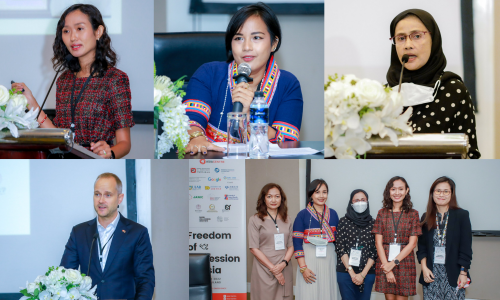
รายงานเวทีเสวนา: ผู้หญิงนักปกป้องสิทธิมนุษยชนในไทย
หัวข้อเสวนา: ผู้หญิงนักปกป้องสิทธิมนุษยชนในไทยองค์กร: สถานเอกอัคราชทูตสวิตเซอร์แลนด์ประจำประเทศไทยกิจกรรม: งานประชุมนานาชาติครั้งที่ 7 ของสถาบันวิจัย Asia Centre ในหัวข้อ Freedom of Expression in Asiaวันที่/เวลา: 25 ตุลาคม 2565 11.00 น. ถึง 12.30 น.สถานที่: โรงแรม Radisson Blu Plaza Bangkok พิธีกล่าวต้อนรับ เมื่อวันที่ 25 สิงหาคม 2565 Conradin Rasi อุปทูตรักษาราชการชั่วคราวของสถานเอกอัคราชทูตสวิตเซอร์แลนด์ประจำประเทศไทย กล่าวในพิธีเปิดงานงานประชุมว่า รัฐบาลสวิตเซอร์แลนด์ให้ความสำคัญกับการปกป้องสิทธิมนุษยชนในประเทศและต่างแดน โดยกำหนดให้ประเด็นต่อไปนี้มีความสำคัญลำดับต้นในด้านสิทธิมนุษยชนของประเทศ 1) การยกเลิกโทษประหารชีวิต 2) การต่อต้านการทารุณกรรม 3) การปกป้องชนกลุ่มน้อย 4) การปกป้องเสรีภาพในการแสดงออก เขาอธิบายว่าเสรีภาพในการแสดงออกเปรียบเสมือนเสาหลักที่คอยค้ำจุนกระบวนการประชาธิปไตยในสังคมที่มีความหลากหลายอย่างสวิตเซอร์แลนด์ เขาเน้นย้ำว่าเสรีภาพในการแสดงออกกำลังตกอยู่ภายใต้แรงกดดันที่เพิ่มมากขึ้นและตระหนักถึงบทบาทของนักปกป้องสิทธิมนุษยชนในการส่งเสริมและปกป้องเสรีภาพในการแสดงออก สถานเอกอัคราชทูตจึงยินดีเป็นอย่างยิ่งที่ได้สนับสนุนงานประชุมนานาชาติของ Asia Centre และเวทีเสวนาหัวข้อผู้หญิงนักปกป้องสิทธิมนุษยชนในไทย เวทีเสวนาหัวข้อผู้หญิงนักปกป้องสิทธิมนุษยชนในไทย โดยสถานเอกอัคราชทูตสวิตเซอร์แลนด์ประจำประเทศไทย ผู้ร่วมเสวนาได้แก่ คุณอังคณา นีละไพจิตร ผู้เชี่ยวชาญของสหประชาชาติด้านการบังคับหรือสูญหายโดยไม่สมัครใจและอดีตกรรมการสิทธิมนุษยชนแห่งชาติ และคุณชลธิชา แจ้งเร็วจากกลุ่มฟื้นฟูประชาธิปไตย ดร. สุรัชนี ศรีใยจากคณะรัฐศาสตร์ จุฬาลงกรณ์มหาวิทยาลัย รับหน้าที่เป็นพิธีกร อังคณา นีละไพจิตร อังคณาเริ่มต้นโดยตั้งข้อสังเกตต่อเหตุโจมตีผู้หญิงนักปกป้องสิทธิมนุษยชน (WHRDs)ในไทย ในอดีต ผู้หญิงนักปกป้องสิทธิฯ ถูกข่มขู่โดยการทำร้ายร่างกาย แต่ในปัจจุบันผู้หญิงนักปกป้องสิทธิฯ จำนวนเพิ่มขึ้นต้องเผชิญกับการคุกคามผ่านกระบวนการยุติธรรมโดยภาครัฐและตัวแสดงที่ไม่ใช่ภาครัฐ นอกจากนี้ ในช่วงไม่กี่ปีที่ผ่านมา การคุกคามออนไลน์โดยปฏิบัติการข่าวสาร (Information Operations – IOs) ที่ได้รับการสนับสนุนจากรัฐยังได้ก่อตัวเป็นวิธีการโจมตีรูปแบบใหม่ เธอยกตัวอย่างการโจมตีสามประเภทที่เธอต้องทุกข์ทน สำหรับการทำร้ายทางกายภาพ เธอเล่าว่ารถของเธอถูกปากรรไกรใส่จนได้รับความเสียหายในเช้าตรู่ของวันที่ 12 เมษายน 2565 เธอเชื่อว่าผู้ก่อเหตุกระทำการดังกล่าวเพื่อแสดงความไม่พอใจต่อการรณรงค์ด้านสิทธิมนุษยชนของเธอ ในกรณีการคุมคามผ่านกระบวนการยุติธรรม เธอถูกบริษัทแห่งหนึ่งฟ้องข้อหาหมิ่นประมาท เนื่องจากบริษัทดังกล่าวถูกกล่าวหาว่าบังคับใช้แรงงานชาวเมียนมาร์ผู้ซึ่งอังคณาให้การช่วยเหลือขณะที่เธอดำรงตำแหน่งกรรมการสิทธิมนุษยชนแห่งชาติในปี 2562 สำหรับการคุกคามออนไลน์ อังคณาเล่าว่ามีโพสต์และรูปภาพที่มีข้อความเหยียดเพศและขาดมนุษยธรรมที่โจมตีเธอแพร่กระจายอยู่ในโลกออนไลน์ เธอเชื่อว่าปฏิบัติการข่าวสาร (IOs) ที่ได้รับการสนับสนุนจากกองทัพคือผู้อยู่เบื้องหลังโพสต์เหล่านี้ ความคิดเห็นของเธอสอดคล้องกับรายงานของเฟซบุ๊กที่ถูกเผยแพร่ในเดือนพฤษภาคมปี 2564 ที่ระบุว่าเฟซบุ๊กได้ปิดบัญชีที่มีความเกี่ยวข้องกับกองทัพไทยและมีส่วนในการเผยแพร่ข้อมูลชวนเชื่อไปทั้งสิ้น 185 บัญชี การโจมตีในรูปแบบดังกล่าวส่งผลต่อความเป็นอยู่ของอังคณา ทำให้เธอต้องใช้ชีวิตภายใต้ความกังวล ความเครียด และความกลัวว่าจะมีคนมาทำร้าย และยังก่อให้เกิดความเสียหายต่อเกียรติคุณชื่อเสียง ทำให้เธอสูญเสียความเชื่อมั่นในตัวเอง และสร้างบาดปาดแผลในจิตใจ อังคณาเห็นว่าแม้จะมีเครื่องมือภายในประเทศที่ลงโทษผู้กระทำผิด แต่ผู้หญิงนักปกป้องสิทธิฯ ยังต้องเผชิญกับอุปสรรคที่คอยขัดขวางไม่ให้พวกเธอได้รับความยุติธรรม เช่น การเข้าถึงหลักฐาน บ่อยครั้งเจ้าหน้าที่ตำรวจผลักภาระให้เธอเป็นผู้ค้นหาหลักฐานซึ่งเธอไม่สามารถเข้าถึงได้ เจ้าหน้าที่มักไม่สนใจหรือผลัดวันประกันพรุ่งในการทำคดีที่เกี่ยวข้องกับผู้หญิงนักปกป้องสิทธิฯ ในหลายกรณี การสืบสวนจบลงโดยที่ไม่สามารถหาผู้กระทำผิดได้ การต่อสู้คดียังผลาญเงินออมของพวกเธอไปกับการจ่ายธรรมเนียมศาลและค่าทนาย ยิ่งไปกว่านั้น ผู้หญิงนักปกป้องสิทธิฯ ต้องรับผิดชอบค่าใช้จ่ายในการรักษาปัญหาสุขภาพจิตที่เกิดขึ้นจากการถูกโจมตีอีกด้วย ชลธิชา แจ้งเร็ว ชลธิชากล่าวว่านับตั้งแต่การลุกฮือของเยาวชนในปี 2563 รัฐบาลได้ใช้มาตรการรุนแรงในการการดำเนินคดีกับผู้หญิงนักปกป้องสิทธิฯ เธออธิบายว่าบทบาทของผู้หญิงในการนำขบวนการเคลื่อนไหว ไม่ว่าจะเป็นการชักชวนผู้หญิง กลุ่มบุคคลที่มีความหลากหลายทางเพศ (LGBTQ) และวัยรุ่นมาเข้าร่วม หรือการผลักดันประเด็นเกี่ยวกับผู้หญิงให้เป็นวาระของขบวนการ ทำให้รัฐบาลพุ่งเป้าการโจมตีไปที่ผู้หญิงนักปกป้องสิทธิฯ เพื่อทำให้ขบวนการเคลื่อนไหวหยุดชะงัก ผู้หญิงนักปกป้องสิทธิฯ ต้องรับมือกับการคุมคามและเหยียดหยามบนโลกออนไลน์จากปฏิบัติการข่าวสาร (IOs) ที่สนับสนุนโดยกองทัพและกลุ่มอนุรักษ์นิยมสุดโต่ง การคุมคามดังปรากฎในรูปความคิดเห็นที่เหยียดเพศและคุมคามทางเพศ ข้อความขู่เอาชีวิต และรูปภาพปลอมหรือรูปภาพตัดต่อ ในกรณีของชลธิชา บทสนทนาปลอมระหว่างสองบัญชีที่แอบอ้างว่าเป็นเธอและนักการทูตชาวสหรัฐฯ ได้แพร่หลายบนอินเตอร์เน็ต ชักจูงให้เชื่อว่าทั้งคู่มีความสัมพันธ์ลึกซึ้งและกำลังวางแผนปลุกปั่นความรุนแรงในหมู่ผู้ประท้วงเยาวชน นอกจากนี้ ผู้หญิงนักปกป้องสิทธิฯ ยังโดนสอดแนมโดยรัฐบาล ที่ใช้เครื่องมือต่าง ๆ เพื่อติดตามความเคลื่อนไหวของของพวกเธอ ตั้งแต่การติดตาม GPS สปายแวร์ เช่น Pegasus ไปจนถึงการสะกดรอย หนึ่งในเหตุการณ์ที่น่าตกใจคือ เจ้าหน้าที่ฝ่ายความมั่นคงใส่ชื่อนักกิจกรรมหญิงที่มีอายุเพียง 13 ปี ในฐานะบุคคลเฝ้าระวังในรายการความมั่นคงแห่งชาติ อีกหนึ่งกลวิธีที่รัฐบาลใช้ข่มขู่นักปกป้องสิทธิฯคือการใช้เครื่องมือทางกฎหมาย ชลธิชาอธิบายว่ากฎหมายสองมาตราที่ใช้เอาผิดนักปกป้องสิทธิฯได้แก่ มาตรา 112 (กฎหมายหมิ่นพระบรมเดชานุภาพ) และมาตรา 116 (กฎหมายยุยงปลุกปั่น) แห่งประมวลกฎหมายอาญา กฎหมายสองมาตรานี้มีโทษร้ายแรง และแม้ว่าศาลอนุญาตให้นักปกป้องสิทธิฯได้รับการประกันตัว นั้นก็ต้องแลกมากับการยอมรับเงื่อนไขที่จำกัดการใช้เสรีภาพในการแสดงออกของพวกเธอ หนึ่งในเงื่อนไขประกันตัวของชลธิชาคือการที่เธอต้องใส่เครื่องติดตามอิเล็กทรอนิกส์ (Electronic Monitoring devices – EM devices) ที่ข้อเท้า เธอกล่าวว่าการใส่ EM เป็นการตีตราว่าเธอเป็นอาชญากร ทั้งยังทำให้เธอกลายเป็นคนหวาดระแวงว่ามีคนกำลังสอดส่องเธออยู่ตลอดเวลา ช่วงถาม-ตอบ ถาม: ผู้หญิงนักปกป้องสิทธิฯ ในไทยร่วมมือกับผู้หญิงนักปกป้องสิทธิฯ ในประเทศอื่น ๆ ในภูมิภาคเอเชียเพื่อเสริมสร้างการพิทักษ์สิทธิหรือไม่ (ถามโดย Herynah Andrianarahina) ตอบ: มีการติดต่อและแลกเปลี่ยนแนวทางการรับมือกับการคุกคามโดยเจ้าหน้าที่รัฐระหว่างผู้หญิงนักปกป้องสิทธิฯ ในไทยและผู้หญิงนักปกป้องสิทธิฯ ในกลุ่มพันธมิตรชานม (Milk Tea Alliance) อย่างไรก็ตาม ความร่วมมือดังกล่าวเป็นไปแบบหลวม ๆ (ตอบโดย ชลธิชา แจ้งเร็ว) ถาม: รู้สึกอย่างไรที่ต้องสวมใส่ EM และถูกจับตามอง (ถามโดย Aminul Islam) ตอบ: ชลธิชารู้สึกว่าตนถูกพรากความเป็นส่วนตัวไป เธอออธิบายต่อว่าแม้กระทรวงยุติธรรมได้รับรองกับเธอว่าเจ้าหน้าที่ของกระทรวงฯ เท่านั้นที่สามารถเข้าถึง EM ที่เธอใส่ได้ แต่ในความเป็นจริง เจ้าหน้าที่ตำรวจกลับได้รับข้อมูลพิกัดของเธอ เธอยังรู้สึกไม่ปลอดภัยเมื่อต้องใส่ EM ในที่สาธารณะ ด้วยเกรงว่าผู้อื่นจะตัดสินหรือโจมตีเธอ (ตอบโดย ชลธิชา แจ้งเร็ว) ถาม: ปัจจุบัน คุณอังคณามีบทบาทอย่างไรในสหประชาชาติ (ถามโดย Vinhou Va) ตอบ: ปัจจุบัน อังคณาเป็นสมาชิกคณะทำงานสหประชาชาติด้านการบังคับหรือการสูญหายโดยไม่สมัครใจ (UN Working Group on Enforced or Involuntary Disappearances) (ตอบโดย อังคณา นีละไพจิตร) ถาม: คุณชลธิชาเคยถูกคุกคามในที่สาธารณะจากการใส่ EM หรือไม่ (ถามโดย Vinhou Va) ตอบ: ชลธิชาไม่เคยถูกคุกคามทางร่างกายในที่สาธารณะ อย่างไรก็ตาม เธอถูกข่มเหงทางวาจาว่า ‘ทำผิดกฎหมาย’ จากคนที่จำเธอได้จาก EM ที่เธอใส่ (ตอบโดย ชลธิชา แจ้งเร็ว) ข้อเสนอแนะ ข้อเสนอแนะจากการแลกเปลี่ยนความคิดเห็นบนเวทีมีดังต่อไปนี้ รัฐบาลไทยจักต้องปฏิบัติตามปฏิญญาสากลว่าด้วยสิทธิมนุษยชน ต้องมีการออกกฎหมายต่อต้านหรือป้องกันการฟ้องปิดปาก (Strategic Lawsuits against Public Participation – SLAPP) ผู้หญิงนักปกป้องสิทธิฯ ทุกคนต้องสามารถเข้าถึงกองทุนยุติธรรม และกองทุนดังกล่าวต้องครอบคลุมค่าใช้จ่ายที่เกิดขึ้น รวมถึงค่าใช้จ่ายในการบำบัดทางจิตใจ รัฐบาลไทยจักต้องปฏิบัติตามข้อเสนอแนะที่เกี่ยวข้องกับผู้หญิงนักปกป้องสิทธิฯ จาก กระบวนการทบทวนสิทธิมนุษยชน (Universal Periodic Review – UPR), คณะกรรมการต่อต้านการทรมาน (Committee against Torture – CAT), คณะกรรมการว่าด้วยสิทธิทางเศรษฐกิจ สังคม และวัฒนธรรม (CESCR), ICCPR, และอนุสัญญาว่าด้วยการขจัดการเลือกปฏิบัติต่อสตรีทุกรูปแบบ (Convention on the Elimination of All Forms of Discrimination against Women – CEDAW) ต้องมีกฎหมายที่เอาผิดการคุกคามที่ตั้งอยู่บนพื้นฐานเพศสภาพโดยเจ้าหน้าที่รัฐและระเบียบการของกองกำลังฝ่ายความมั่นคงที่คำนึงถึงเพศสภาพ ชุมชนองค์กรภาคประชาสังคมจักต้องตระหนักถึงความเสี่ยงเฉพาะทางที่ผู้หญิงนักปกป้องสิทธิฯ ต้องเผชิญ สรุป จากประสบการณ์ส่วนตัวของอังคณาและชลธิชา สามารถสรุปได้ว่าผู้หญิงนักปกป้องสิทธิฯ ในไทยกำลังเผชิญกับความท้าทายที่เจาะจงเพศสภาพในรูปแบบของการทำร้ายทางกายภาพ การคุกคามออนไลน์ และการคุกคามผ่านกระบวนการยุติธรรม จึงจำเป็นอย่างยิ่งที่ข้อเสนอเนอแนะที่กล่าวไปในข้างต้นในถูกนำไปปฏิบัติเพื่อปกป้องผู้หญิงนักปกป้องสิทธิฯ และสนับสนุนการต่อสู้เพื่อสิทธิมนุษยชนของพวกเธอ
Panel Report: Women Human Rights Defenders in Thailand
Panel Title: Women Human Rights Defenders in Thailand Organisation: Embassy of Switzerland in Thailand. Programme: Asia Centre’s 7th International Conference – Freedom of Expression in Asia Date and Time: 25 August 2022 11.00 AM – 12.30 PM Venue: Radisson Blu Plaza Bangkok Welcome Remarks Conradin Rasi, Chargé d’Affaires a.i, gave his welcome remarks on 25 August 2022. He stated that the Swiss government emphasises the protection of human rights in the country and abroad. Switzerland defines the following as human rights priorities: the abolition of the death penalty, the fight against torture, the protection of minorities and the protection of freedom of expression. He explained freedom of expression is a pillar that buttresses democratic progress in a diverse society such as Switzerland. He noted that freedom of expression is under increasing constraints, and recognises the role human rights defenders play in promoting and protecting freedom of expression. Therefore, the Embassy is pleased to support the Asia Centre conference and support a panel. Panel: Women Human Rights Defenders in Thailand by the Embassy of Switzerland in Thailand The speakers of the panel were Angkhana Neelapaijit, a UN Expert and former National Human Right Commissioner Thailand and Chonthicha Jangrew from Democracy Restoration Group. The panel was moderated by Dr. Surachanee Sriyai from Faculty of Political Science, Chulalongkorn University. Angkhana Neelapaijit Angkhana began by giving her observation on attacks against women human rights defenders (WHRDs) in Thailand. In the past, WHRDs were threatened with physical assaults. Now more WHRDs are facing judicial harassment by the Thai state and non- state actors. Online bullying by state-sponsored Information Operations (IOs) has also emerged as a new tactic in recent years. She proceeded to give examples of three types of attacks that she has endured. For physical assault, she narrated that her car was smashed in the early morning of 12 April 2022. She believed that the attacker committed the offence to express his objection against her human rights campaigns. For judicial harassment, she was sued by a company for criminal defamation. The company was accused of using forced labour of Myanmar workers whom Angkhana supported in her role as Thailand National Human Rights Commissioner in 2019. For online bullying, Angkhana said that online posts and pictures containing inhumane and sexist messages against her circulate in cyberspace. She believes that these posts are fabricated by military-supported IOs. This is concurrent with a report from Facebook in May 2021, which states that it had taken down 185 Thai military-affiliated accounts engaging in information-influencing activities. These forms of attacks have affected her well-being. She lives in constant anxiety and pain, fearing that someone might attack her. They have tainted her reputation, lowered her self-esteem and left psychological trauma with her. According to Angkhana, while internal mechanisms to punish wrongdoers are in place, WHRDs are confronted with arduous barriers that constrain them from receiving justice. One of which mentioned by Angkhana is access to evidence. Citing her own experience, police authorities often push the burden of finding evidence to which she does not have access. Authorities tend to ignore and procrastinate cases involving WHRDs. In many cases, the investigations yield no results. Fighting cases can exhaust WHRDs’ savings. Such expenses are, among others, court fees and lawyer fees. WHRDs also have to spend their money on psychological treatment. Chonthicha Jaengraew Chonthicha explained that since the youth uprising in 2020, the government has employed draconian measures to persecute WHRDs. The roles of WHRDs to the movement, Chonthicha explained, are leading the movement, attracting female, LGBTQs and young people to join the movement and pushing women-related issues onto the movement’s agendas. Given these roles, the government has targeted WHRDs in order to derail the movement. WHRDs have to endure online bullying and harassment from military-led IOs and the ultra conservatives. These can come in the forms of sexist and sexual harassment comments, life-threatening messages and fake, edited pictures. In the case of Chonthicha, a fabricated chat between two accounts posing as her and a US diplomat was circulated on the internet. The chat suggests that the two have an intimate relationship and are planning to incite violence among young protestors. WHRDs have found themselves under close surveillance. The government has employed various tools to track movements of WHRDs, ranging from GPS tracking, spyware such as Pegasus and stalking. In one shocking instance, security authorities put the name of a female activist as young as 13 year-old in the national security lists as a monitored person. Another tactic used by the government to intimidate WHRDs is through legal means. Chonthicha explained that the two repressive legislations mostly used to prosecute WHRDs are Section 112 (Lèse-majesté law) and Section 116 (sedition law) of the Criminal Code. The two legislations carry harsh punishment. And even though the court grants bail to WHRDs, they still have to accept disproportionate bail conditions that constrains them from exercising freedom of expression. Chonthicha is obliged to wear an Electronic Monitoring (EM) on her ankle as part of bail conditions. She said that the EM has labelled and stigmatised her as a criminal. She is paranoid by the feeling that she is being watched all the time. Question and Answers Question: Are Thai WHRDs collaborating with other WHRDs in Asia to strengthen their advocacy? (asked by Herynah Andrianarahina) Answer: Chonthicha answered that Thai WHRDs connect with other WHRDs in the Milk Tea Alliances and learn from each other on how to handle harassment by state authorities. However, the cooperation is not strong. Question: How does it feel to wear an EM and to be watched? (asked by Aminul Islam) Answer: Chonthicha feels that her privacy is deprived. She explained that even though the Ministry of Justice assured her that only its officials have access to her EM, the reality is that her location is shared with police authorities. She also feels insecure wearing an EM in public, fearing that people will judge or attack her. Question: What are Angkhana’s current roles in the UN? (asked by Vinhou Va)
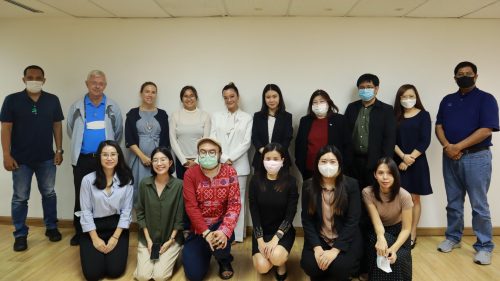
Female Journalists Continue to Face Threats
Attacks targeted at female journalists remain a threat to freedom of expression in the region, hence more should be done to mitigate and eliminate this threat. This was the key idea that emerged from speakers of the panel session: “STOP: Crimes against Female Journalists” convened by Asia Centre and the Friedrich Naumann Foundation for Freedom East and Southeast Asia on 2nd November 2022. The hybrid event attracted over 15 onsite and 10 online participants and was convened in partnership with Engage Media and Taiwan Foundation for Democracy to commemorate the International Day to End Impunity for Crimes against Journalists. Recording of the discussion can be found here. Dr. James Gomez, Regional Director, Asia Centre at the welcome remarks introduced the Centre’s media programme highlighting its ongoing projects with UNESCO in Cambodia as well as the ASEAN Digital Literacy Programme being implemented in Malaysia and Thailand in partnership with ASEAN Foundation and Google. This was followed by welcome remarks from Vanessa Steinmetz, Regional Project Coordinator, Friedrich Naumann Foundation for Freedom East and Southeast Asia who then went on to introduce the speakers and moderate the event. Pointing to one form gender discrimination, Thai PBS News Anchor, Wenika Wichawatthana discussed the lack of onscreen representation of LGBTQ journalists in the entertainment industry despite them being predominant. She also drew attention to how sexual assault against junior female journalists often leads to their silence when instead they should speak up. Speaking from the Indonesian perspective, Uni Lubis, Chair and Editor-in-Chief, Indonesian Forum for Women Journalists underlined the physical attacks targeted towards women journalists making them and their relatives vulnerable to violence. She stressed that women journalists are particularly exposed to gendered violence and recommended the need to have S.O.Ps and training in place to ensure female journalists’ safety. Eunice Barbara Novio, Correspondent, Inquirer.net enumerated the different types of online threats she received from fellow journalists during her time as a woman reporter including death and rape threats. Being a freelance journalist, she explained that often she was left without institutional support and had to find other ways of coping with the mental health challenges of constant cyberbullying. Sokheng Pa, a reporter with the Cambodian Center of Independent Media (CCIM), highlighted the low number of women journalists in Cambodia compared with their male counterparts. She mentioned, when covering the news, Cambodian female journalists often experienced discriminatory attitude from male government officials leading to a climate of fear among women journalists and media professionals. Among the topics raised by participants during the Q&A session were the recurring sexual harassment faced by women journalists in the region as well as the repercussions they face when reporting such behaviour. The discussion pointed to a need for concrete action to be taken at the international level to help protect women journalists against online attacks. To advocate for safer journalism in the workplace, NGOs and civil society support will be crucial to enable change at the institutional level. On that note, both Asia Centre and the Friedrich Naumann Foundation for Freedom East agreed to find more ways to keep the spotlight on the challenges journalists face, especially women. The event welcomed journalists, INGOs representatives and a wide range of other participants who gathered to examine current challenges faced by female journalists in Southeast Asia.
ASEAN DIGITAL LITERACY PROGRAMME (ADLP)
1.Background In order to mitigate the negative impact of disinformation in the ASEAN member states, the ASEAN Foundation, with the support of Google, is rolling out the “ASEAN Digital Literacy Programme” to build resilience against misinformation and disinformation for communities in the region. To this end, Asia Centre, a research institute in Special Consultative Status with the Economic and Social Council of the United Nations (UN ECOSOC), was appointed by the ASEAN Foundation to implement the training program for Youth, Teachers, Parents, Elderly, Government Officials, People with Disability and Community Leaders. 2. Project Objectives Asia Centre will work with local partners in Thailand to implement the following project objectives: Recruitment of Master Trainers Identify and recruit 80 Master Trainers (MTs) who fall into the following 6 target groups: Youth (63 MTs); Teachers (5 MTs); Parents (3 MTs); Elderly (2 MTs); Government Officials (3 MTs) and People with Disability (2 MTs) and Marginalised Communities (2 MTs). Training of Master Trainers (ToTs) Execute a 20-hour training of Master Trainers (ToTs), divided into 14 hours online and 6 hours onsite, consisting of: a 4-hour Pre-Training – online 6-hour Media and Information Literacy (MIL) Training – onsite 5 hours Self-Study – online 3 hours Preparation for End Beneficiaries Training – online 2 hours Post-Training Evaluation – online Training of End Beneficiaries Ensure Master Trainers, following the ToTs, each conduct a 3-hour training for at least 100 End Beneficiaries. The 3-hour training consists of an 1-hour pre-training assignment, 1-hour online training on MIL; and an 1-hour post-training evaluation [End Beneficiaries should be Youth, Parents, Elderly and other Vulnerable Groups]. 3. Tasks and Benefits of Master Trainers Tasks: Participate in 20-hour training (ToTs), divided into 14 hours online and 6 hours onsite: Pre-Training Reading Assignment (3 hours) – online Pre-Evaluation Questionnaire (1 hour) – online Training on Media and Information Literacy (MIL) Part 1 (3 hours) – onsite Training on Media and Information Literacy (MIL) Part 2 (3 hours) – onsite Online Self-Study – Video Lessons from Media Civics Lab (5 hours) – online Preparation for End Beneficiaries Training (3 hours) – online Post-Training Evaluation Questionnaire (2 hours) – online Once completed the training, each Master Trainer is required to conduct and coordinate the 3-hour End Beneficiaries training sessions for at least 100 End Beneficiaries: Pre-Reading Assignment (1 hour) – online Online Training on Media and Information Literacy (MIL) (1 hour) – online Evaluation Questionnaire (1 hour) – online After the End Beneficiaries Training, MTs are to submit a final report to Asia Centre. The report must include the following details: A. List of participants with the following details: 1. Name; 2. Gender; 3. Age; 4. Education Level; 5. Income. Write 1-2 paragraphs on their story/experiences as a Master Trainer Benefits: Master Trainers participate in the training program for free of charge. Master Trainers will develop their knowledge on issues related to media such as mis/disinformation, hate speech, cyber security and increase their media information literacy level. A certificate with Google, ASEAN Foundation and Asia Centre’s logo and signed by the relevant representatives 4. Project Timeline [table id=3 /] 5. Project Outline This project is implemented by Asia Centre through in-country partners. Asia Centre will begin by contacting potential partners to discuss their interest to collaborate. Once this interest is established, the local partner will identify and recruit 20-25 persons to attend Master Trainers Training (ToTs) and fix the date at their institution for the onsite Master Trainers Training (ToTs). Thereafter Asia Centre will provide the training to the Master Trainers based on the curriculum the Centre has compiled from the ASEAN Foundation. Following the training, Asia Centre will liaise with the Master Trainers to support them in the implementation of the training to End Beneficiaries and collect their final reports. a) Asia Centre’s Responsibilities Develop Curriculum for the Master Trainers Training (ToTs) and End Beneficiaries Training Provide 2-3 Trainers to Conduct Master Trainers Training (ToTs) Conduct Onsite Master Trainers Training (ToTs) Support Catering for Onsite Master Trainers Training (ToTs) Arrange Certificate for MTs (with Google, ASEAN Foundation and Asia Centre’s logo and signed by the relevant representatives) Monitor the Progress of all Master Trainers and End Beneficiaries Training b) Local Partner’s Responsibilities Identify and Recruit Master Trainers (More than 10 Master Trainers, ideally between 20-25 Master Trainers) : Target Profile of Master Trainers: Youth (63); Teachers (5); Parents (3); Elderly (2); Government Officials (3) and People with Disability (2) and Marginalised Communities (2) Provide venue and date for Asia Centre to conduct onsite Master Trainers Training (ToTs) Communicate with Asia Centre to receive updates throughout the implementation of Master Trainers Training (ToTs) and End Beneficiaries Training conducted by Master Trainers c) Master Trainer’s Responsibilities Participate in a 20-hour (14 hours online and 6 hours onsite) Master Trainers Training (ToTs) conducted by Asia Centre with the Support of Local Partner Conduct and Coordinate the 3-hour End Beneficiaries Training for at least 100 End Beneficiaries Submit a final report to the Asia Centre. The Report must include: a list of participants with the following details: 1. Name; 2. Gender; 3. Age; 4. Education Level; 5. Income. 1-2 paragraphs on their story/experiences as a Master Trainer Asia Centre invites interested applicants to join the Asean Digital Literacy Programme. Register here: https://bit.ly/3BVAQKN For more information, please email: contact@asiacentre.org
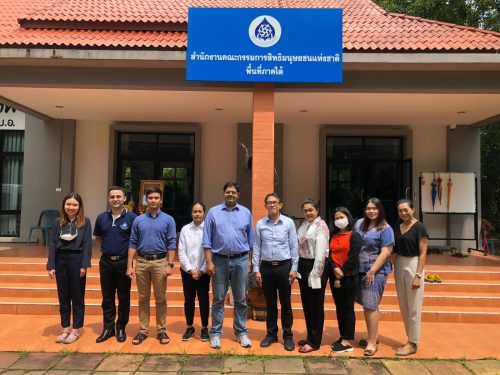
Asia Centre Visits the Office of the National Human Rights Commission of Thailand (Southern Region)
Asia Centre, with support of Friedrich Naumann Foundation for Freedom (Thailand) and Taiwan Foundation for Democracy held a consultation session with the Office of National Human Rights Commission of Thailand (NHRCT) (Southern Region) to explore collaboration on human rights issues in the southern region during a visit to Songkhla province between 25 – 26 October 2022. The consultation was held on 26 October 2022 at the NHRCT regional office in Songkhla. The NHRCT began with welcome remarks and background to the office’s establishment in March 2022. Its main mandates cover administration, the protection as well as the promotion and monitoring of human rights situations. Next, Asia Centre explained its role as a civil society research institute in special consultative status with the UN ECOSOC. The Centre also introduced its regional and local partners including Friedrich Naumann Foundation for Freedom and several academic institutions. In outlining ideas, Dr. James Gomez, the Centre’ Regional Director, suggested the NHRCT regional office and Asia Centre can collaborate in promoting human rights in the southern region in forms of research and activities such as seminar, training or roundtable discussion. He particularly underlined the importance of undertaking an assessment and mapping of key issues and actors in the region to identify the existing gaps. Such a mapping can be developed into a strategic plan to implement improvements to the human rights situation. Krisada Ngamsinchamrat, Director of NHRCT regional office, reacted positively to the different ideas. As a first step, he suggested that the NHRCT Southern Office and Asia Centre proceed on MOU for general cooperation within the first quarter of next year. Thereafter consider signing partnership agreements for the specific project collaborations. The meeting ended with both organisations agreeing to exchange their working plans, projects and activities to find opportunities to participate in each others’ activities. After that, the consultation event was promoted on the Facebook page of the NHRCT, please see the link.
Asia Centre And Google Collaborate To Combat Disinformation
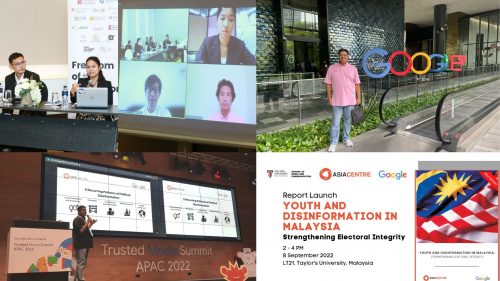
In 2022, Asia Centre and Google collaborated on a range of projects to combat disinformation. These included co-convening a panel titled “Rights-Friendly Content Regulation in APAC” for the Centre’s 7th International Conference on Freedom of Expression in Asia, a baseline study titled Youth and Disinformation in Malaysia: Strengthening Electoral Integrity and its launch in Kuala Lumpur, a presentation on its key findings at the 2022 APAC Trusted Media Summit on 20-21 September in Singapore and the implementation of media information literacy training in Malaysia and Thailand. Below are the key highlights: On 25 August 2022, in partnership with Asia Centre, Google Asia Pacific Singapore (APAC) co-convened a panel “Rights-Friendly Content Regulation in APAC” to discuss online regulations in the Asia Pacific region. Invited speakers highlighted the rise of problematic online content such as hate speech, mis- and disinformation leading to the enactment of criminalising laws restricting online freedom of expression. They pointed to the importance of independent third-party fact-checking and digital and media literacy programmes in the region to achieve a rights-friendly regulatory environment in the region. On 8 September 2022, Asia Centre partnered with Google’s Government Affairs and Public Policy (Malaysia and Singapore) to co-launch a report titled “Youth and Disinformation in Malaysia: Strengthening Electoral Integrity”. Following the voting age lowering in Malaysia, the report highlighted the danger of disinformation placing Malaysian Youth at risk of manipulation in light of the upcoming general elections. The report also outlined the different types of disinformation targeted at the youth and provided key recommendations to fight against disinformation. The findings of the report were widely reported in the media. Following the launch, Google News Initiative, a journalism-focused program to help combat fake news, invited Asia Centre’s Regional Director, Dr. James Gomez to present the key findings of the report during the 2022 APAC Trusted Media Summit in Singapore. The annual summit, organised as a hybrid event, gathered over 80 people ranging from researchers, journalists, media and civil society organisations. Invited online guests included Maria Ressa, 2021 Nobel Peace Prize Laureate and Elliot Higgins, founder of Bellingcat. Starting in September 20202, Asia Centre embarked on a Media and Information Literacy training of trainers programme in Thailand and Malaysia. The project was implemented on behalf of the ASEAN Foundation. It is part of a USD1.5 million Google.org, a philanthropy project funded by Google and was presented to the Foundation to implement media literacy initiatives to combat disinformation in the region. The collaboration with the various Google initiatives and its partners are part of Asia Centre’s engagement with technology companies. To date the Centre has engaged with TikTok, Twitter and META (Facebook) to create awareness of the challenges of disinformation and hate speech and to promote media literacy.
Asia Centre and Taylor’s University Malaysia Sign MoU
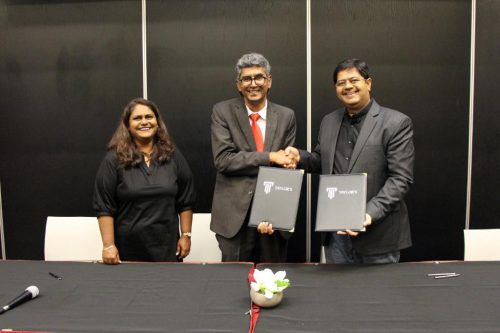
On 8 September 2022, Asia Centre and Faculty of Social Sciences & Leisure Management, Taylor’s University signed a Memorandum of Understanding (MoU). This MoU was signed just prior to the launch of the Asia Centre and Google report titled “Youth and Disinformation in Malaysia: Strengthening Electoral Integrity” hosted by the School of Media and Communications at Lecture 21 on the Lakeside Campus of Taylor’s University. You can read the report launch article here. The MoU ceremony and signing was conducted onsite at Taylor’s University and attended by faculty representatives. Dr Neethiahnanthan A/L M Ari Ragavan, Executive Dean, Faculty of Social Sciences & Leisure Management, Taylor’s University emphasized the importance of the MoU with Asia Centre for enhancing research, academic events and student internships. Asia Centre’s Regional Director, James Gomez also echoed the importance of MoU with Taylor’s University and outlined concrete projects such as media literacy training for staff members and students, the Centre’s annual conference and internships for communications and media students. The MoU signing materialised following a series of engagements with Taylor’s University. It began with the appointment of Dr. Benjamin Loh Yew Hoong, senior lecturer at the School of Media & Communication, Taylor’s University and an Asia Centre Associate during Asia Centre and Thai Media Fund report launch event titled “Infodemic and SDGs: Internet Freedoms in Southeast Asia” on August 2021. Dr. Loh Yew Hoong was a speaker during Asia Centre second panel discussion titled “Respect for Human Rights: Measurement and Implementation of Public Health Policy in Southeast Asia”, during which he discussed COVID-19 misinformation in Malaysia causing xenophobia towards migrant workers and refugees. Since his appointment, Dr. Loh Yew Hoong has published a total of 5 articles on Malaysian socio-political issues in the Nikkei Asia, Malaysiakini and The Vibes with the Asia Centre Associate tagline. In October 2021, when Asia Centre and Taylor’s University convened a webinar titled “Media Ethics and Journalism in Malaysia”. Dr. Loh Yew Hoong was once again a speaker. The discussion focused on the lack of support for Malaysian journalists leading to instability and lack of visibility in the industry. This is Asia Centre’s 1st MoU with a Malaysian Institution. It builds on Asia Centre’s prior engagement with Malaysian Universities and non-governmental organisations since 2018. If you like to collaborate with Asia Centre and sign an MoU email us at contact@asiacentre.org
Asia Centre Outreach In Canada
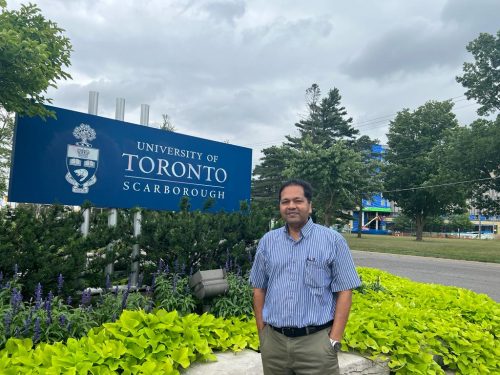
Asia Centre’s Dr. Robin Ramcharan carried forward the Centre’s ongoing global exploration for collaborations and partnerships, this time in Canada, during the months of July and August 2022. This follows similar outreach undertaken over the past five years in Australia, Bangladesh, Belgium, France, India, Japan, South Korea, Switzerland, Taiwan, the United States and New Zealand. In the course of his outreach, as Canada considers the development of a foreign policy strategy for the Indo-Pacific area, he spoke at the Royal Military College of Canada on regional governance matters in Asia, at the invitation of Associate Professor Ali Dizboni. Intimately involved in the discussion on Canada’s foreign relations in the Indo-Pacific is the Macdonald Laurier Institute (MLI), one of Canada’s premier think tanks. He discussed future collaboration between MLI and the Centre with Jonathan Berkshire Miller, Director of the Indo-Pacific Program and Senior Fellow at MLI. He also met with and apprised Charles Burton, Senior Fellow at MLI and Canada’s premier expert on their relations with China, regarding the progress of Asia Centre as it forged its reputation as a regional research hub over the past eight years. The Centre’s outreach included discussions with Prof. Sorpong Peou of the Department of Politics and Public Administration at the Toronto Metropolitan University (formerly Ryerson) in Toronto who served previously on the Advisory Board of Asia Centre. Discussions over potential collaboration were also held with Professor John Packer, Professor of International Conflict Resolution and Director of the Human Rights Research and Education Centre at the University of Ottawa. Complementarities between the Centre and the Department of Political Science of the University of Quebec at Montreal (UQAM) were also explored with Dr. Chalmers Larose, Senior Lecturer at UQAM. Dr. Ramcharan reconnected with the University of Toronto, where he has taught in the past, to explore collaboration. The university hosts many initiatives on Asia affairs. The Centre looks forward to contributing to Canada’s exploration of its role in Southeast Asia and the wider region. Canada can and must play a strong role in Asia, where it has vital interests. Civil society in the region also looks to Canada to augment its presence in support of a strong and vibrant civic space. Towards this end, Asia Centre has engaged with the Canadian embassy in Bangkok in the course of its work. With this aim in mind, the Centre will look to cement these relationships through joint research projects, workshops and events in Canada and in Southeast Asia.
Asia Centre Expands Partnerships In Northern Thailand
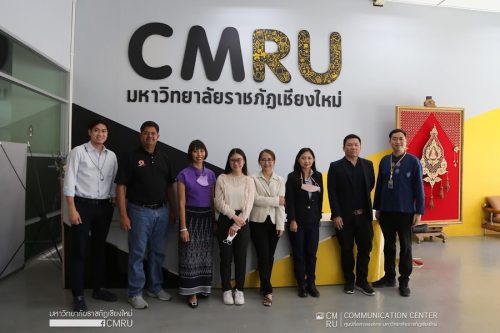
Asia Centre has expanded and strengthened its partnership into Northern Thailand following a visit from 4 to 5 August 2022 to Chiang Mai. During the visit, Asia Centre’s regional director Dr. James Gomez and Program Coordinator Nalinrat Tingoum visited Chiang Mai to co-convened several activities and discussed future activities deepening the Centre’s network with Northern partners. During the trip, they were able to introduce the Centre’s activities and discussed concrete collaborations with a number of people and organisations including the Faculty of Mass Communication, Chiang Mai University, University Academic Service Center of Chiang Mai University (UNISERV) and the Religion, Culture, and Peace Lab (RCPL), Payap University. One stop was at the Faculty of Mass Communication of Chiang Mai University that has previously participated in Asia Centre 6th International Conference on Covid 19 in Asia: Communication, Nationalism and Technology. Dr. Gomez discussed the Centre’s work and explored Media and Information Literacy training for faculty members and students. At a meeting with staff from the Religion, Culture, and Peace Lab (RCPL), Payap University, a seminar or conference to discuss Asia Centre’s reports on freedom of religion and belief were discussed. Created in 1995, the RCPL, formerly known as the Institute of Religion, Culture, and Peace (IRCP) is a sub-institute working with the Peacebuilding Department at Payap University on peacebuilding activities towards better inter and intra-religious understanding. Potential collaboration on media literacy training was also discussed with Krith Karnjanakitti, Chief, Academic Services and Research Section, University Academic Service Center of Chiang Mai University (UNISERV). Operating since 1989, the organisation, under Chiang Mai University, provides academic services and helps in solving problems. This outreach builds on a series of earlier meetings in Northern Thailand in 2021 and 2022. In February 2022, Dr. Gomez and Dr. Ramcharan visited Chiang Mai and met with members of the Faculty of Mass Communication, Chiang Mai University, the Faculty of Information and Communication Centre of Trends and Futures Studies from Maejo University and the Faculty of Political Science and Public Administration at Chiang Mai University to discuss partnership on joint seminars in Northern Thailand. Earlier in 2021, Dr. Ramcharan met with members of the Faculty of Mass Communication, Chiang Mai University to discuss joint projects on Asia Centre 7th International Conference on Freedom of Expression in Asia. The visit laid the foundation for cooperation on two fronts. One, it facilitated the Thailand Media and Information Literacy Master Training project between Asia Centre and Northern Thai Institutions. Two, on 25 August 2022, during Asia Centre 7th International Conference on Freedom of Expression in Asia, Asia Centre’s Dr. Gomez and Dr. Charoensri, Deputy Dean of Research Affairs at the Faculty of Political Science and Public Administration, Chiang Mai University signed an MoU, making the faculty an official partner of the Centre 2023 8th International Conference on Democracy and Elections in Asia. You can read the event article here. Overall, the trip and meetings in Chiang Mai helped Asia Centre to build on its initial engagements and strengthen its emerging network of partners in Northern Thailand.
Asia Centre and Chiang Mai University Sign MoU
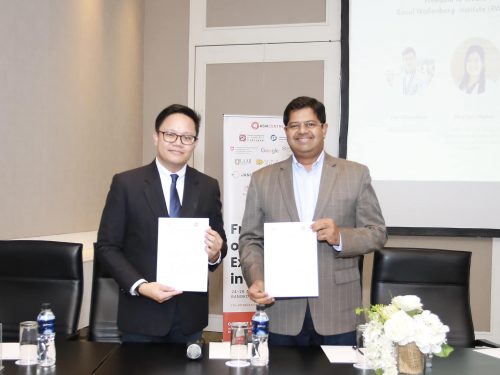
On 26 August 2022, Asia Centre and Faculty of Political Science and Public Administration, Chiang Mai University signed a Memorandum of Understanding (MoU). This MoU builds on the ongoing collaboration of both organisations and launched the formal partnership with Asia Centre’s 8th International Conference on Democracy and Elections in Asia, to be held in Bangkok, 23-25 August, 2023. Some of the activities leading up to the MoU included Asia Centre’s Dr. James Gomez’s participation in the panel discussion titled “ASEAN in the Changing Regional Dynamics”, held on 4 August 2022 at the Faculty of Political Sciences and Public Administration, Chiang Mai University. The panel discussion was also supported by the Taiwan Foundation for Democracy, a Taiwan-based organisation that aims to collaborate with like-minded organisations for the global promotion of fundamental freedoms. Speakers from the panel included Dr. Nisit Panthamit, Head at the ASEAN Studies Centre, Chiang Mai University and Dr.Narumit Hinshiranan, professor at the School of International Affairs, Chiang Mai University. The panel was moderated by Dr. Narut Charoensri, vice Dean of the Political Science Faculty, Chiang Mai University The event gathered over 40 lecturers and students who debated whether ASEAN has agency to plot its own political journey given the competing influence of China and the US in the region. Earlier this year, Dr. Narut Charoensri participated in the Asia Centre and Friedrich Naumann Foundation conference “ASEAN-EU Relations in Light of the Ukraine War” on 17 June 2022 in Bangkok. He moderated the third panel titled “Trade” which centred on the need to observe flexibility as a means to overcoming issues that were blocking the ASEAN-EU Free Trade Agreements. The above collaborations started when Dr. Charoensri visited the Asia Centre on 26 April 2022 and discussed plans for collaboration on upcoming activities including joint seminars and Asia Centre 8th International Conference. This meeting was a follow up to an earlier meeting on 25 February 2022 during which Dr. James Gomez and Dr. Robin Ramcharan visited the Faculty of Political Science and Public Administration at Chiang Mai University. Hence, on 25 August 2022, during Asia Centre 7th International Conference on Freedom of Expression in Asia, Asia Centre Dr. Gomez and Faculty of Political Science and Public Administration Dr. Narut Charoensri both signed a Memorandum of Understanding, to host Asia Centre’s 8th International Conference, Democracy and Elections in Asia scheduled for 23-25 August 2023. Click here to register: https://forms.gle/AL9qBToKnHDr2U9c8 This is Asia Centre 5th MoU with a Thai University. It has previously signed MOUs with other universities such as the Faculty of Social Sciences, Naresuan University, the Faculty of Political Science, Ubon Ratchathani University, the National Institute of Development Administration (NIDA), the Faculty of Law, Thammasat University and a conference partnership agreement with the Faculty of Communication Arts, Chulalongkorn University. Its other MOU in Thailand is with the Thai Media Fund. If you like to collaborate with Asia Centre and sign and MoU email us at contact@asiacentre.org
Media Information Literacy Needed To Combat Disinformation
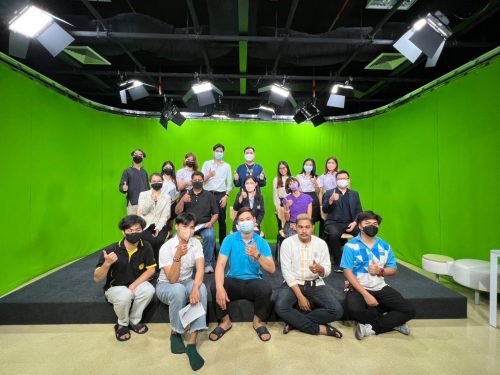
Disinformation is a major issue in Southeast Asia and Thailand is not an exception. However, media literacy education can be a good tool to tackle the negative effects of disinformation. This was the key takeaway from the panel discussion, “Media Information Literacy in Southeast Asia and Thailand” held on 5 August 2022 at Chiang Mai Rajabhat University. The event was organised by Asia Centre in collaboration with Friedrich Naumann Foundation (Thailand Office), and in partnership with Chiang Mai Rajabhat University, Payap University, Maejo University and the Office of National Broadcasting and Telecommunications Commission (NBTC). The panel, moderated by Assistant Professor Dr. Napat Ruangnapakul from the Faculty of Information and Communication, Maejo University, consisted of Dr. James Gomez, Regional Director of Asia Centre, Assistant Professor Dr. Taien Layraman, Assistant to vice President for Administration and Finance, Payap University, Rotchanakorn Baengthit, Lecturer at the Department of Communication Arts, Chiang Mai Rajabhat University and Dr. Tri Bunchua Executive Director, Executive Director at the Broadcasting Consumers Protection Bureau, the Office of National Broadcasting and Telecommunications Commission. During the COVID-19 pandemic, there was a surge in disinformation obstructing access to accurate health information. While there have been different attempts by governments, CSOs and tech companies to counter disinformation with fact-checking initiatives, media information literacy (MIL) is increasingly seen as an effective tool against disinformation by strengthening the capacity for people to critically engage with online content and navigate the digital world. Starting the discussion, Asia Centre’s Dr. Gomez provided an overview of the current state of media information literacy in Southeast Asia. The key point made was the importance of ‘media ethics’ as a side-by-side approach to media information literacy programs given the rising number of citizen content producers. The regional overview was followed by perspectives from Thai universities and the government unit. Dr. Taien Layraman, Payap University, highlighted the importance of focusing on customer behaviour and their susceptibility to fake advertising, while Rotchanakorn Baengthit, Chiang Mai Rajabhat University and Dr. Tri Bunchua, National Broadcasting and Telecommunications Commission, emphasised collaborations among multi-stakeholders such as academic sector, media professionals and businesses. They pointed to the need to learn best practices from other countries in the region to improve media literacy for people of all ages in Thailand. Dr. Napat Ruangnapakul, Maejo University also suggested online platforms such as Co-Fact and other national fact-checking agencies as relevant tools to help regulate the flow of online false information. Overall the panellists argued the importance of highlighting the wide use of media literacy on people’s daily life as a way to reach a larger audience and deepen partnership among multi-stakeholders. The panel was convened in the studio at the Department of Communication Arts, Chiang Mai Rajabhat University, with a green screen, and was live streamed over Facebook with the support of the department’s student team. The event was reported on local news publishers such as Chiang Mai News and the Public Relations Department Region 3 Chiangmai.
Asia Centre’s Report on Disinformation Attracts Strong Interest in Malaysia
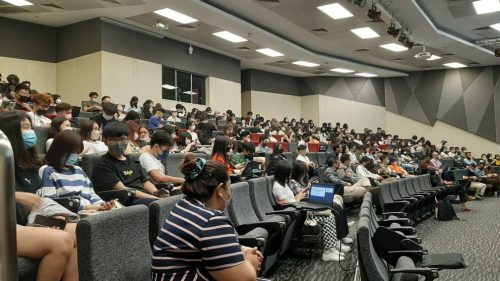
Held on 8 September 2022, the launch of Asia Centre’s report Youth and Disinformation in Malaysia: Strengthening Electoral Integrity drew a crowd of over a hundred participants. It included academics, journalists, students and representatives from civil society organisations, the election commission, government agencies, political parties and youth groups. Media interest in the report was also strong. On the eve of the launch, The Vibes published an opinion piece ‘Political competition to intensify disinformation in GE15’ by Asia Centre’s regional director Dr. James Gomez. On the morning of the launch, Malay Mail published a curtain raiser article ‘Govt agencies, political parties the most active in spreading disinformation, new study finds’ – that was picked via syndication by Yahoo News Malaysia and Borneo Post Online. There was also a report in Bahasa Melayu ‘Penyebaran Maklumat Palsu: Pemerintah dan Pembangkang Sama-sama Aktif’ in Dagannew.com. Mashable, an online Southeast Asia news website, published an article ‘M’sian gov agencies & political parties are main culprits of disinformation, study finds’. Malaysiakini also published ‘Nearly 6m New Voters Will Be Target of Disinformation in GE15’. Earlier in the day, BFM radio’s Shazana Mokhtar interviewed Dr. Gomez for her podcast Pressing Matters: ‘Strengthening the Media Ecosystem against Political Disinformation’ that was released on 12 September. During the event, BFM radio also additionally interviewed Dr. Gomez for the 5:30 PM news bulletin. On the following day, The Malaysian Insight discussed the report’s findings in its article ‘Youth vulnerable to disinformation in next election, says think tank’. The report findings were also covered by Indonesian media. A couple days after the launch event, Alinea, an Indonesia online news website, published “Laporan terbaru tentang pemuda dan disinformasi di Malaysia berikan rekomendasi cara memperkuat integritas pemilu”. A week later, Malay Mail released another op-ed written by Dr. James on “Lowering voting age does not ensure political participation”. In Singapore, The Independent also published the op-ed on “Lowering voting age does not ensure political participation” on its platform. The research for the report was supported by Google. During the opening remarks of the launch event, hosted by the School of Media and Communication at Taylor’s University, Joanne Bala, Government Affairs and Public Policy, Google, highlighted that there is a necessity to help voters access reliable sources of information, prevent disinformation and educate media and individuals on how to spot fake news and build resiliency among voters. Dr. James Gomez presented the report’s main findings, which were the 5 recurring patterns of disinformation that had occurred over 5 previous elections in Malaysia between 1999-2018. These were disinformation related to sexual orientation and promiscuity; corruption allegations; electoral integrity; attacks on women politicians; and foreign interference. These patterns of disinformation are expected to surface in Malaysia at the next general election that needs to be held by September 2023. Following the presentation, the findings were discussed by Daranee Balachander, Programme Officer, Centre for Independent Journalism; Zaidel Baharuddin, Vice President, of Malaysian United Democratic Alliance (MUDA) party; and Dr. Choong Pui Yee, Senior Lecturer, Universiti Malaya. The panel was moderated by Dr. Benjamin Loh Yew Hoong, Taylor’s University and an associate of Asia Centre. Referring to the report, Daranee accepted that the risks of disinformation are real as more people access information online. She agreed with the report’s findings that mistrust in the media and lack of reliable and timely sources of information will facilitate disinformation and manipulation campaigns. For Zaidel, he emphasised the importance of Undi18 (the ‘Vote18’ movement) and stated that he was not too concerned about disinformation as youths are able to discern between fake news and the truth. However, he agreed with the report, disinformation can be weaponised by the government to stifle legitimate opinion and freedom of expression. Next, Dr. Pui said she was pleased that the report highlighted how disinformation can be used to harass women politicians. She said sexist remarks, harassment and body shaming are prevalent in the online space. Falsehood resulting from a misogynist culture can discourage women from political participation. Dr. Gomez outlined Asia Centre’s recommendations that can be adopted by relevant government agencies, the election commission, technology companies, universities, think-tanks and NGOs to curb the spread of disinformation during elections. In the short term, the Election Commission should update rules or regulations to combat disinformation campaigns and ensure that voters can cast their meaningful votes. Political parties should run political campaigns with accurate and verified content and stop mudslinging political rivals by deploying fake news or disinformation. Technology companies should be provocative in combating disinformation on their platforms by flagging false information and removing or taking down false information that potentially misleads voters. In the medium to long resolution, the Centre recommends the government introduce or amend any law that criminalises disinformation, that it should be compatible with international standards and refrain from curbing freedom of expression. Educational institutions should include digital literacy in the basic curriculum to ensure all students stay safe online and foster principles of democracy, human rights and elections in schools. The event ended with the recognition that the risks from political disinformation are real in GE15 and need to be tackled by stakeholders. Watch the FB livestream recording of the event here. In addition, between 20 – 21 September 2022, Dr. Gomez was invited by Google to attend the Trusted Media Summit APAC 2022 held in Singapore. In this event attended by academics, media practitioners, CSOs, government officers and tech companies, he presents key findings and recommendations from the report. Read the full report Youth and Disinformation in Malaysia: Strengthening Electoral Integrity.
7th International Conference (2022): Freedom of Expression in Asia
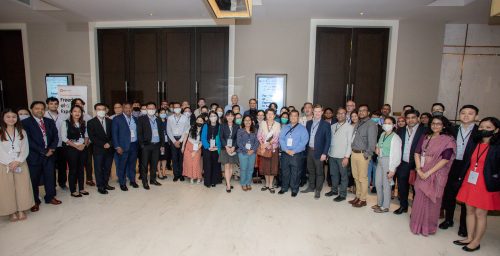
From 24 to 26 August 2022, Asia Centre convened its 7th International Conference: ‘Freedom of Expression in Asia’. Following the relaxation of COVID-19 restrictions, participants and panellists flew from different regions to join the Conference held at the Radisson Blu Plaza Hotel, Bangkok. Meanwhile, those who could not join in-person due to travel and health advisories participated remotely via Zoom. Into its 7th year, Asia Centre’s annual conference continues to grow with the 2022 Conference having 16 partners: Taiwan Foundation for Democracy; Friedrich Naumann Foundation for Freedom, Thailand; Embassy of Switzerland in Thailand; Google Asia Pacific; International Development Research Centre (IDRC); Eugene Thuraisingam LLP; International Republican Institute (IRI); Destination Justice; Raoul Wallenberg Institute of Human Rights and Humanitarian Law (RWI); Council of Asian Liberals and Democrats (CALD); Graduate School of Humanities Osaka University; University of Libral Arts Bangladesh (ULAB); Tony Blair Institute for Global Change; Expertise Agency of The Indonesian House of Representatives; Japan NGO Center for International Cooperation (JANIC) and Kyushu University. A total of 16 panels were convened with 63 speakers, of which 54 percent were male and 46 percent were female. There were 90 people joining the conference on-site and 20 online, bringing the total number of people at the Conference to 110. The conference examined the current state of freedom of expression in Asia following the pandemic which has given rise to authoritarianism in the region. Throughout the three days, the following major themes were discussed: impacts of laws that interfere with freedom of expression, commonalities that Asian governments share in suppressing simmering political discontent, personal experience and ordeal of human rights defenders from different countries, balance between freedom of expression and content regulation in cyberspace. There were also six country panels covering Thailand, Indonesia, Bangladesh, Cambodia, Japan and Korea. On the first evening, participants were welcomed by Robin Ramcharan, Executive Director of Asia Centre who introduced the first panel by the Council of Asian Liberals and Democrats (CALD). Speakers from Singapore, Cambodia and Taiwan shared cases of political persecution in their respective countries. They pointed out that their governments have – or at least used to in the case of Taiwan – employed both extrajudicial tactics, including killing, and legal means to silence their critics to maintain their grip on power. The second day started with official welcome remarks from Dr. James Gomez, Regional Director of Asia Centre, Conradin Rasi, Chargé d’Affaires a.i of the Embassy of Switzerland in Thailand, and a keynote speech from Michaela Browning, Vice President of Google APAC’s Government Affairs and Public Policy. Browning remarked that the internet has enhanced the enjoyment of freedom of expression by providing people with access to information. But to perpetuate and protect this enjoyment, there needs to be clear regulations in order to ensure safe and secure access and build trust and confidence between government, public, and internet providers. Speakers from civil society organisations, international institutions, technology corporates and universities across 7 panels addressed challenges to freedom of expression in Asia. Panellists discussed youth political expressions, challenges faced by women human rights defenders, academic freedom, legal measures on public speech, platform governance, models of internet content moderation and collaboration among Asian civil society in building a rights-friendly regulatory environment in Asia. There were attempts to lay out the responsibilities of states, technological corporations and civil society in protecting freedom of expression while ensuring privacy. On the third day, the last day of the conference, 8 panels consisting of university researchers, government units, activists and media organisations examined the development of legal frameworks on access to information and freedom of expressions in selected countries in Asia, media freedom, digital literacy and disinformation, platform governance, hate speech, impacts of COVID-19 and philosophical consideration on freedom of expression and experience of human rights activists. In the last panel of the Conference, Doreen Chen, Executive Director of Destination Justice, launched a baseline study Internet Freedoms in Thailand which is a collaboration between Asia Centre and Destination Justice. The report reviews and analyses legislation that impacts internet freedoms in Thailand. These include provisions in the Constitution, Penal Code, the Computer Crime Act, the Cybersecurity Act, and the Emergency Decree. The report can be accessed here. At the end of the conference, Asia Centre’s Dr. James Gomez, joined by Dr. Narut Charoensri, Vice Dean at the School of International Affairs, Faculty of Political Science and Public Administration, Chiang Mai University signed an agreement to co-convene the 8th International Conference: ‘Democracy and Elections in Asia’, which will be held in Bangkok from 23 to 25 August 2023. The details of the conference are available here. The conference is Asia Centre’s annual event where it brings together its partners to share the outcomes of their programmes and network for future collaborations. Over the years, the conference has become a platform for a range of actors to meet and discuss key human rights issues. Recordings of selected conference panels are available on Asia Centre’s YouTube channel and photo albums are published on the Centre’s Facebook page.

Asia Centre’s New Research Hub
Asia Centre will consolidate its research work under a new Hub, as the team expands to publish more books, baseline studies, policy papers, and opinion pieces. Part of this work will involve making submissions to the UN, following the granting, in 2021, the UN’s ECOSOC Special Consultative Status. The Research Hub, housed in a 131 sqm office on the 20th floor of the Chamnan Phenjati Business Center, and located 200m away from Rama 9 MRT Station, has a mixture of open working spaces and meeting rooms. Fitted with the latest video-conferencing technology, the Hub will enable the Asia Centre Team to work collaboratively across borders and time zones. The Hub will have four separate rooms for the Asia Centre Team and Partners to meet and collaborate. The Asia Centre Team will primarily be located in the working area which will be composed of eight work stations, with a TV console and whiteboard for team meetings. Along the walls will be built-in cabinets and shelves for storage, printers, and office supplies. There will also be a pantry with a fridge, microwave, filtered water, and a coffee machine. Surrounding the working area will be four separate rooms. Meeting Room 1, composed of a table, five chairs, and a TV screen will be used to receive Asia Centre partners for face-to-face meetings and larger video conferencing calls. Meeting Room 2, composed of a table and two chairs, will be used for smaller meetings as well as online presentations. It will also serve as a studio for podcast and video recordings. The Discussion Room, with armchairs, small tables, and a wall projector, will serve as a space for Asia Centre Team Members to engage in collaborative conversations. The Quiet Room, with a built-in desk, chair, and a separate armchair, will be used for individual phone/ WhatsApp calls, as well as a place for quiet reflection or prayer. The new office will have glass walls and partitions all around to let in natural light. The renovation began in early April 2022 and is scheduled to end in August 2022. Watch our Facebook video here and check out the renovation updates 1, 2, 3, and 4 on TikTok. While the new office will serve as a research space, the Office in Phaya Thai will be used for convening events.
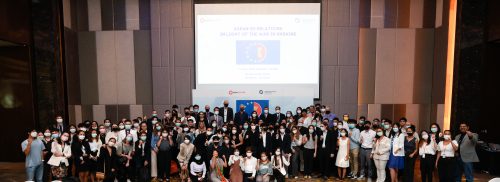
Ukraine Challenges Do Not Damper ASEAN-EU Relations
The ongoing war in Ukraine has accelerated several key challenges to the ASEAN-European Union (EU) relationship. These challenges include the EU’s unclear role in mediating the great power relationship in the wider Indo-Pacific region, a difference in approach towards regional integration, trade negotiations hampered by the political contexts of ASEAN states, and non-aligned over human rights issues that prevented the deepening of relationships. Despite these challenges, there is a desire within both regions to work towards maintaining and strengthening this strategic partnership. This was the primary sentiment that emerged from the conference “ASEAN-EU Relations in light of the War in Ukraine”, co-convened by Asia Centre with the Friedrich Naumann Foundation, Regional Office for East and Southeast Asia on 17 June 2022 at Radisson Blu Plaza Bangkok. The conference discussed developments since the elevation of the ASEAN-EU relationship to a “strategic partnership” in 2020. The conference had 4 thematic panels with a total of 14 speakers and was attended by over 150 people that included representatives from civil society organisations, diplomatic missions, government units, development aid agencies, the media and universities. The conference’s program can be found here. Opening the conference, Moritz Kleine-Brockhoff, Head, Regional Office Southeast and East Asia, Friedrich Naumann Foundation argued the importance of regionalism as the foundation for peace in the EU as well as in the ASEAN. Dr. James Gomez, Regional Director, Asia Centre welcomed the participants and panelists and shared findings from the Centre’s closed doors consultations. He said the consultations revealed that 1) the majority of ASEAN states want to be neutral, 2) the peoples’ feelings and values opinion in ASEAN countries are divided over the war in Ukraine, and 3) the idea of the EU is still unclear among most people in ASEAN. The first panel, titled “Geo-Politics and Security”, discussed the value that the EU could provide to ASEAN countries in the midst of the US-China great power rivalry. The panel, moderated by Mr. Kleine-Brockoff, included H.E. Georg Schmidt, Ambassador of Germany to Thailand, Dr. Kitti Prasirtsuk, Professor, Faculty of Political Science, Thammasat University and Dr. Felix Heiduk, Asia Division, Stiftung Wissenschaft und Politik, German Institute for International and Security Affairs. Although ASEAN sees the EU as a key actor who could ease tensions over the US-China great power rivalry and support ASEAN in setting up an inclusive mechanism, the deepened relationship between EU and the US following the Ukraine war is driving the EU away from ASEAN. Given that the Ukrainian war will be protracted, it is also likely that the EU would divert its resources to secure its borders and reduce attention towards ASEAN. Hence, rather than trying to get ASEAN to side with the EU over the war in Ukraine, the panel discussion veered towards how EU leaders can help ASEAN navigate the big powers over the conflict. The second panel, entitled “Regional Integration”, was moderated by Asia Centre Associate Dr. Kenneth Houston who was joined by Nukila Evanty, Country Director, Rights Foundation, Atena Stefania Feraru, author of “Weak States, Vulnerable Governments, and Regional Cooperation: An ASEAN Case Study” and Dr. Titipol Phakdeewanich, Director, Regional Center for Human Rights at the Faculty of Political Science of Ubon Ratchathani University. The panellists discussed the challenges faced by ASEAN and the EU regarding their respective approaches to regional integration as well as the lack of information and progress in cooperation and collaboration between the two regions which were further weakened by the War in Ukraine. The key reason why there is a stalemate is because the EU operates on a set of principled goals for cooperation, centralisation, and unity. On the other hand, ASEAN has a non-interference policy that is based on compromise as opposed to principles. As a result, the EU goals of cooperation with ASEAN will be unattainable, unless a different approach is considered. The third panel on “Trade” was moderated by Dr. Narut Charoensri, Vice Dean of the Faculty of Political Science and Public Administration, Chiang Mai University and included Robin Hoenig, Divisional Head, at Trade Policy Competence Centre; Tricia Yeoh, CEO of IDEAS; Tom Cachet, Chairman of Thai European Business Association (TEBA) Supply Chain Management Committee and Dr. Suwannarat Meesomboonpoonsuk, Lecturer, Southeast Asian Studies at Thammasat University. The panellists listed the existing issues that caused suspension of the agreements including: the ASEAN way; the lack of negotiation capacity; technical barriers; lack of political will; strong opposition from local producers as well as national regulations. Supply chain disruption as a result of the Russia and the Ukraine war, climate change and protectionism that flourished after the COVID-19 outbreak further added challenges to the agreements. To reach the ASEAN-EU Free Trade Agreements, bridging the gaps and increasing flexibility between the two regional blocs were suggested by members of the panel. The fourth and final panel entitled “The Future” was moderated by Dr. Robin Ramcharan, Executive Director, Asia Centre, and joined by Abhisit Vejjajiva, Former Prime Minister of Thailand, Karen Gomez Dumpit, Former Commissioner, Commission on Human Rights of the Philippines, Laure Brachet, Head, Political Press and Information Section, EU Delegation to Thailand and Jonathan Head, journalist, BBC News. The panel started with introductory remarks on the need to precisely define the Indo-Pacific concept. The main argument made during the session was the need to further engage on human rights platforms and develop human rights policies to achieve mutually beneficial partnership, as both regions differed in their approaches towards the universality of human rights. Given the differences in approaches by both regions, the discussion focused on how best to find a way that might pave the way for strong future cooperation building. In summing up the fourth session and the conference, Dr. Ramcharan noted three points: 1) While both ASEAN and EU share common values, they need to acknowledge their differences in order for future EU-ASEAN relations to succeed. 2) Given the international political and economic context, future partnership building will be slow. 3) The EU’s position as a model and soft norm entrepreneur can contribute to deeper integration and help build a
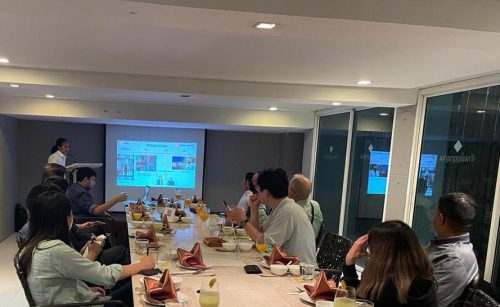
Thailand’s Computer Crime Act: Placing Digital Rights At Risk
Increased internet use by Thai citizens for political expression and mobilisation gave rise to the implementation in 2007 and the later amendment in 2017 of the Computer Crime Act (CCA). In the name of national security and public order, the Act has been used to prosecute internet users placing their digital rights at risk. Asia Centre’s Researcher Korbkusol Neelapaichit made these opening remarks during the report launch of “Thailand’s Computer Crime Act: Restricting Digital Rights, Silencing Online Critic”, jointly published with EngageMedia and supported by The International Center for Not-for-Profit Law (ICNL). Korbukusol then went on to highlight the key concerns around the Act. First, the CCA contains vague and broad language without clear definitions that is open for arbitrary interpretation. Second, it gives sweeping powers to officials, who are appointed by the Minister, without transparent procedures and judicial scrutiny for the use of powers under the Act. Third, the CCA penalises internet service providers (ISPs) and technology companies even if they are not the content producers. Fourth, the Act does not provide a mechanism for protecting privacy. There is no guarantee that how traffic data kept by ISPs or accessed by the officials will be used or scoped. Fifth, some offences under the Act overlap with offences under the Penal Code. Therefore, the CCA has been used to increase punishment or impose harsher penalties against offenders. Sixth, there is a lack of public awareness on the implications of the CCA. The public do not know how seriously the CCA violates their fundamental rights. As a result, the CCA has continuously been criticised for its disproportionate use to criminalise individuals and silence political dissent. Asia Centre’s analysis forecasts that the digital rights situation in Thailand is likely to worsen if the proposed CCA amendment by the Ministry of Digital Economy and Society (MDES) to introduce a single internet gateway is realised. This announcement has raised concern that freedom of expression, especially of independent media, journalists and human rights activists will be at risk. The report launch was attended by over 25 people that included representatives from diplomatic missions, development aid agencies, the media, respondents interviewed for the report and staff from Engage Media and Asia Centre. Read the full report here. The Thai version can be found here. You can also watch a TikTok video of the report launch event here.
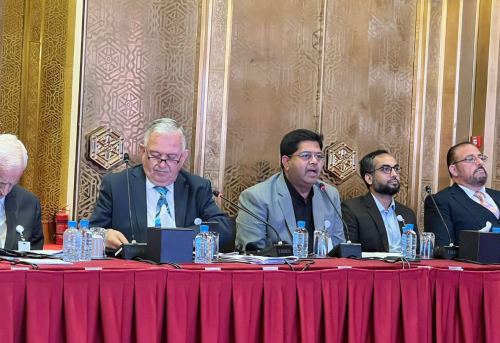
Dr. Gomez in Doha: “Harmony laws” foster hate against minorities
“Harmony laws”, while well-intentioned, their implementation has inevitably led to the spread of hate speech directed at minorities in Southeast Asia. This is primarily due to the use of these laws against ethnic-religious minorities and those seen as a threat to the majority group. This was the finding that Asia Centre’s Regional Director, Dr.James Gomez, highlighted in his keynote speech delivered at the 14th Doha Interfaith Conference titled “Religion and Hate Speech: Between Scriptures and Practice” which took place on 24-25 May 2022 in Doha, Qatar. His speech, based on his conference paper, titled “Legislating Hate Speech in Southeast Asia: Impacts and Recommendations” (read here) was drawn from two of Asia Centre reports: Hate speech in Southeast Asia, New forms, Old Rules and Harmony Laws in Southeast Asia: Majority Dominance, Minority Repression. Dr. James Gomez was one of several keynote speakers invited by the Doha International Center for Interfaith Dialogue (DICID), a Qatar-based institution founded in 2007. DICID encourages and supports dialogue between religions and peaceful coexistence among adherents of different religions. This is the second occasion that Asia Centre’s Dr. James Gomez was a speaker at a DICID event. He spoke in October 2021 at a virtual symposium titled “Interfaith Dialogue on Conflict Transformation: towards a Paradigm of Change”. The symposium, held in partnership with the Nordic Center for Conflict Transformation, heard Dr Gomez provide an overview of “harmony laws” discriminating against ethnic-religious minorities in Southeast Asia. The 2022 DICID conference also provided Asia Centre’s Dr. James Gomez the added opportunity to meet and discuss future collaboration with Nordic Center for Conflict Transformation’s Noufal Abboud as noted in their March 2022 Memorandum of Understanding, which the two organisations signed to partner on activities and projects between the Middle East and Southeast Asia regions. Hence, on 26 May 2022, both Dr. James Gomez and Mr.Noufal met with Dr. Ghassan Elkahlout, Assistant Professor and Head of Conflict Management and Humanitarian Work, and other representatives of the Center for Conflict and Humanitarian Studies at the Doha Institute for Graduate Studies. They discussed possible collaborations between the institutions. Separately, Dr. James Gomez was also able to meet with Keneshbek Sainazarov, Director of Asia, Search for Common Ground to discuss a research project on Freedom of Religion or Belief in Southeast Asia. While, Mr. Noufal Abboud, met with Dr. Moataz El Fegiery of the Human Rights Program of the Doha Institute for Graduate Studies, to discuss collaboration possibilities. With Doha, Qatar being based in the Middle East and straddling both Asia and Europe, Asia Centre hopes to deepen its engagement with Doha-based institutions moving forward.
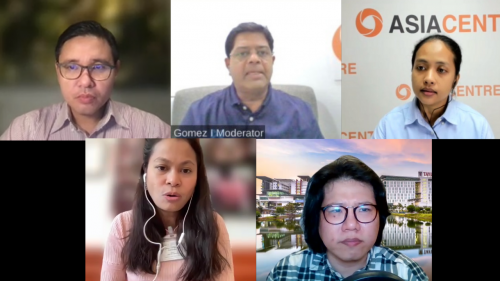
Electoral Reforms Can Ensure Multiparty Democracy In Southeast Asia
A range of electoral reforms are needed if multiparty democracy is to take root in Southeast Asia. Reforms related to electoral laws, the media, independence of election management boards and the voting age formed the broad suite of ideas that emerged from speakers of the parallel session “Multiparty Democracy in Southeast Asia” during the 2022 Gwangju Democracy Forum convened by Asia Centre. Co-convened with the May 18 Foundation – a South Korean organisation founded in commemoration of the May 18 Uprising – the 19 May 2022 online event was as part of the Gwangju Democracy Forum, an annual international conference held by the Foundation. This is the second occasion where Asia Centre has co-convened a panel during the Gwangju Democracy Forum. It first convened a panel in 2021, entitled “Freedom of Expression and Democracy in Asia”. Watch the 2021 panel discussion here. You can also read the article titled “Freedom of Expression A Fundamental Right” here. In his opening remarks and introduction of the panel, Dr James Gomez, Regional Director of Asia Centre said the key question to address is whether electoral systems in the region are a force for democracy or a force for authoritarian consolidation. For Southeast Asia, despite the plethora of elections at multiple levels, there is an increasing tendency that they end up with illiberal outcomes. Executive Director of the Council of Asian Liberals and Democrats (CALD) Celito Arlegue discussed the result of the Philippines presidential election in 2022, following Bongbong Marcos’s victory. He noted Bongbong’s social media image revamp that had contributed to his electoral win. The election result underlines the weakening of political parties as independent institutions in favour of established political dynasties in the Philippines. Korbkusol Neelapaichit, a Research Coordinator at Asia Centre, updated on the Bangkok governor’s election and its implication for the upcoming general election. She highlighted that while women voters outnumber men voters, women candidates are underrepresented for the election as there are only 6 of them out of 31 candidates. She also pointed out that women candidates, especially in the South, have been facing gendered attacks. She predicts that this bias towards women has the risk of repeating itself at the national elections. Speaking from the Cambodian perspective, Sokunthea Chhan, Media Development Director of the Cambodian Center for Independent Media (CCIM), focused on the media’s role in the upcoming commune elections scheduled for 5 June 2022. She emphasised the important role of independent media in helping political parties voice and broadcast their opinion. However, in the run-up to the communal elections, there continue to be restrictions on the activity of independent media. Senior Lecturer at the School of Media and Communication, Taylor’s University in Malaysia, Dr. Benjamin Loh Yew Hoong, discussed the introduction of youth voters (aged 18-21) into the Malaysian election system. Due to the lack of media literacy, he said youth risk being susceptible to disinformation during elections. He voiced his concerns that disinformation could herald the possible return of disgraced elites – naively well received by the youth – to power. The panel discussion served as an important launching pad for Asia Centre 8th International Conference scheduled for 23 to 25 August 2023 titled “Democracy And Elections in Asia”. In his closing remarks, Dr. Gomez announced the issue of multiparty democracy is a theme, the Centre will track over the next couple of years. Please stay tuned for Asia Centre’s International Conference on Multiparty Democracy In Asia in 2023. Meanwhile, see the update for the Centre’s 7th International Conference: Freedom of Expression in Asia, to be held on 24-26 August 2022. Visit the Facebook events page for the Conference here.
Asia Centre’s Steps Up its Engagement in Geneva
Giving effect to its 5-year strategic plan to 2027, to step up its engagement with UN human rights mechanisms and international organisations, Asia Centre undertook an outreach mission to Geneva, Switzerland during April 2022. This mission stems from the Centre’s continuous growth over the past seven years which has seen it achieve the following: Recognition as a research institute in the regional and Thai landscape on democracy, rights and geopolitical issues, Establishment of a branch in Malaysia, Production of seminal, policy-oriented knowledge products on democracy and human rights in the region, Building networks across the region on critical issues (business and human rights, freedom of expression, freedom of religion or belief and human rights mechanisms), Engaging in policy oriented advocacy aimed at achieving progressive social impact, Participating in policy processes that promote human rights through civil society and parliamentary networks in Southeast Asia and in research networks in South Asia, and Advising Thai-based foreign embassies on regional affairs. Similar missions were undertaken by Asia Centre to Australia, China, Japan, New Zealand, South Korea, Taiwan, India and the United States between 2015 and 2022. A forthcoming mission to Canada will take forward such strategic outreach. Spearheaded by Dr. Robin Ramcharan, the Centre’s mission to Geneva from 7 to 22 April followed a similar mission in 2020, prior to the pandemic. On this occasion, the Centre secured its access to the Geneva International and to UN premises. It also explored collaboration with think tanks and IOs in Geneva. Building on existing relationships and work the UN mechanisms and civil society organisations in Southeast Asia, it seeks to take its advocacy to a higher plane through the establishment of a representation office in Geneva and building coalitions with like-minded think-tanks and CSOs. Dr. Ramcharan discussed the Centre’s work and strategy with Ambassador Salman Bal, who heads the Geneva International, a platform that services major international organisations and NGOs in Geneva. This was undertaken with a view to setting up a representation office. The Centre therefore filed its registration papers with the Centre d’Acceuil de la Genève International (CAGI), or Geneva Welcome Centre. This step signifies clearly the Centre’s intention to step up its human rights dialogue with stakeholders from the regional level to the international level, to contribute to upholding universal human rights norms and to realizing progressive change at the ground level. Dr. Ramcharan also met with a number of organisations and think tanks, including the Geneva Human Rights Platform of the Geneva Academy for International Humanitarian Law and Human Rights. He and Mr. Domenico Zipoli of the Platform explored collaboration on projects aimed at increasing the compliance of states with their obligations to human rights treaty bodies. He also explored potential collaboration on rule of law and justice issues with Mr. Marc Cassayre, Permanent Representative in Geneva of the Rome-based International Development Law Organisation (IDLO). Both the Centre and IDLO share common interests in a producing knowledge tools on key justice issues. He informed other Geneva-based institutions about the work of the Centre, including the World Intellectual Property Organisation (WIPO). Mr. Tshimanga Kongolo of the WIPO Academy was apprised of the work of the Centre. The WIPO engages on global issues connected to intellectual property rights such as the traditional knowledge of indigenous peoples, the right to health and the right to a clean environment. This outreach, builds on Asia Centre’s prior engagement with Geneva-based organisations in February 2020.
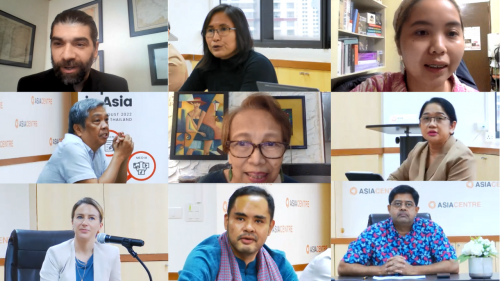
Disinformation Winner of 2022 Philippines Presidential Election
Disinformation, and lots over it over social media, was the predicted winner of the 2022 Philippines Presidential Elections. This was the sentiment of speakers and respondents as well as the results of 2 online polls on 3 May 2022 during an event to commemorate World Press Freedom Day. Entitled, “2022 Philippines Presidential Election: Fake Accounts, Bots, and Trolls”, Asia Centre, in collaboration with the Friedrich Naumann Foundation for Freedom Southeast and East Asia convened a roundtable discussion to assess the impact of social media on mainstream media and election campaigning. (Watch the TikTok here, the event video here, and see event photos here) Officiated by Vanessa Steinmetz, the regional project coordinator at the Friedrich Naumann Foundation for Freedom Southeast and East Asia, and Dr. James Gomez, regional director of Asia Centre, the event welcomed the speakers, reactors, and participants to examine how social media platforms were impacting the election campaign. Setting the stage, Marites Vitug, editor-at-large at Rappler, said disinformation over social media has been used by the lead presidential candidate Ferdinand “Bongbong” Marcos Jr. and his supporters since the 2016 vice-presidential election to positively branding of Bongbong, while negatively affecting his rival Leni Robredo. Krixia Subingsubing, journalist from Philippine Daily Inquirer, expanded the analysis by pointing out that trolls and bots are part of a larger disinformation machinery that includes influencers, celebrities, and even government agencies that are working together to manipulate the public opinion or media outlets by using misleading content. Greg Kehailia, country director of Internews Philippines, explained that since 2016, actions have been taken by Filipino stakeholders to combat disinformation, but it has become a huge problem for the 2022 Presidential Election as fake news is more numerous, more tailored, and more widespread. Eunice Barbara of Inquirer.net, pointed out that professional journalists face challenges in debunking disinformation over social media. She said that the fact-based reporting by mainstream media is actually seen as biased by a large swath of the electorate, making it even more difficult to counter disinformation. Reacting to the speakers, Joel Mark Barredo, Executive Director of SHAPE-SEA, said that disinformation is dismantling the democratic infrastructure that has been rebuilt following the ouster of Ferdinand Marcos. He suggested cutting demand for the disinformation “industry” through accountability and critical consciousness of fake news. Dr. Analiza Perez-Amurao, of the Humanities and Language Division at Mahidol University International College, raised questions on the role of social media companies in addressing disinformation. Referring to her background as an educator, she pointed to the importance of media and digital literacy for the youth. Ed Legaspi, Former Executive Director of SEAPA focused on the role of the election commission and rules governing election propaganda in the Philippines. He said to date the role of COMELEC has been poor and late in addressing the problem of disinformation during elections. He recommended that this weakness be addressed for future elections. From the discussion during the event, it was clear that during the 2022 Philippines Presidential Election campaign disinformation has spiked over compared to the 2016 elections. There is a real risk disinformation might become mainstream, and mainstream media sidelined. Fact-checking and media literacy, while important, are proving inadequate in tackling the issue effectively. The event was covered by BenarNews, read ‘Filipino journalists, experts allege online attacks, disinformation from Marcos camp’
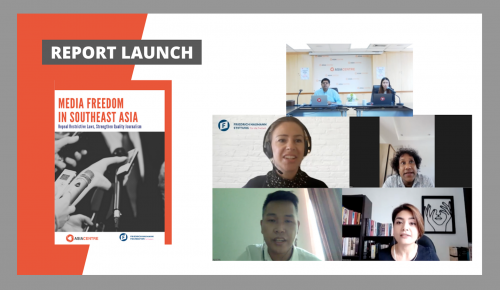
Strengthening Quality Journalism to Fight Online Disinformation
As the majority of news production and consumption shifts to social media so has government control. “Media Freedom in Southeast Asia: Repeal Restrictive Laws, Strengthen Quality Journalism,” outlines how fake news legislation is used to silence media organisations and journalists who produce and disseminate critical content online. Launched by Asia Centre and the Friedrich Naumann’s Foundation on 15 March 2022, the report recommends that governments focus on strengthening media organisations rather than silencing them. Through these efforts journalists can counterbalance online disinformation through verified information and quality journalism. Tech companies can help by not feeding hate and using algorithms to spread fake news. Discussing the impact digitalisation has on journalists, Vanessa Steinmetz, Regional Project Coordinator of the Friedrich Naumann Foundation, began the report launch by explaining how online disinformation makes it hard for journalists to express freely. She believes the report is a starting point of a bigger discussion to overcome problems for journalists to work in more free conditions. Explaining different types of disinformation, Dr. James Gomez, Regional Director of Asia Centre, explained that governments are using anti-fake news laws to punish media organisations and journalists who critically call out bad government policies. He shared statistics, such as increasing Press Freedom Censorship scores and dropping Internet Freedom rankings across Southeast Asia to drive home the message. Pointing to the need for civil society and awareness organisations to lead the charge for media freedom, Tehmina Kaoosji, an Independent Broadcast Journalist, said that all of the report outcomes resonate deeply with the type of actions around media restrictions. She explained how the collapse of the democratically elected government early in the pandemic in Malaysia resulted in the increase of anti-fake news laws and restrictions for media broadcasters and journalists. Nipuna Kumbalathara, Communications Expert at EarthRights, highlighted the oxymoron of how national security is used as an excuse to repress media freedoms and freedom of expression. Instead of repressing the media and activism, he suggested governments should invest in encouraging free and open discussions around issues such as political corruption and the climate crisis. He stressed the need for future discussions on how to involve people beyond civil society organisations in these discussions. Stating the report is essential in highlighting key issues of media and press freedoms, Sao Phal Niseiy, Editor in Chief of Cambodianess, pointed out the importance of fighting the decline of quality journalism and ensuring that rights and freedoms of journalists are not taken away. He said a broader discussion on how to tackle media freedom challenges and make a better future for journalists is needed. The report launch was concluded by Nalinrat Tingoum, Programme Coordinator of Asia Centre by highlighting that the report is available for download on the website. Asia Centre and the Friedrich Naumann Foundation will begin the promotion of their report through social media posts, podcasts, infographics and videos. Stay tuned to our social media for the updates. Watch the report launch here. Download the report here.
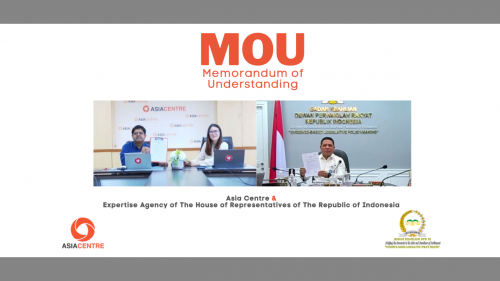
Asia Centre and Indonesian Parliament’s Expert Agency Sign MoU
On 14 March 2022, Asia Centre and The Expertise Agency of The House of Representatives of The Republic of Indonesia signed a 5 year Memorandum of Understanding (MoU). Through the MoU, both organisations pledges to jointly undertake the publishing of research outputs, execute teaching and training programmes, develop course outlines and materials, and support each other to promote joint activities. Built off of a few years of engagement between the two organisations, the MoU formalises the path for future collaborations and joint projects. The Expertise Agency first participated in Asia Centre’s 3rd International Conference on Businesses in Human Rights in 2018 through the discussion of building synergies with other national state institutions on human rights, and later attended Asia Centre’s 6th Conference in September 2021 as a panel partner. In February 2021, Asia Centre’s Dr. James Gomez and Nikula Evanty conducted an online training for the Agency’s staff on drafting policy papers for legislative agendas. The MOU ceremony was conducted over Zoom and attended by representatives of Asia Centre and The Expertise Agency. Welcome remarks were made by Dr. Inosentius Samsul, Head of the Expertise Agency of The Indonesian House of Representatives and Dr. James Gomez, Regional Director of Asia Centre. Dr. Samsul explained how Asia Centre’s international conferences would encourage “officials here to get along on an international scale,” and would help Indonesia capture developing international issues. Dr. Gomez reminded all present that the MoU was built on an ongoing relationship of a few years, and solidifies the long term partnership. Nukila Evanty, an Advisory Board Member of Asia Centre, suggested collaborations on developing research outputs and training programmes to further talks on global issues. Agus Wijayanto of Westminster Foundation for Democracy (WFD) mentioned the opportunity for future discussions on democracy and freedom of expression. Focusing on collaborations on the issue of business and human rights, Dr. Robin Ramcharan, Executive Director of Asia Centre, congratulated the two organisations on their official partnership. The ceremony was widely reported on The Expertise Agency’s social media and website, highlighting the importance of the MoU. The Expertise Agency will be a panel partner in Asia Centre’s 7th International Conference on Freedom of Expression in Asia on 24-26 August 2022. Apart from the Conference, the two parties will explore other partnerships moving forward. Stay tuned for future work and collaborations between Asia Centre and The Expertise Agency of The House of Representatives of The Republic of Indonesia. Sign up for Asia Centre’s 7th International Conference on Freedom of Expression here.
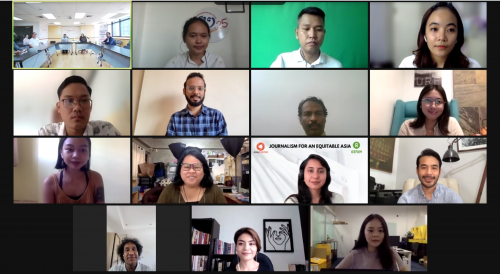
Continued Unemployment Furthers Inequality
The second year of the COVID-19 pandemic pushed the world into further unemployment and inequality. Reporting under the theme, ‘Inequality – Threat to Lives and Livelihoods,’ the journalists discussed how disadvantaged communities such as women, ethnic groups, religious and gender minorities, migrant and informal workers found themselves languishing in unemployment as a result of the pandemic. The journalists’ articles were shared during the 2021-22 Journalism for an Equitable Asia Award. Watch the event here. The top 10 finalists from Asia wrote about how COVID-19 impacted the lives and livelihoods of disadvantaged groups. These groups included minorities such as women, ethnic, gender and religious minorities, and migrant and informal workers. Lockdowns, unequal access to vaccines, and a greater risk of illness and death forced vulnerable groups into poverty and created greater inequality in Asia. Disadvantaged groups have difficulty adapting to the outcomes of the pandemic. With many living in close quarters, it is hard to quarantine and social distance. While wealthy elites are able to afford private healthcare, minorities have limited access to basic health care, soap, and clean water. These disadvantaged groups face discrimination that further prevent them from accessing health services. Vaccine inequality has led to some minorities still waiting to receive a vaccine, which ultimately slows down pandemic recovery of Asian countries. In its third year, the Award received over 150 nominations filed by journalists based in Bangladesh, Cambodia, India, Indonesia, Malaysia, Myanmar, Nepal, Pakistan, Philippines, Singapore, Thailand, and Vietnam. The award is to recognise journalists whose articles highlight the issue of inequality among disadvantaged groups against the backdrop of the COVID-19 pandemic in Asia. John Samuel, Regional Director in Asia, Oxfam in Asia, in his opening remark, recognized and appreciated the efforts of journalists to fight inequality and injustice. He described how the pandemic exacerbated inequality and injustice in Asia and globally, noting that 148 million people worldwide went into poverty. He discussed the importance of journalists writing for an equitable Asia in unprecedented times over the past two years through increasing poverty, inequality, authoritarianism, and crony journalism. He commented on the courageousness of journalists for standing up for an equitable Asia, and stated that he stands with them. Dr. James Gomez, Regional Director, Asia Centre, in his opening remarks Dr. James Gomez, Regional Director, Asia Centre, in his opening remarks said that re-employment post COVID-19 would be key to Asia’s vulnerable communities somewhat halting the ever increasing inequality gap. The hard part would be after that, trying to close the income gap. Hence, as countries declare themselves endemic, they should also be announcing measures to support these vulnerable communities to get back on their feet and address the widening inequality in the community. The top 3 prize winners and top 10 journalists received certificates. The top three prize winners received $US 1,000 (1st Prize), $US 750 (2nd Prize), and $US 500 (3rd Prize) respectively. The top 11 to 15 finalists were given merit awards. The top 10 finalists of this year were announced by the Master of the Ceremony Nalinrat Tingoum. The finalists were: Kok Xinghui from Singapore with her article, “Coronavirus: why vaccine inequality in Asia threatens the world’s recovery, Meg Adonis from the Philippines with her article, “Yet another challenging year for public school teachers,” Poramet Tangsathaporn and Kornchanok Raksaseri from Thailand with their article, “Patpong ‘on its last legs‘,” Lay Sopheavotey from Cambodia with her article, “Trade Unions: Women Workers Need Support During Pregnancy and Postpartum,” Sanket Jain from India with his article, “Covid 19 and The Desperate Lives of India’s Sugarcane Workers,” Wanna Tamthong from Thailand with her article, “How to Make a Killing: Overpriced Covid-19 Tests for migrant labourers,” and Geela Garcia from the Philippines with her article, “Who peels your garlic: Inside Manila’s informal economy.” Shiza Malik announced the top three winners of the Journalism for an Equitable Asia Award. Atom Araullo from the Philippines won the first prize for his article, “The Hunger Pandemic.” The article explains how the COVID-19 pandemic has contributed to increasing hunger and food insecurity in the area of Manila, the nation’s capital. Araullo begins by writing about the stories of those who rely on pagpag, which are food scraps, to feed themselves. Lockdowns have led to high unemployment rates and an increasing struggle for those in impoverished communities to feed themselves and their families. Government cash aid in response to the pandemic was not enough to help these vulnerable groups. Araullo discusses the works of international non-governmental organisations and Filipino citizens to try and aid the fight against poverty and hunger throughout the pandemic. Marielle Lucieno from the Philippines secured the second prize for her article, “The gold trap: COVID-19 is pushing more Filipino children into hazardous work.” The COVID-19 pandemic has reversed efforts to eliminate child labour made by the government and non-government organisations. Lucieno writes about children in the village of Malaya, who were freed from child labour in 2017, but many children were forced back into work during the pandemic to help their struggling families. The Philippine government had committed to remove 2 million children from child labour by 2022 and end child labour by 2025, but COVID-19 will prevent the attainment of these goals. Vantha Phoung, Lay Sopheavotey and Gerald Flynn from Cambodia obtained the third prize for their article, “Locked Down and Out of Work: Desperation Sets in among Garment Workers.” Inequalities that garment workers face such as unequal access to sanitation services and clean water led to many COVID-19 outbreaks in factories. The writers describe how garment factory owners did not have any obligation to provide support to their employees during the COVID-19 lockdown. Many factories refused to pay their workers severance pay, resulting in garment workers facing poverty and debt throughout the pandemic. The writers acknowledged that NGOs, CSOs and unions called on the government to introduce a social protection system to protect garment workers from further wage stealing and inequalities. Shiza Malik, Regional Communications and Media Lead in Asia of Oxfam International, announced the top 5 merit
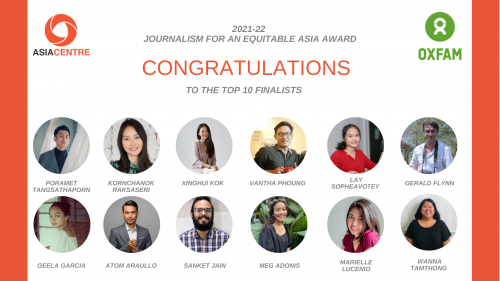
Asia Centre and Oxfam Announce 2021-22 Journalism Award Finalists
Asia Centre and Oxfam in Asia are pleased to announce the finalists for the 2021-22 Journalism For an Equitable Asia Award. The Award recognises the work of journalists who wrote on the threat of inequality to the lives and livelihoods of disadvantaged groups including women, ethnic, religious and gender minorities, and migrant and informal workers. The Journalism for an Equitable Asia Award aims to not only recognize these journalists, but also to encourage more journalists to write for a fairer Asia. Here are the finalists: Miss Meg Adonis is a 25-year-old writer in the Philippines. She was a journalist for the Philippine Daily Inquirer, the country’s largest newspaper, where she told the stories of education stakeholders bearing the brunt of the Philippines’ haphazardly implemented remote learning setup. Seeking justice for their plight, she spoke to overworked yet underpaid public school teachers, burnt out students, and professionals whose months-long work for the government remain uncompensated. Her stories helped bring the public’s attention to the country’s learning crisis and seek accountability from the government. Read her article: “Yet another challenging year for public school teachers” here. Mr. Vantha Phoung and Ms. Lay Sopheavotey are journalists working at Thmey Thmey News. Mr. Vantha has covered social issues, human rights and the environment, including impacts on health, climate change solutions and illegal logging. Ms. Sopheavotey has covered issues on social protection, workers’ rights, human trafficking among others. Mr. Gerald Flynn is a freelance journalist based in Phnom Penh, where he produces in-depth stories exploring Cambodia’s social, political and environmental issues for local, regional and international outlets. The three journalists have collaborated to write an article. Read their article: “Locked Down and Out of Work: Desperation Sets in among Garment Workers” here. Miss Xinghui Kok is a senior reporter at the South China Morning Post. She works on the Asia desk and is based in Singapore, from which she closely monitors and reports on developments in the city-state and the surrounding region. Xinghui works across beats, from politics, macroeconomics and business, to health and social issues. She worked for local papers in Singapore before joining the Post in 2020. Read her article: “Coronavirus: why vaccine inequality in Asia threatens the world’s recovery” here. Miss Geela Garcia is a freelance multimedia journalist and peasant advocate based in Manila, Philippines. Her photographic work focused on inclusive development, documents stories of women, food sovereignty, and the environment, with the aim to write history from the experience of its makers. Her writing and photography appear on South China Morning Post, Philstar, Bulatlat, Thomson Reuters Foundation, and Rappler among others. Read her article: “Who peels your garlic: Inside Manila’s informal economy” here. Ms. Lay Sopheavotey is a political student. Her passion for democracy, human rights and social work led her to become a journalist. Since 2019, she has started working as a young female journalist at Thmey Thmey. She has been covering issues such as social protection, workers’ rights, and human trafficking among others for more than two years. Gradually, she sees social issues in more detail and more importantly, citizens who need social protection. To build awareness on social protection for citizens, she decided to write in detail about citizens’ challenges and needs. Therefore, her article focuses on informal workers, union leaders, and vulnerable women and children. Read her article: “Trade Unions: Women Workers Need Support During Pregnancy and Postpartum” here. Mr. Sanket Jain is an award-winning independent journalist and a documentary photographer based in India’s Maharashtra state, and a Senior Fellow at People’s Archive of Rural India, where he is documenting vanishing livelihoods and dying art forms from rural India. His work has been featured in more than 30 national and international publications. Sanket, who spends most of his time in the countryside, has been extensively reporting on the transition rural India is undergoing through the lived experiences of everyday people. You can read his stories at www.sanketjain.in Read his article: “Covid 19 and The Desperate Lives of India’s Sugarcane Workers” here. Mr. Poramet Tangsathaporn is a new journalist from Bangkok Post with one year experience in journalism. He is passionate in fighting for human rights for the marginalised in Thailand, especially the LGBTQ+ community, sex workers, PHIV, women, drug users and working class, by writing to reveal how they are being neglected or subordinated in societal and national level and point out solutions. The purpose of these writings aims to ignite social change and policy change to improve their lives at a national level and ultimately, at a global level. His goal in his journalism career since day one is, “to make the unheard heard.” Ms. Kornchanok Raksaseri is a Thai journalist who has covered almost every field from business and lifestyle to politics and social issues. She was a Political Editor for The Nation, Assistant Managing Editor for Econ News and Deputy News Editor for Bangkok Post. Now she works with Zero Covid Thailand as a content provider and campaigner aiming to eliminate COVID-19 from her country. The two journalists have collaborated to write an article. Read their article: “Patpong ‘on its last legs’” here. Mr. Atom Araullo is a journalist and documentary filmmaker. He currently hosts GMA Network’s “The Atom Araullo Specials” and “I-Witness.” He also anchors State of the Nation, a nightly newscast on GTV. Araullo’s work revolves around disaster reporting, climate change, conservation, conflict, and social issues. In 2017, he co-founded FYT, an independent media organization that promotes community and explanatory journalism. He previously worked as an anchor and reporter of ABS-CBN News. Araullo is also the National Goodwill Ambassador for UNHCR, the UN Refugee Agency. He earned a degree in Applied Physics at the University of the Philippines. Read his article: “The Hunger Pandemic” here. Ms. Wanna Tamthong (Tan) is a journalist of Prachatai, an independent newspaper in Thailand. A former law student turned journalist who came up with a number of questions on what is going on in her hometown, the quality of life, women rights, migrant labours, youth, democracy, and the future