
China’s One Belt, One Road Initiative: What Role for Southeast Asia?
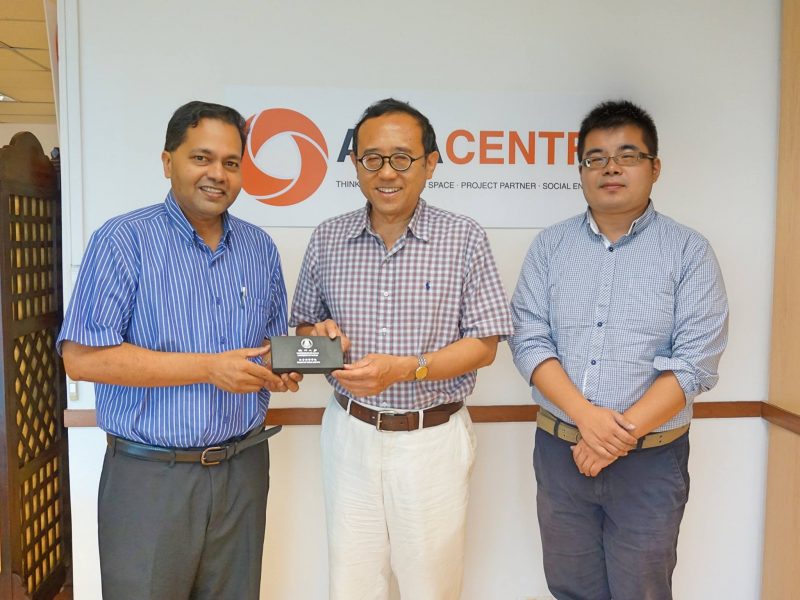
The role of Southeast Asia in China’s one belt, one road vision for its relations with Asia, Africa and Europe was the topic of discussion between Asia Centre and Dr. Wang Jianwei, Director of the Institute of Global and Public Affairs, University of Macau. China’s One Belt, One Road initiative was announced in 2013 by President Xi Jinping. It seeks to increase the connectivity between China and Asia, Africa, the Middle East and Europe. Major support mechanisms for this important initiative are China’s policy banks (China Development Bank and Exim Bank) that support a ‘going-out’ strategy, state-backed investment funds (including the 2013 China-ASEAN Infrastructure Investment Fund and the Silk Road Fund) and the Asian Infrastructure Investment Bank (AIIB). With these coordinated initiatives China has become a major player in global investment and finance. As with great powers in the past, China seeks to further integrate its own economy into the global economy and thereby increase its regional and global influence. Domestically, Southwest China becomes a gateway to the land and ocean “silk roads”. On route to connectivity between China and Africa and Europe, is Southeast Asia, which appears keen to serve as a springboard for China’s global presence. Nearly all ASEAN countries are keen to attract investments in the region’s large scale projects in areas such as transport and energy. China already has a significant presence in Cambodia, Laos, Myanmar and Vietnam. At ASEAN’s summit in Vientiane in 2016, the members were mindful of China’s growing economic presence in the region as they sought to diplomatically navigate thorny issues between China and the region, notably on the South China Sea conflict. Geopolitical issues aside, for its part, China must be mindful of local sensitivities as its economic presence is increasingly felt in places like Thailand. The latter country, for example, is the centre of the ASEAN Economic Community, where Chinese firms are exerting a solid footprint in areas such as e-commerce through companies like Baidu, Tencent, Alibaba and JD.com, in tourism through giant Chinese tour operators in places like Phuket, Chiang Mai and Pattaya that bring over 10 million Chinese tourists per year and in the real estate sector in which Chinese investors partnering with Thai companies will have invested well over 120 billion baht. Trade relations have increased with the China-ASEAN Free Trade agreement. The relationship must ultimately be mutually beneficial. Asia Centre highly appreciated the exchange of views with the University of Macau and with partner institutions in China and looks forward to continued discussions with universities and think tanks in China.
Asia Centre delivers lectures on Women’s Rights in China
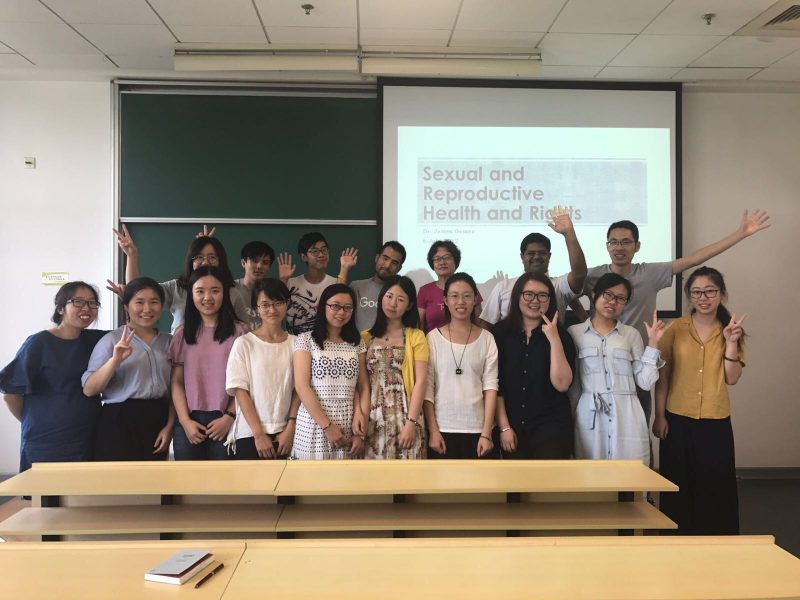
Asia Centre’s Dr James Gomez, delivered several key lectures at a one week course on the Study of Gender and Women’s Rights in China in Shanghai from 3-7 July 2017. Organised by Fudan University’s National Base for Human Rights and Training the course drew some 20 students from within and outside the university. The course is part of a range of activities within China organised by “National Bases” around the topic of human rights. Throughout China there are presently 8 National Bases for Human Rights and Training located within different universities which draws researchers from within its departments, faculties and schools. The National Base for Human Rights and Training at Fudan University was founded by the Ministry of Education, the Publicity Department of the Communist Party of China, the State Council Information Office, and China Society for Human Rights Studies in 2014 in accordance with the National Human Rights Action Plan of China (2012-2015). Dr Gomez, presented two sessions during the course entitled, “Sexual and Reproductive Health Rights” and “Gender Stereotypes and Stereotyping”. He covered key concepts and made references to examples in both in China and Southeast Asia. Additionally, Dr Gomez, also delivered a public lecture on the human rights trends in Southeast Asia at the Law Faculty, Fudan University. Apart from gender and women’s rights, an emerging area of interest in China is business and human rights. Asia Centre is exploring opportunities to contribute towards China’s understanding of human rights in these and other areas by engaging with these “National Bases”.