
Freedom of Religion and Belief in Southeast Asia: Evidence Based Research in Support of Regional Networks
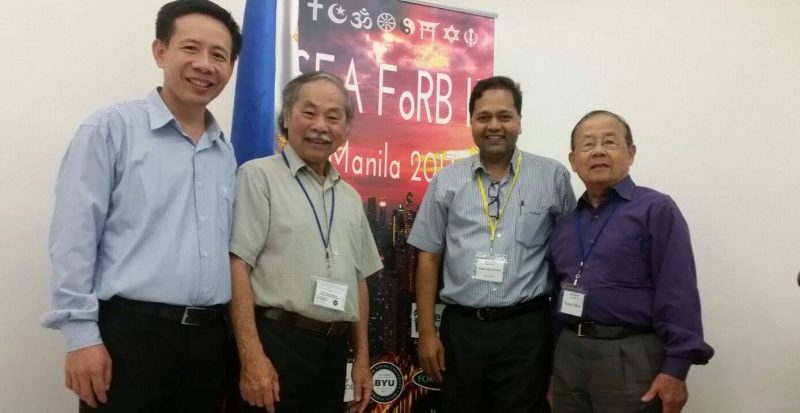
The challenges to freedom of religion or belief (FoRB) emanating from analysis of the Universal Periodic Review of Southeast Asia were outlined by Asia Centre’s Dr. Robin Ramcharan at the third Southeast Asia FoRB (SEA ForB) conference in Manila from 7 to 8 November 2017. In the lead up to this conference, Asia Centre undertook a regional analysis of these challenges in collaboration with the International Panel of Parliamentarians for FoRB (IPPForB). The Universal Periodic Review revealed a number of region-wide issues: rise in FoRB based violence against non-dominant religions, non-alignment of domestic legislation with international standards, faith-based governmental discrimination especially in countries which have adopted official religions, restrictions on places of worship, restrictions on the right to convert, discrimination against women and the destruction of the Indigenous peoples’ habitats which negatively impacts their spiritual practices and belief systems. In this regard, practices (mining in particular) of business entities need greater attention. The intersectionality with related rights also featured in the UPR reports, notably, negative impacts on freedom of expression due to restrictions (in criminal codes and blasphemy laws) on public discourse about religion, freedom of assembly, migrant workers rights and on refugee protection. Discrimination and denial of rights across the region with respect to the Rohingya community in Myanmar and those fleeing the country was noted. The ongoing ethnic cleansing of the Rohingya community from Myanmar featured poignantly at the SEA FoRB conference in Manila. Collectively, the SEAFoRB conference raised the following salient points: The problematic global and regional human rights protection regime, Uncertainty over global leadership on human rights in the current geopolitical context, The ineffectiveness of global human rights institutions in the face of extreme crises like that taking place in Myanmar, The need for effective national human rights systems and institutions to take forward human rights protection, notably on FoRB, The need for effective regional and universal support mechanisms The need for sound, accurate, evidence-based documentation for effective advocacy on FoRB. In order increase the profile of FoRB in the region SEAFoRB partners concurred on the need to create a formal regional FoRB network that will step-up engagement on FoRB challenges. Asia Centre looks forward to being an integral part of that network. In the meantime, the Centre will continue its research and advocacy in this very important area.
Freedom of Religion or Belief Threatened in Southeast Asia
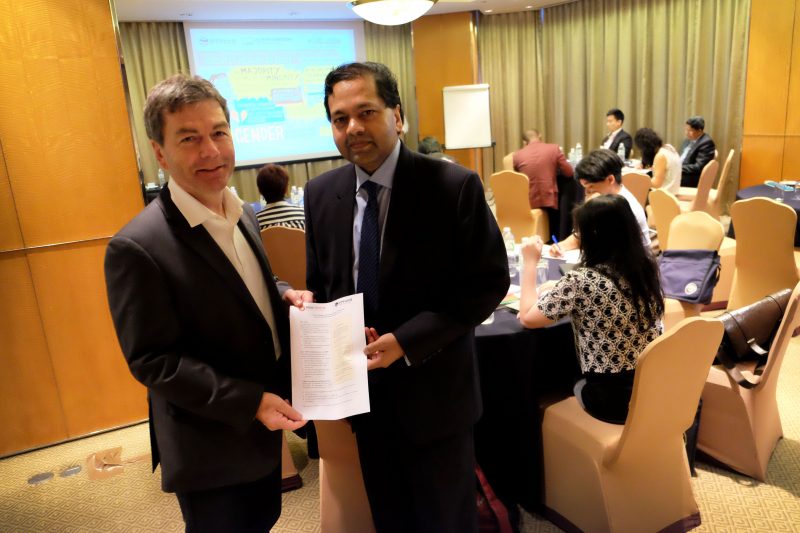
Reports jointly produced by Asia Centre and International Panel of Parliamentarians for Freedom of Religion (IPPFoRB) reveal serious challenges to religious freedom in Southeast Asia. The 11 country reports were released at IPPFoRB’s conference for ASEAN Parliamentarians held in Bangkok on 7th and 8th October 2017. Dr. Robin Ramcharan of Asia Centre coordinated the research on behalf of IPPFoRB. Looking at all the ASEAN countries, the research shows that religious freedom appears to be regressing in Southeast Asia. Serious challenges have arisen in recent years across the region, such as in Brunei, Indonesia and Malaysia, according to the reports. The country reviews of each of the 11 States of the region provide a toolkit for parliamentarians, civil society and other stakeholders who want to engage on FoRB, especially in the Universal Periodic Review (UPR) of the Human Rights Council. “The reports provide a valuable resource for parliamentarians and civil society organisations across South East Asia,” said David Anderson, member of the IPPFoRB Steering Group and Member of Parliament in the Canadian House of Commons. He added: “I encourage ASEAN parliamentarians to use these expert reports to press their respective governments for the legislative and policy changes necessary to secure religious freedom.” Asia Centre aims to continue its evidence based research on FoRB in Southeast Asia and its intersectionality with other fundamental rights, such as freedom of expression.