
Asia Centre Launches Report on Political Hate Sites in Singapore
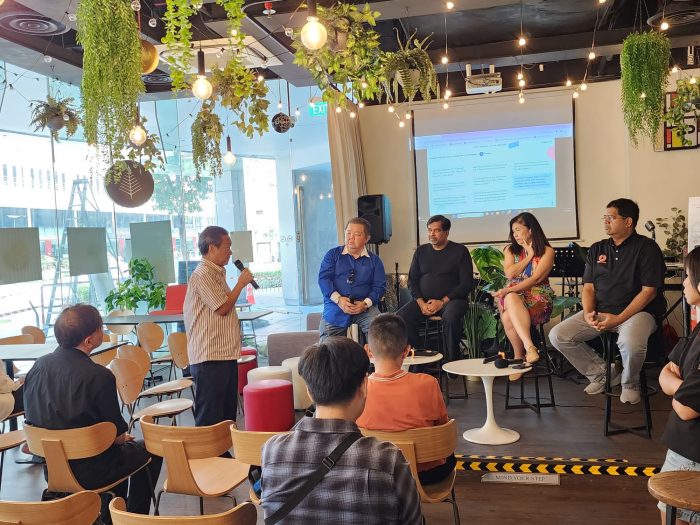
On 8 July 2023, Asia Centre held a discussion panel for the launch of its newest report, Political Hate Sites in Singapore: Flourishing without Repercussions. The event, jointly organised with two Singapore-based independent media platforms: The Independent Singapore and Wake Up Singapore, gained over 30 participants. To promote the launch event, Asia Centre released two promotional videos on its social media platforms introducing what are political hate sites in Singapore. Additionally, The Independent Singapore, one of the organising partners, published a promotional pre-event article, and The Online Citizen, a regional news platform based in Taiwan, released an audio post of Dr James Gomez, Asia Centre’s regional director, providing a summarised definition of political hate sites. Shortly after its release on 8 July 2023, Agencia EFE, a Spanish international news agency, reported the findings of the report in its article “Aumentan los discursos de odio contra opositores y activistas en Singapur, según estudio” (Hate speech against opponents and activists on the rise in Singapore, study finds) with SWI swissinfo.ch – the Swiss news and information platform. This is followed by another article published by The Online Citizen, a regional news platform based in Taiwan on 9 July 2023, “Asia Centre report highlights the proliferation of unchecked hate sites in Singapore” to share its findings. Besides, the key research findings were also promoted via an online campaign with infographics and infographic video posted on Asia Centre’s social media platforms, Facebook, Linkedin, Instagram, Twitter and Tiktok. The event, held at Palms Bistro, Singapore, was attended by lay Singaporeans, members of the opposition political parties, media activists and journalists of independent media platforms. Dr James Gomez, Asia Centre’s regional director, delivered the presentation about the report’s findings and highlighted how many Singaporeans often overlook the existence of such political hate sites due to the normalisation of hate speech in political discourse and debate in Parliament and the mainstream media. Through the 3 phases of internet control and various laws and legislations, the state has controlled and regulated political discourse and participation of the opposition parties, media advocates, independent journalists and media platforms, thereby narrowing the space of critical political discourse both offline and online. The report has identified the proliferation of hate content and hate sites online as the fourth phase of internet control, whereby Dr James expounded on the traits, tactics and targets of political hate sites by presenting 4 case studies as identified by the report. Moderated by Craig Teo of Reverse Auction & Financial Services Consultant, the findings were further discussed by Wendy Low of Eldan Law LLP, Jeannette Chong-Aruldoss, a prominent lawyer with 30 years of experience and a former politician, and Kumaran Pillai of The independent Singapore. Wendy Low presented over a pre-recorded video the strategies that victims of online hate speech can utilise to seek legal justice against their perpetrators through four main strategies; identifying the hater before taking legal actions, building one’s narrative through independent news platforms to amplify one’s side of the story, remaining above board by exercising transparency in the investigation process and using existing laws on harassments (such as POHA) against the perpetrators of hate. Jeannette Chong Aruldoss pointed out that the public has generally accepted certain behaviours and speech which disable them from identifying the hate narratives contained within them. Hate speech is a dangerous, divisive tool to society and must be curbed not just by legislation but also by civic actions from the members of society. Bringing in the insider’s perspective as an independent media practitioner, Kumaran Pillai asserts that the incumbent political party has distorted the online landscape for political discourse and restricts the space for different political parties and the general public to contest for the best ideas through constructive debates on policies and to call for accountability of public officials. In the report, Asia Centre recommends the international community, UN bodies, Singapore parliament, political parties, tech companies, and civil society organisations to 1) monitor, document, and call out cases of online hate speech in Singapore; 2) use UN mechanisms to engage with the Singaporean government to address political hate speech and commit itself to international standards of freedom of expression; 3) advocate for the amendment of laws restricting freedom of expression; 4) develop new technology solutions to improve the detection of online hate speech; and 5) work cooperatively to consider everyone’s views in the development of new strategies to address online hate speech. This small cluster of critical voices is a manifestation of a larger, suppressed and silent resistance to the ruling regime in Singapore. Improved internet freedoms and safety to voice criticisms will provide the necessary valve to express democratic aspirations in Singapore without risking unnecessary and abrupt political upheavals. Read the full report here. You can also watch the TikTok video of the report launch event here, as well as the infographic video here. This report is Asia Centre’s first report on Singapore. The Centre has published four other reports on internet freedoms in Southeast Asia: Internet Freedoms in Malaysia: Regulating Online Discourse on Race, Religion, and Royalty (2023) Internet Freedoms in Cambodia: A Gateway to Control (2021) Timor-Leste: Internet Freedoms Under Threat (2021) Myanmar: Dismantling Dissent – Crackdowns on Internet Freedoms (2021) Asia Centre is a civil society research institute in Special Consultative Status with the United Nations Economic and Social Council. It serves as a knowledge partner and undertakes evidence-based research as well as provides capacity-building training for end beneficiaries. If you would like to collaborate with the Centre, please send an expression of interest to contact@asiacentre.org.
ASIA Centre Takes Fake News Discussion to Indonesia
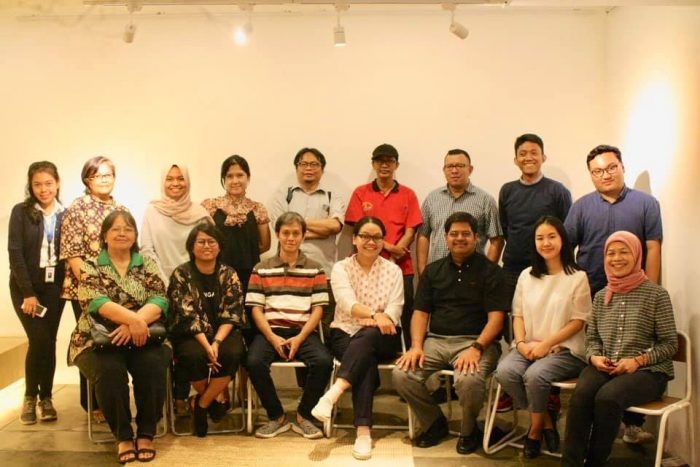
Asia Centre and local partner – Indonesian alumni of Asian Public Intellectuals – co-organised two seminars on fake news or “berita hoax” in Jakarta on 16 and 17 Jan 2019. The seminars are part of a series of activities around fake news Asia Centre will undertake with partners in Indonesia in 2019. On 16 January 2019, the first seminar entitled “Fake News and Freedom of Expression” was hosted by venue partner KineForum at a theaterette at the Tun Ismail Marzuki arts complex. Speakers included, Asia Centre’s Dr. James Gomez, Dr. Sri Nuryanti, LIPI political researcher and former Election Commissioner (2007-2012), Abdul Manan, Chair, Alliance of Independent Journalists, Dr. Hero Susetyo, Assistant Professor, Law Faculty, University of Indonesia with session moderator Resmi Setia Milawati, Social Researcher, Office of the Vice-President. During the session, speakers identified that in Indonesia in the run up to the 17 April 2019 presidential election, “berita hoax” has become more intensive. Reasons given for the motivation for producing fake news is money, to manage and counter political issues and for voter mobilisation. It was pointed out that Indonesian laws of 1946 and 2008 already make reference to fake news. However, in additional to laws, awareness programmes by election commission (KPU) was highlighted as an important step to promote fake news literacy among voters. On 17 January 2019, the second seminar entitled “Critical Thinking and Digital Media Consumption: Year of Politics and Beyond” was hosted by venue partner AKASARA at their co-working space cum bookshop at Jalan Kemang Jaya in South Jakarta. Speakers included Asia Centre’s Dr. James Gomez, Hikmat Darmawan, Chair Film Committee, Jakarta Arts Council, Aquino Hayunta, Art Activist with session moderator Arfa Suchi Ramadhon, HIVOS. During the session, the panelists discussed if media literacy and fact check efforts can help to keep fake news reined in? Several of the participants felt that people have a behaviourial tendency to “share” even though they know the content is false. When one caught in an online bubble such as a Facebook group or a WhatsApp group the option people exercise is to leave of “keluar” group, especially when they don’t like the content or think there is too my fake news circulating in it. Hence, to ensure fake news can be kept in check, one suggestion that was thrown up was to get technology companies to stop the viralisation of fake news by taking it down from their platforms. One theme that came out across the two seminars was the role of journalism. Both speakers and participants debated if critical thinking and quality journalism can be one way to combat fake news. The audience remained skeptical as there is a trust deficit in journalism in some countries in Southeast Asia due to government control. Trust in Journalism in countries with media freedom is higher and trust in online platforms is higher when the mainstream media is less trusted. Further, the number people accessing mainstream media has dropped significantly. Online media channels, while an estimate, is more than print newspapers, television and radio. Which explains why advertising has gone online now. In fact, what we are experiencing is an era of niche media. In particular, we are living in a post-truth area in a time of niche online media, hence one option is to return to analog, so as to side step the challenges of technology. Asia Centre’s plans to undertake further activities in Indonesia. The next planned activity on “Religion, Media, and Politics in Southeast Asia” is with the Center for Religious, Pluralism and Democracy Studies, Satya Wacana Christian University in Central Java, Indonesia.