
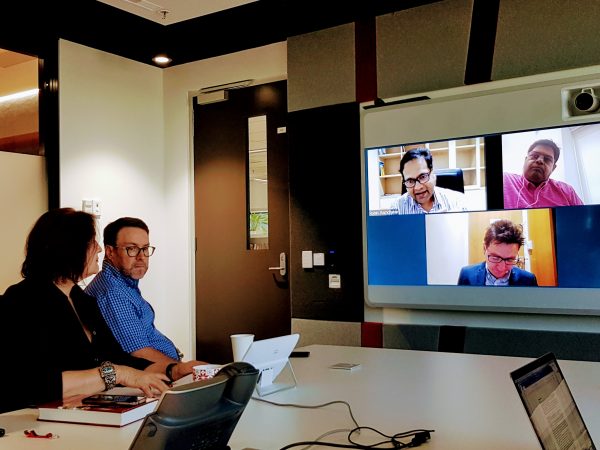
Asia Centre and Monash University co-host Roundtable on the Rohingya Crisis
Asia Centre and Monash University co-hosted a roundtable on the Rohingya Crisis on 15 December 2017, which was held at the National Centre for South Asian Studies at Monash. Experts and discussants pondered the causes and the future of the humanitarian efforts, including the November 2017 agreement between Bangladesh and Myanmar for the return of over 700,000 Rohingya to Rakhine State. Whereas the UN and wider international community have responded within constrained parameters, the Association of Southeast Asian Nations (ASEAN) appears to be impotent in the face of one of the worse cases of gross and massive violations of human rights in recent times. Even if the Rohingya in Bangladesh return to Rakhine, the core underlying causes of the crisis still remain – their statelessness and consequent lack of rights in Myanmar. In October of this year Asia Centre also hosted a human rights dialogue which saw the Ambassador of Bangladesh highlighting the Bangladesh response to the Rohingya crisis. The Centre aims to pursue further work on the situation of the Rohingya in 2018.
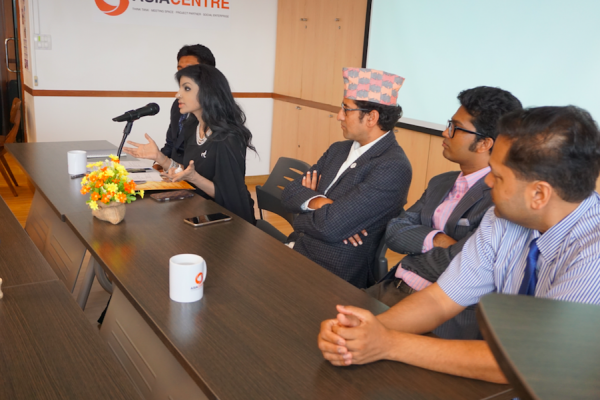
Ambassador of Bangladesh Highlights Rohingya Crisis in Human Rights Dialogue at Asia Centre
The desperate plight of the Rohingya people in Myanmar was raised by the Ambassador of Bangladesh, H.E. Ms. Saida Muna Tasneem during an address at Asia Centre to youth from South Asia and Thailand. As Bangladesh bore the brunt of the influx of refugees, Ambassador Tasneem made an impassioned plea for the world and Southeast Asia to both care about and act resolutely to address the humanitarian crisis in Myanmar, which the international community has called “Ethnic Cleansing”. The United States has also labeled the situation ‘ethnic cleansing’. It will be recalled that over 600,000 Rohingya refugees have fled into Bangladesh and some to other parts of the world since the latest exodus started following violence in Rakhine State on 25 August 2017. Mostly women and children have made it to Bangladesh in refugee camps of Kutupalong and Nayapara, as well as in makeshift sites. Overall, since October last year some 700,000 have fled to neighbouring countries due to the Myanmar Government’s ‘clearing operations’. Despite a recent agreement between Bangladesh and Myanmar on the return of the Rohingya to Myanmar, based on a 1992/93 repatriation pact, history suggests that any return will be a very long term process and the thorny issue of their citizenship will remain. The Rohingya people have faced discrimination and persecution in Myanmar for decades. The Myanmar government maintains that they are ‘Bangladeshis’ who migrated in recent times to Myanmar and withdrew their citizenship rights in 1982. This condition of statelessness has seriously aggravated their livelihoods, as they are thus prevented from enjoying their most basic rights, including religious freedom. Amnesty International noted that the Rohingya lived under state-sponsored, institutionalized discrimination that amounted to apartheid, in a November 2017 Report. Women in particular have borne the brunt of the atrocities being committed. A United Nations women’s rights panel has requested the Myanmar to report within six months on allegations of sexual violence by its Security forces. This ‘exceptional report’ by the Committee on the Elimination of Discrimination Against Women, was issued because the committee felt very compelled to do so due to “reports of sexual violence, rape, torture, mutilation” that women were allegedly being subjected to. Nobel Laureate Daw Aung San Suu Kyi’s silence on the Rohingyas, universally condemned by her international peers, is even more striking in this context. The Ambassador, while stressing her country’s compassionate response to the crisis despite its many existing challenges, also made a plea to the youth assembled at Asia Centre, in late October 2017, to never let this happen again. She emphasized that it was youth activism for human rights in other parts of the world, notably young people in Southern United States in the 1940s and 1950s, whose courage led to the greatest advances in human rights in that country. This was critical in the context of international and regional political mechanisms that appear to be ineffective in responding to crimes against humanity, despite the nascent ‘responsibility to protect’ doctrine. His Holiness Pope Francis’s well intentioned visit to Myanmar in late November 2017, was undertaken with great trepidation as he too was advised against the use of the word “Rohingya”, out of fear that there could be backlash against Christian minorities. The Pope made a necessary visit, especially as the Myanmar government denies any faith based conflict on its territory, for peace and harmony among all faiths and for reconciliation.
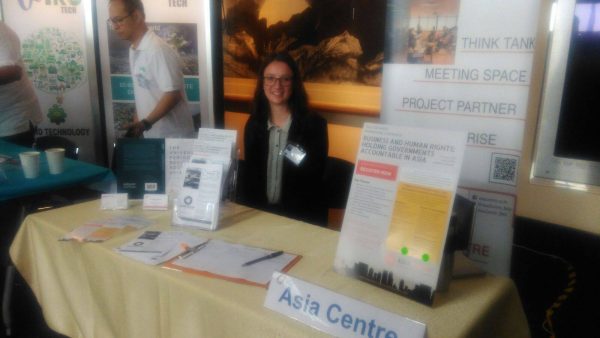
Innovative Initiatives for Sustainable Development at UN SDG Week
On Thursday 30 November, Asia Centre participated in the SDG (Sustainable Development Goals) Week organized by UN’s Economic and Social Commission for Asia and the Pacific. This year’s event focused on innovation – integration – inclusiveness and implementing the 2030 agenda for sustainable development in Asia and the Pacific. The SDG Week brought together government organizations, intergovernmental partners and agencies, regional organizations, businesses, think tanks, academia and other stakeholders to engage in discussions on effective implementation of the SDGs. Throughout the SDG week Asia Centre showcased its work at the Pavilion of Partnerships alongside other social enterprises, civil society organizations and universities among others. Asia Centre’s Michelle D’cruz and Tessa Alleblas also joined discussions in the Bazaar of Ideas where social enterprises and start-ups presented innovative solutions to economic, social and environmental problems and to promote sustainable development. These included projects on social housing, tackling the waste problem by providing biodegradable alternatives, and removing waste from the ocean and turning this into clothing and accessories. Asia Centre continues to follow discussions on SDGs closely and remains committed to promoting sustainable development through its work on human rights. As part of this commitment, the Asia Centre will organize an international conference on business and human rights in July 2018.
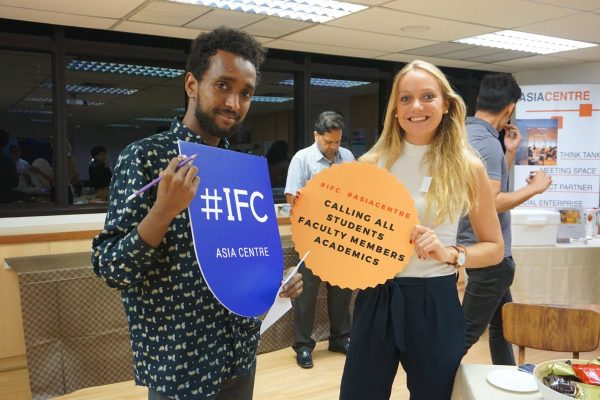
IFC #3: Innovative Research on Display
Four speakers came forward to share their research interests in their respective fields at AsiaCentre’s third International Faculty Club (IFC) Night. They spoke on a variety of topics, including niche areas such as on representations of Tibetan Buddhism in contemporary China, women’s entrepreneurship and digital technologies and linguistics. Jingyu (Forrest) Huang, introduced his study on a three-dimensional Buddhist Mandala in Pule Temple, in Chengde, China, and the understandings of these works in contemporary China. He shared his keen interest in the art history of Tibetan Buddhism. He is a Master’s student at the College of Religious Studies of Mahidol University. Gender, migration and entrepreneurship was discussed by Puja Singh who is pursuing a doctorate focusing on this theme. She highlighted the relationship between entrepreneurial orientation and enterprise performance with women’s empowerment as mediator. Her ideas solicited much discussion and interest in the models that she is developing. Research into linguistics for second language learners using digital technologies is Willard Van De Bogart’s area of expertise. He is a lecture and researcher at Bangkok University and offered his insights into this cutting edge research field. Youth engagement and empowerment also featured in the evening’s discussions as Hamsa Mohamed, a student at Stamford International University, introduced his work with and the role of AISEC in generating future leaders with innovative solutions to world challenges. The evening saw new faces joining the IFC community of academics, researchers and students.Held on 23 November at Asia Centre, IFC attracted over 20 participants for the line up of speakers. Asia Centre will continue to engage with the community through the IFC in 2018 and to seek new, innovative research and projects being undertaken in Bangkok and beyond. Meeting Spaces
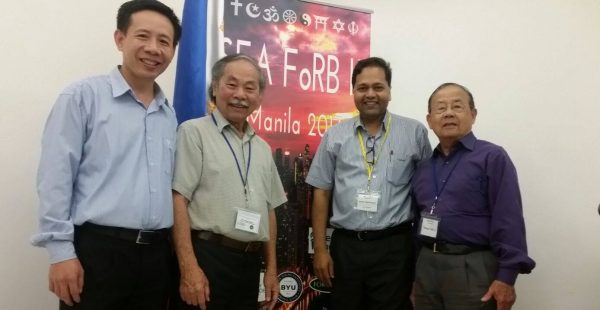
Freedom of Religion and Belief in Southeast Asia: Evidence Based Research in Support of Regional Networks
The challenges to freedom of religion or belief (FoRB) emanating from analysis of the Universal Periodic Review of Southeast Asia were outlined by Asia Centre’s Dr. Robin Ramcharan at the third Southeast Asia FoRB (SEA ForB) conference in Manila from 7 to 8 November 2017. In the lead up to this conference, Asia Centre undertook a regional analysis of these challenges in collaboration with the International Panel of Parliamentarians for FoRB (IPPForB). The Universal Periodic Review revealed a number of region-wide issues: rise in FoRB based violence against non-dominant religions, non-alignment of domestic legislation with international standards, faith-based governmental discrimination especially in countries which have adopted official religions, restrictions on places of worship, restrictions on the right to convert, discrimination against women and the destruction of the Indigenous peoples’ habitats which negatively impacts their spiritual practices and belief systems. In this regard, practices (mining in particular) of business entities need greater attention. The intersectionality with related rights also featured in the UPR reports, notably, negative impacts on freedom of expression due to restrictions (in criminal codes and blasphemy laws) on public discourse about religion, freedom of assembly, migrant workers rights and on refugee protection. Discrimination and denial of rights across the region with respect to the Rohingya community in Myanmar and those fleeing the country was noted. The ongoing ethnic cleansing of the Rohingya community from Myanmar featured poignantly at the SEA FoRB conference in Manila. Collectively, the SEAFoRB conference raised the following salient points: The problematic global and regional human rights protection regime, Uncertainty over global leadership on human rights in the current geopolitical context, The ineffectiveness of global human rights institutions in the face of extreme crises like that taking place in Myanmar, The need for effective national human rights systems and institutions to take forward human rights protection, notably on FoRB, The need for effective regional and universal support mechanisms The need for sound, accurate, evidence-based documentation for effective advocacy on FoRB. In order increase the profile of FoRB in the region SEAFoRB partners concurred on the need to create a formal regional FoRB network that will step-up engagement on FoRB challenges. Asia Centre looks forward to being an integral part of that network. In the meantime, the Centre will continue its research and advocacy in this very important area.
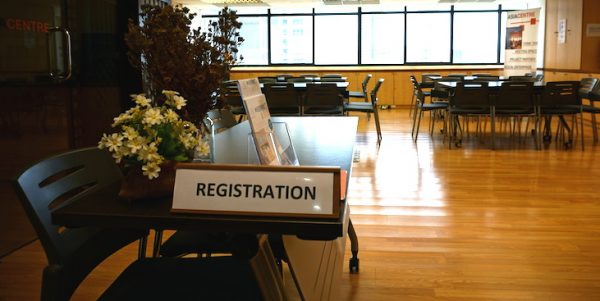
Check out our new Meeting Space video. Hurry up, space available NOW!
Check out our new Meeting Space video: https://www.facebook.com/asiacentre.rental/videos/987915438016846/ Hurry up, space available NOW! Contact Us: Tel +66-2-1293773 Email: info@asiacentre.co.th

Asia Centre Joins Anti-Death Penalty Asia Network (ADPAN)
Asia Centre is pleased to announce its membership in ADPAN, which works towards abolishing the death penalty in Southeast Asia and beyond, on the occasion of the 15th world anti-death penalty day on October 10, 2017. Southeast Asia has seen a resurgence in the use of the death penalty in recent years, notably in Malaysia and Singapore. Whereas it has been abolished in the Philippines since 2006, the current government seeks to re-instate its use. Indonesia and Vietnam appear to use this sentence liberally. Moratoria remain in other parts of the region. The right to life is guaranteed under international human rights law. The death penalty for all types of offences runs counter to this fundamental right. Powerful arguments against this penalty have been advanced: 1) That the practice of the death penalty – an ‘eye for an eye’ approach – by States is not a good basis on which to build a peaceful society; 2) That this sentence is used mostly against poorer segments of society and vulnerable communities, such as the LGBTI community for the act of gay sex; 3) That it does not deter crime; 4) That miscarriages of justice may occur as many on death row may in fact be innocent; 5) That various methods of execution involve much pain and suffering to those sentenced (as powerfully depicted in the work of anti-death penalty artist Toshi Kazami); and 6) That long periods on ‘death row’ inflicts cruel, inhuman and degrading treatment on those thus sentenced and causes and pain on their families. The United Nations (UN) has urged states to respect the rights of those facing the death penalty, to progressively restrict its use and to reduce the number of offences for which this sentence is used. UN Secretary General (SG) Antonio Guterres has stated that there was “no place for the death penalty in 21st Century” during an anti-death penalty event of the Office of the High Commissioner for Human Rights on 10 October in New York. Globally, some 170 countries have either abolished or stopped using the death penalty. The SG noted that four countries only were responsible for 87 per cent of all remaining executions and expressed concern over a worrying trend towards reversing long-standing moratoria. Asia Centre has supported initiatives in line with ADPAN’s mission, which is to work for the abolition of the death penalty primarily across Asia and the Pacific and the world at large. The Centre organized a regional panel on the death penalty in 2015 and facilitated a discussion on Toshi Kazami’s exhibition in Bangkok in October 2016. TheCentre participated in ADPAN’s General Assembly as an observer on 20 July 2017 in Kuala Lumpur and also contributed to the subsequent two-day National Conference on the Abolition of the Death Penalty in Malaysia and in Asia-Pacific. During the National Conference the Centre’s Dr. Robin Ramcharan called attention to the need for better and more strategic use of the Universal Periodic Review in efforts to advocate for abolition of the death penalty. Likewise, National Human Right Institutions have a vital role to play. Asia Centre engages in evidence-based research on regional human rights issues and mechanisms, including on the death penalty. In July 2018, Asia Centre will examine, inter alia, the capacity of regional human rights instruments to contribute to the elimination of the death penalty.
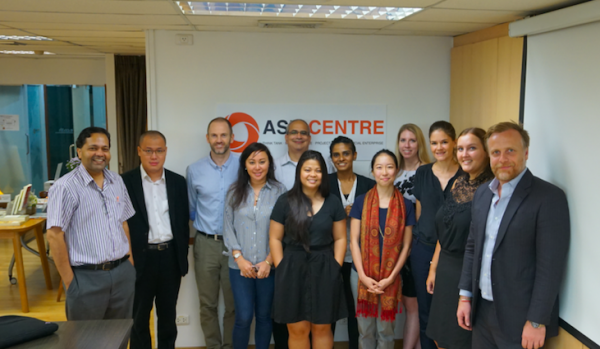
Impact of the UPR on the Protection of Human Rights in Southeast Asia
In its ongoing work on the impact of the Universal Periodic Review (UPR) of the Human Rights Council on the protection of human rights in Southeast Asia, Asia Centre convened a focus group to discuss its research findings for a baseline study on this mechanism. Held on October 6, 2017, the session was facilitated by Asia Centre’s Dr. Robin Ramcharan and it included participants from national, regional and international organisations. Civil society and other stakeholders noted during the discussions that since the UPR is a dialogue mechanism that States are comfortable with, it might be effectively harnessed as a platform for holding States accountable and keeping discourse on human rights issues alive. Key points raised by participants included the need for greater strategic engagement and coalition building by civil society, challenges in the follow up and implementation of recommendations and the need for capacity building on the UPR for civil society and government officials. The baseline study, conducted in partnership with the Heinrich Boell Stiftung, Southeast Asia, adds to the emerging evidence-based research on the impact of the UPR on human rights protection in Southeast Asia and seeks to enhance civil society’s advocacy strategies. The feedback and points raised during the discussion, echoed many of of the trends revealed in Asia Centre’s initial mapping of the UPR and its inaugural UPR conference over the period 2016 to 2017. The Centre’s evidence-based research on the UPR takes place in the context of its Human Rights Programme.
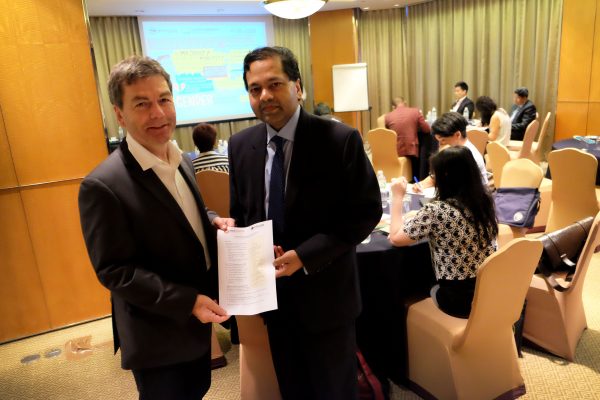
Freedom of Religion or Belief Threatened in Southeast Asia
Reports jointly produced by Asia Centre and International Panel of Parliamentarians for Freedom of Religion (IPPFoRB) reveal serious challenges to religious freedom in Southeast Asia. The 11 country reports were released at IPPFoRB’s conference for ASEAN Parliamentarians held in Bangkok on 7th and 8th October 2017. Dr. Robin Ramcharan of Asia Centre coordinated the research on behalf of IPPFoRB. Looking at all the ASEAN countries, the research shows that religious freedom appears to be regressing in Southeast Asia. Serious challenges have arisen in recent years across the region, such as in Brunei, Indonesia and Malaysia, according to the reports. The country reviews of each of the 11 States of the region provide a toolkit for parliamentarians, civil society and other stakeholders who want to engage on FoRB, especially in the Universal Periodic Review (UPR) of the Human Rights Council. “The reports provide a valuable resource for parliamentarians and civil society organisations across South East Asia,” said David Anderson, member of the IPPFoRB Steering Group and Member of Parliament in the Canadian House of Commons. He added: “I encourage ASEAN parliamentarians to use these expert reports to press their respective governments for the legislative and policy changes necessary to secure religious freedom.” Asia Centre aims to continue its evidence based research on FoRB in Southeast Asia and its intersectionality with other fundamental rights, such as freedom of expression.
Bandung Revisited: Africa-Asia Relations in the 21st Century
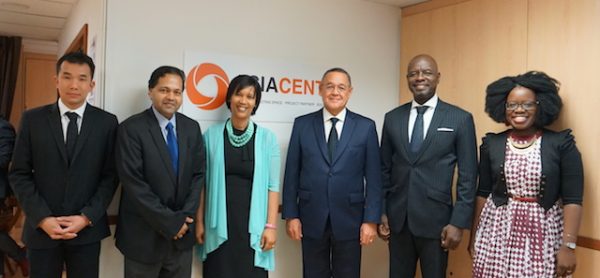
The opportunities for greater engagement and exchange between Africa and Asia are numerous and can lead to mutual benefit for the regions. This was key-takeaway from Africa-Asia roundtable held at Asia Centre on 5th October 2017. Bandung Revisited: Africa-Asia Relations in the 21st Century was convened in partnership with Stenden University Thailand and attracted a diverse audience of over 30 including members of the African diaspora in Thailand. H.E Ambassador Geoff Doidge, Embassy of the Republic of South Africa to the Kingdom of Thailand, opened the event by looking back at the contributions of the 1954 Bandung Afro-Asian conference, which championed the cause of freedom in Africa as colonial empires waned after World War II. The Ambassador called for the regions to rekindle the Bandung spirit of mutual cooperation and peaceful coexistence in addressing contemporary development and security challenges. Dr. Sarut Wittayarungruangsri from Bolliger & Company (Thailand) Ltd then provided an economist perspective on Africa-Asia relations, noting opportunities for collaboration, technological transfer and increasing intra and inter regional trade and investment. Disaster Management expert, Mrs Rene Oosthuizen from Stenden University South Africa provided insight on the lessons that Asia might learn from Africa in the areas of disaster preparedness and protecting vulnerable communities. Rounding up the discussion was Dr. Roland Amoussou-Guenou of Vovan & Associates Bangkok who pointed to the greater level of regional integration in Africa and lessons and opportunities for the regions. The Q&A session was moderated by Ms. Chiedza Mutsaka Skyum, a lecturer from Stenden University Thailand and also an Asia Centre Associate, sparked conversations on the role of China and the African nations. With the low level of awareness and engagement on Africa-Asia relations in this region, Asia Centre’s roundtable discussion help to this bring issue into the public domain. Asia Centre looks forward to working with Stenden University Thailand and engaging in African issues as they relate to Asia.
Engaging the Vietnamese Diaspora on Human Rights Issues
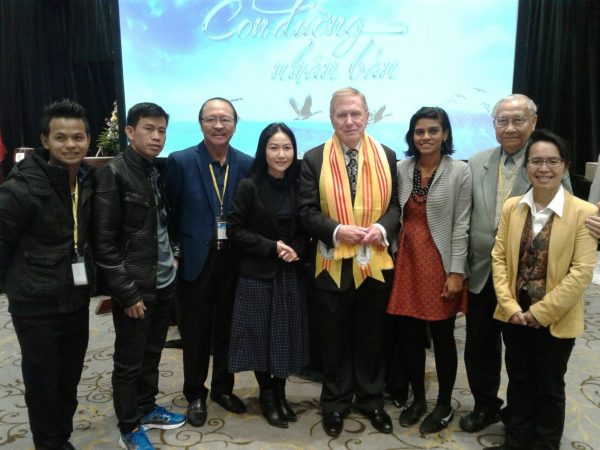
Asia Centre, a neutral and independent think-tank, participated in the “International Youth Conference, Vietnam: Pathway to Humanity”, held in Sydney, Australia from 7 to 10 September 2017. The Centre’s Programme Coordinator Michelle D’cruz exchanged views and ideas with diaspora communities on how they can bolster human rights activism and advocacy efforts within Vietnam. The conference discussions identified and unpacked three critical issues impacting the rights movement in Vietnam: challenges to FoRB, deaths in police custody, as well as the overarching issues of shrinking civil society space and the climate of fear this engenders for activists within Vietnam and their overseas counterparts. This inaugural youth conference attracted some 200 participants from the overseas Vietnamese community established across Australia, the US and Canada as well as noted international rights advocates and organizations. It inspired youth within the Vietnamese community to share best practices on the advancement of human rights in Vietnam, in light of their past experiences and challenges faced by their communities. Faith was an important connecting factor among participants, with many coming from church groups. Asia Centre’s Human Rights Programme examines freedom of religion and belief across Southeast Asia. It has produced regional country studies soon to be released by the Norwegian Helsiniki Committee. The Sydney youth conference provided an opportunity to engage with stakeholders from Vietnam who provided first hand knowledge of the role that diaspora communities play in supporting, funding and advocating for human rights issues in their countries of origin. Asia Centre will continue its engagement on FoRB through its evidence based research on this and other critical issues in the region for the benefit of civil society and other stakeholders.

IFC #2: International Faculty Club Gathers Momentum
Asia Centre’s International Faculty Club gained momentum as people gathered for the second installment dedicated to interdisciplinary discourse and networking. Held on 1 Sep at Asia Centre’s premises, the event attracted about 25 participants from different academic and professional backgrounds, all keen to engage on subject matters outside of their comfort zones. Six speakers took to the floor to share their research and experience on a range of issues from philosophy to architecture, to fundraising and on environmental governance. Eva Rappoport, a Mahidol University Ph.D student, presented her research on spirit possession in Javanese culture, set to the backdrop of a collection of photographs on the subject that she had taken while in Java. This niche area of research definitely struck a chord with the participants who were interested her insight into the connection with Islam, the role of youth in such activities as well its intrinsic value to the community. Dr Taro Mochizuki, a visiting professor at Chulalongkorn University’s Faculty of Arts introduced his passion for the development of Southeast Asian philosophy while Jonathan Rhodes, an independent environmental consultant, gave an overview of his work in environmental governance. Another hot topic for the evening was captured in a presentation by Francisco Garcia Moro, an architect who is researching urban governance in Southeast Asia. His presentation captured some of the resilience and often unheard of struggle for survival of informal and illegal developments in bustling cities, with the Klong Toey slum being one such example. Abdullah Al Noman, a law lecturer from ASA university in Bangladesh introduced his efforts at developing and attempting to mainstream a human rights curriculum. The final presenter for the night, fundraising expert Faz Yusof, addressed some of the hard questions he often faces as a fundraiser for international NGOs including the importance of accountability and winning the public trust. The presentations were followed by questions and pointed discussions on the topics, which carried on during the networking segment of the evening. The next IFC Night is set for Thursday, 23 November 2017. Asia Centre welcomes presenters and co-organisers interested in becoming a part of the IFC.
1st ASEAN-Japan Roundtable: Multipolar Asia-Pacific Century
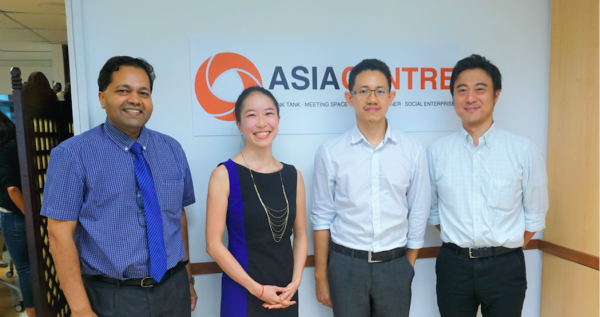
After the Second World War, Japan’s search for a guiding framework for renewed relations with Southeast Asia led to the adoption, 32 years after the end of the war, of the Fukuda Doctrine on 18 August 1977. The doctrine had at its core a “heart to heart” approach to its foreign policy in the region. However, forty years later, at Asia Centre’s roundtable discussion on Japan-ASEAN Relations in a Multipolar World, it became clear that Japan needed to develop a human rights dimension to its foreign policy with Southeast Asian countries in order to distinguish itself from other major Asian powers, such as China and India, who also are increasingly engaging with the region. The doctrine’s goal of a “heart to heart” relationship came on the heels of significant anti-Japanese protests across Southeast Asia in the preceding years over unsavoury Japanese business practices. Japanese companies, and American, had started to go offshore in the late 1960s and Southeast Asia was a natural destination for their companies. However, large protests against Japanese companies at the time highlighted problems with human resource practices and the lack of skills, knowledge and technology transfer to the local communities. The benefits of the economic relationship appeared to be one-sided. An ‘ugly Japanese’ image resulted and easily so given the ravages of war-time occupation between 1941 and 1945. The latter, as noted by Dr. Teewin Suputtikun of Chulalongkorn University, was addressed in the Fukuda Doctrine by announcing a non-hegemonic, non-military role, with the added reassurance of Japanese domestic constitutional constraints and external constraints through the Japan-US Security relationship. The Doctrine enabled a greater role for Japan in the Cold War competition between the US and the Soviet Union by helping Southeast Asia through increased trade, development assistance and a “heart to heart” relationship. A deepening trade and investment relationship followed during Japan’s peaceful rise since then.Japan was the number two trade partner for the 10 members of ASEAN in 2016 and a major source of FDI in the region. While large companies, such as Toyota, have been firmly entrenched across the region for some time, the majority of newer investment features small and medium sized enterprises. All are attracted to the prospect of an increasingly integrated ASEAN Economic Community. With such deepening business ties, there is a logical concern in Japan for peace and security in the ASEAN area, as noted by Dr. Takashi Tsukamoto of Thammasat University. Moreover, he noted a demand in the region for Japan’s services as a security provider on hard security issues in the context of an increasingly assertive Chinese presence in the South China Sea. Japan will have taken note of China’s ‘One Belt, One Road’ initiative that seeks to tie ASEAN’s economies closer China’s economy. The adoption of a human rights dimension to Japan-ASEAN economic and business relationship will provide greater traction for Japan in this regional political economy. Ms Akiko Sato from the United Nations Development Programme Regional Office in Bangkok noted concerns related to environmental degradation and labour practices resulting from Japanese firms’ business operations in Southeast Asia. Japan, as other powers, also needs to pay heed to ASEAN’s 2007 Charter, which adopted norms of democracy, rule of law and the promotion and protection of human rights. In this context, the principles of protection, respect and provision of remedies as outlined in the UN Guiding Principles on Business and Human Rights will likely feature increasingly in the Japan-ASEAN relationship. States have a duty to protect human rights, corporations have a duty to respect and victims of violations have a right to a remedy. The Human Rights Council unanimously endorsed the Guiding Principles in 2011. Japan also announced in 2016, that it intended to elaborate a national action plan in this area in the coming years. An effective plan will ensure sound, ethical and rights-based business practices by Japanese firms operating abroad. Asia Centre aims to explore further the theme of business and human rights through its July 2018 international conference on human rights in Southeast Asia, its policy papers and in future roundtable discussions. You can view photos from the event here. This event was held with the support of the Japan Foundation, Bangkok.
China’s One Belt, One Road Initiative: What Role for Southeast Asia?
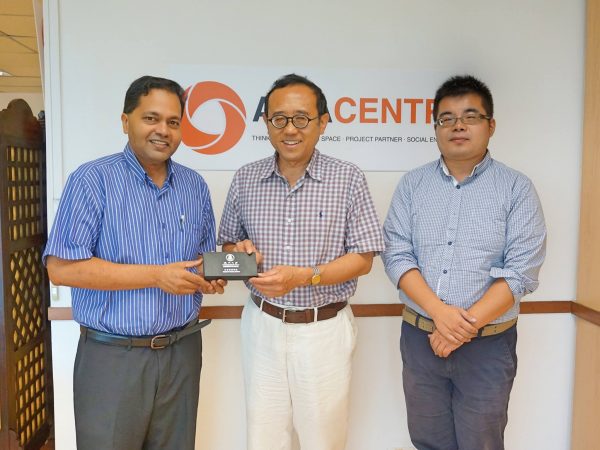
The role of Southeast Asia in China’s one belt, one road vision for its relations with Asia, Africa and Europe was the topic of discussion between Asia Centre and Dr. Wang Jianwei, Director of the Institute of Global and Public Affairs, University of Macau. China’s One Belt, One Road initiative was announced in 2013 by President Xi Jinping. It seeks to increase the connectivity between China and Asia, Africa, the Middle East and Europe. Major support mechanisms for this important initiative are China’s policy banks (China Development Bank and Exim Bank) that support a ‘going-out’ strategy, state-backed investment funds (including the 2013 China-ASEAN Infrastructure Investment Fund and the Silk Road Fund) and the Asian Infrastructure Investment Bank (AIIB). With these coordinated initiatives China has become a major player in global investment and finance. As with great powers in the past, China seeks to further integrate its own economy into the global economy and thereby increase its regional and global influence. Domestically, Southwest China becomes a gateway to the land and ocean “silk roads”. On route to connectivity between China and Africa and Europe, is Southeast Asia, which appears keen to serve as a springboard for China’s global presence. Nearly all ASEAN countries are keen to attract investments in the region’s large scale projects in areas such as transport and energy. China already has a significant presence in Cambodia, Laos, Myanmar and Vietnam. At ASEAN’s summit in Vientiane in 2016, the members were mindful of China’s growing economic presence in the region as they sought to diplomatically navigate thorny issues between China and the region, notably on the South China Sea conflict. Geopolitical issues aside, for its part, China must be mindful of local sensitivities as its economic presence is increasingly felt in places like Thailand. The latter country, for example, is the centre of the ASEAN Economic Community, where Chinese firms are exerting a solid footprint in areas such as e-commerce through companies like Baidu, Tencent, Alibaba and JD.com, in tourism through giant Chinese tour operators in places like Phuket, Chiang Mai and Pattaya that bring over 10 million Chinese tourists per year and in the real estate sector in which Chinese investors partnering with Thai companies will have invested well over 120 billion baht. Trade relations have increased with the China-ASEAN Free Trade agreement. The relationship must ultimately be mutually beneficial. Asia Centre highly appreciated the exchange of views with the University of Macau and with partner institutions in China and looks forward to continued discussions with universities and think tanks in China.
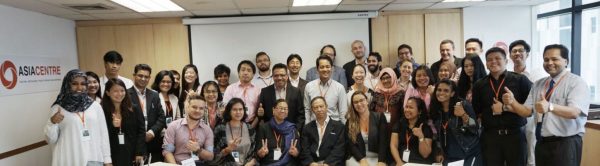
2nd International Conference (2017): National Human Rights Institutions in Southeast Asia: Challenges of Protection
An effective national human rights institution (NHRI) requires a creative, purposive interpretation of the mandate, and a proactive approach to implementation, this was one of the key takeaways from Asia Centre’s International Conference on National Human Rights Institutions in Southeast Asia: Challenges of Protection held on 13 and 14 July at the Centre’s premises in Bangkok, Thailand. The conference brought a diverse group of participants including representatives from United Nations, NHRIs and civil society for critical discourse into the effectiveness of the regions NHRIs. The conference also featured the UN Special Rapporteur on the Human Rights of Internally Displaced Persons, Ms. Cecilia Jimenez-Damary who will be presenting a report to the UN on NHRIs and displacement. As independent, state-funded bodies with broad, internationally-endorsed mandates to protect and promote human rights, NHRIs serve as a vital bridge between the government and civil society, and play a distinct role in ensuring the effective implementation of international human rights standards at the national level. However, as conference discussions revealed the regions NHRIs are inundated with implementation challenges, ranging from opaque appointment processes to funding shortfalls to the lack of political will to investigate abuses. In Southeast Asia, NHRIs find themselves established in transitional or repressive regimes, posing unique obstacles to their promulgation of mandate. Often, the effectiveness of the NHRI comes down to the initiative of the leadership and membership. As highlighted in several conference presentations, this initiative can be manifested in several ways, including making more regular, coordinated use of social media, increasing engagement with civil society, and developing greater sensitivity to issues of mental health, climate change, internal displacement, indigenous peoples, sexual orientation and gender identity, interreligious tension, and armed conflict. There are also opportunities to be explored on the regional level that will become increasingly relevant as some of the recently-established NHRIs mature, and as debates over the role of NHRIs continue to take place. The Centre’s second conference was held in partnership with ASEAN-China International Studies Program and The Lutheran World Federation. It was supported by the Taiwan Foundation for Democracy. Asia Centre Conferences: Designed for Discourse The boutique conference assembled over 44 participants from across the ASEAN, New Zealand, Nepal, India, the U.S. and the U.K. Two of the six Southeast Asian NHRIs—the Myanmar National Human Rights Commission (MNHRC) and Indonesia National Commission on Human Rights (Komnas HAM)—were in attendance along with representatives from the New Zealand National Human Rights Commission. The two day conference’s program can be found here. Watch the conference’s video here. The nine panels were grouped thematically with presentation of research followed by questions and answers, feedback and discussion. The role of NHRIs was explored in different contexts, including in its relationship with civil society and regional human rights mechanisms, in achieving transboundary justice, and in various political and social environments. Country-specific discussions were held on Indonesia, Timor-Leste, Malaysia, Singapore, Myanmar, Thailand, Nepal, and the Philippines. Day One The first day focused on the mandate and broad principles underlying NHRIs, as well as the limitations and opportunities that they afford to NHRIs. Participants discussed the central question: to what extent are NHRIs limited by their mandate, and to what extent by other factors? In opening the conference, Cecilia Jimenez-Damary, UN Special Rapporteur on the human rights of internally displaced persons, highlighted the distinct advantage of NHRIs over academics and civil society in human rights protection, noting that they have a stamp of legitimacy in both the national and international context. Asia Centre Director Robin Ramcharan emphasized that while the mandates for NHRIs are generally broad, NHRIs will be ineffective unless they implement their mandate “creatively, purposefully, and proactively.” The major takeaway here was that NHRIs, despite their limitations, can do more in terms of improving their advocacy and follow-up (such as by making better use of digital media) and that it is largely up to them to set higher standards. Participants brought up examples of best practises from around the world, including Kenya and New Zealand. The role of other stakeholders in the protection of human rights was also discussed. Participants explored the potential of regional mechanisms like ASEAN and its Intergovernmental Human Rights Commission (AICHR) in helping to strengthen NHRIs, as well as the role of corporations in protecting communities near resource extraction sites. Participants also debated the best approach for various sectors of civil society to take in interacting with NHRIs on human rights issues–how best to present criticism in a constructive manner? Overall, the need for greater, systematic coordination between different stakeholders and NHRIs was apparent. Day Two The second day honed in on the political and social contexts that constrain and inform the work of NHRIs. Participants highlighted the need for NHRIs to develop greater sensitivity towards the rights of marginalized peoples, including the LGBT communities in Thailand and Malaysia, religious minorities and the mentally disabled in Indonesia, drug-affected populations in the Philippines, Filipino migrant workers in Japan, as well as internally displaced persons throughout the Asia-Pacific region. Through country-specific discussions on Timor-Leste, Singapore, and the Philippines, participants asked more fundamental questions about the future of NHRIs: Why would a state undergoing political crisis, or one that avowedly rejects human rights values, establish and promulgate an NHRI? Why would any state be incentivized to establish such an institution? Are NHRIs necessary in all states? Some of the questions challenged the very founding principles of NHRIs: Is independence necessary to an effective NHRI? To what extent should NHRIs take into account local laws? The questions opened up the floor to discuss alternative pathways for rights protection. Participants explored the role of domestically-mandated investigative bodies, as well as the importance of participatory research in human rights investigation. Alternative conceptions of the role of NHRIs were also discussed. Michael White from the New Zealand Human Rights Commission and Dr. Khoo Ying Hooi, senior lecturer at the University of Malaya and co-convenor the conference, emphasized that full independence for an NHRI is unlikely given their essential status as state apparatuses. Going further, they argued that independence is
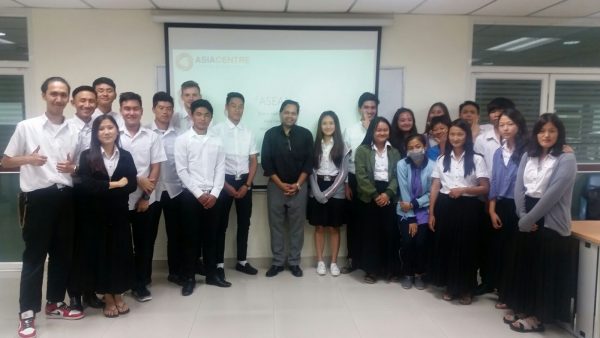
ASIA Centre Lectures on Business and Human Rights in ASEAN at Rajamangala University of Technology Phra Nakhon (RMUTP)
Asia Centre’s Dr. Robin Ramcharan delivered a course to students at RMUTP on the political economy of human rights in the ASEAN area, from 3 to 7 July 2017. A total of 23 students in the Faculty of Business at RMUTP from Bhutan, Germany and Thailand benefited from a comprehensive overview of ASEAN’s origins, evolution and contemporary challenges, notably in the area of human rights protection. The students, all of whom are pursuing degrees in international management of business organizations, learned of the relationship between business entities and larger economic, social and political problems in the societies in which they operate. They were apprised of the need for business entities to be responsive to wider stakeholders that they serve and affect, and not only to their shareholders. The course discussed the implications of the ASEAN Economic Community for all ASEAN countries, notably the integration of the ten economies into one common market and production base that will see business entities operating regionally. Business organizations from the region and beyond will impact the lives of people economically, socially and politically. As they do so they are increasingly called upon to pay attention to the protection of fundamental human rights of all peoples. Students shared good insights in their presentations on regional power dynamics, the origins of ASEAN, the economic, political and social challenges in the region and the importance of democracy and human rights for the creation of an ASEAN Political-Security Community and for a sound AEC. They also showed good awareness of the general geopolitical context – rise of China – and its impact on ASEAN. On human rights and business, they drew attention to the role of the Universal Periodic Review of the Human Rights Council, to the possible role of the ASEAN Intergovernmental Commission on Human Rights, to the role of the Sustainable Development Goals, to corporate social responsibility and to the importance of the Guiding Principles Principles on Business and Human Rights formulated by Professor John Ruggie at the United Nations. The latter drew upon States’ existing obligations to respect, protect and fulfil human rights and fundamental freedoms, the responsibility of business organizations to comply with all applicable laws and to respect all human rights and to the need for rights and obligations to be matched to appropriate and effective remedies when breaches occur. Asia Centre looks forward to further such collaboration with RMUTP and with other universities in Thailand. This builds on successful hosting at the Centre of interns from the Faculty of Business of RMUTP.
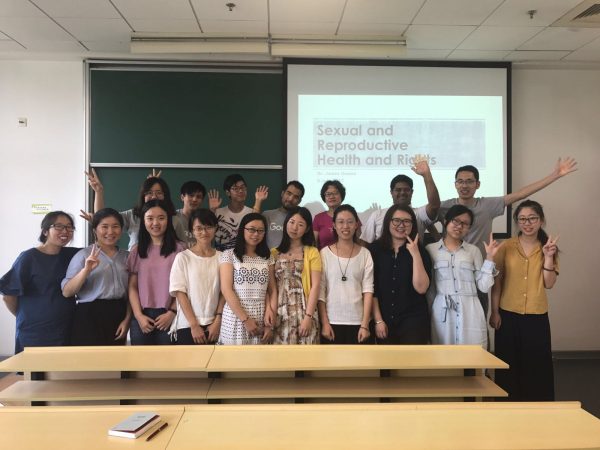
Asia Centre delivers lectures on Women’s Rights in China
Asia Centre’s Dr James Gomez, delivered several key lectures at a one week course on the Study of Gender and Women’s Rights in China in Shanghai from 3-7 July 2017. Organised by Fudan University’s National Base for Human Rights and Training the course drew some 20 students from within and outside the university. The course is part of a range of activities within China organised by “National Bases” around the topic of human rights. Throughout China there are presently 8 National Bases for Human Rights and Training located within different universities which draws researchers from within its departments, faculties and schools. The National Base for Human Rights and Training at Fudan University was founded by the Ministry of Education, the Publicity Department of the Communist Party of China, the State Council Information Office, and China Society for Human Rights Studies in 2014 in accordance with the National Human Rights Action Plan of China (2012-2015). Dr Gomez, presented two sessions during the course entitled, “Sexual and Reproductive Health Rights” and “Gender Stereotypes and Stereotyping”. He covered key concepts and made references to examples in both in China and Southeast Asia. Additionally, Dr Gomez, also delivered a public lecture on the human rights trends in Southeast Asia at the Law Faculty, Fudan University. Apart from gender and women’s rights, an emerging area of interest in China is business and human rights. Asia Centre is exploring opportunities to contribute towards China’s understanding of human rights in these and other areas by engaging with these “National Bases”.
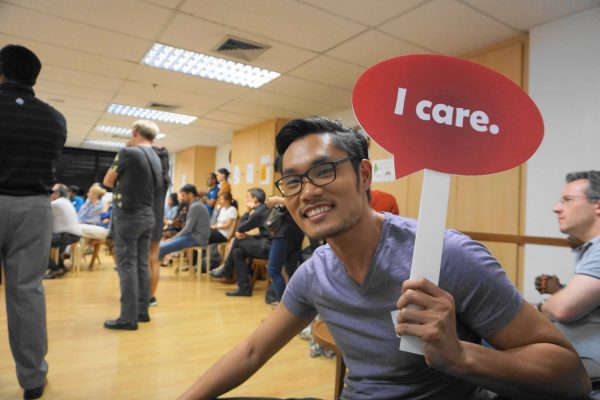
Nite for Rights: A Human Rights Open Mic Platform
Asia Centre’s first human rights open mic night was held on the 30 June 2017 with an audience of about 35 from various backgrounds including academics, students, civil society representatives and media representatives. Nite for Rights was a celebration of human rights advocacy and activism in the region, with Asia Centre providing a platform for sharing and discussion into the critical human rights issues impacting the region as well as strategies for effective engagement. The event was opened with an overview of Asia Centre’s Human Rights Programme and sharing of key findings of our research into the Universal Periodic Review. This was followed by presentations from NGOs and individual presenters on topics ranging from the personal experiences of refugees in Thailand, accountability for human rights violations committed in Papua, the state of freedom of the press in 2017 and an overview of conflict and non-violent strategies for activism. Representatives from BPSOS and Asylum Access highlighted their work and some of their upcoming projects as well as key achievements in the year so far. Veerawit Tianchainan, founder of the Thai Committee for Refugees Foundation (TCR) shared his path to setting up TCR and its impact on changing mentalities. Sujit Peris, Head of Global Trusts and Foundations for Amnesty International (AI), shared insights from his years of expertise in fundraising and organisational development, while AI’s Regional Director for Southeast Asia and the Pacific, James Gomez, briefly outlined the focus of the newly set up AI regional office. The open mic was followed by networking and break out, informal discussions in which participants exchanged views on rights issues across the region. The event was held with the support of the Taiwanese Foundation for Democracy.
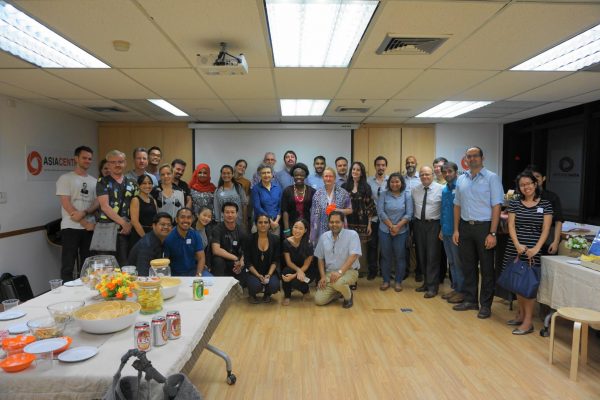
Asia Centre’s Second Anniversary
After two years of operations, Asia Centre cast a confident gaze at its steady growth, program development, outreach and presence in Bangkok. As a testament to the Centre’s community-building prowess the celebrations featured friends and associates from academia, local and international civil society organizations, international institutions, embassies, students and the media. Asia Centre provided a platform for sharing in the form of an open mic night dedicated to human rights in the region. Over the past year, the Centre focused on developing its role as a think tank and on its flagship Human Rights Programme, which carries out evidence-based research, policy oriented briefs and capacity building on key regional human rights mechanisms and issues. The Centre’s first book, title, (Gerak Budaya and Palgrave Macmillan) will be published later this year. Continuing with its examination of regional human rights mechanisms, the Centre’s second international human rights conference on national human rights institutions is set for July 13 to 14, 2017. The Centre has managed to attract new talent, adding to our Advisory Board and Centre Associates. It continues to attract a steady stream of interns. In 2017 we partnered with Forum Asia and hosted a public lecture by the UN Special Rapporteur on Human Rights Defenders, Mr. Michel Forst on the challenges faced by defenders in the region and beyond We also explored regional geopolitical issues, notably the implications of the US 2016 elections for America in Asia-Pacific and Russia’s engagement with the region. His Excellency, Mr Kirill Barsky, Ambassador of Russia to the Royal Kingdom of Thailand, made a keynote address at a Centre roundtable on Russia’s grand strategy in the Asia-Pacific. Later this year we will tackle Japan-ASEAN relations and it trajectory for the future. In this second year, Asia Centre also launched its Intellectual Exchange Programme which serves as a focal point for interdisciplinary exchange and discourse. The inaugural International Faculty Club (IFC) Night was also convened under the auspices of the new programme and it sparked great interest among Bangkok based academics, researchers and graduate students, who came to showcase their projects and research interests in a convivial and informal setting. The second IFC will take place on September 1, 2017. The anniversary celebrations saw a coming together of the community that the Centre has built and nurtured in its two years of operations from Bangkok. The Centre looks forward to continued community-building across the region and for 2017 to 2018 looks to explore projects and partnerships in Malaysia.
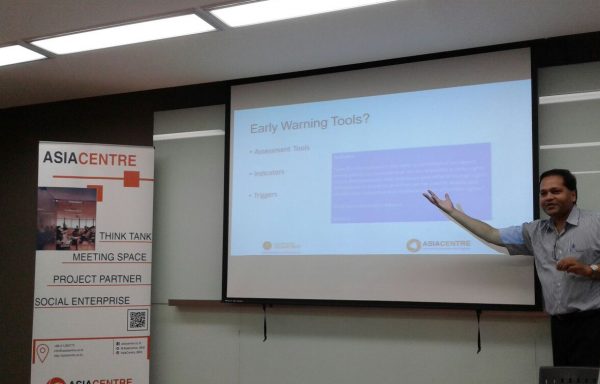
Asia Centre Leads Discussion on Human Rights and Conflict Prevention at ICIRD 2017
Applying human rights principles in the development of early warning systems and indicators can bolster internal – conflict prevention processes and mechanisms. This was the key discussion point at the Asia Centre-Thammasat University panel on internal conflict held at the International Conference on International Relations and Development (ICIRD) on 24 June 2017. The panel entitled, Human Rights Violations and Internal-Conflict in Southeast Asia: Identifying Conflict Prevention Processes and Mechanisms, looked at the challenges and opportunities for internal conflict prevention from conceptual and practical perspectives. Asia Centre’s Executive Director Dr Robin Ramcharan’s paper Human Rights and Conflict Prevention in Southeast Asia: The Protection Gap considered the degree to which violations of economic, social and cultural rights trigger conflict and how to identify those triggers. Dr Kenneth Houston, a lecturer with Webster University and Asia Centre Associate adopted a methodological perspective looking at how qualitative data analysis can provide monitor attitudes and thoughts that shape perceptions and consequently policies. The Proto-policy Domain as an Early Warning Resource: Options for Quantitative Data Analysis in Human Rights Monitoring in Southeast Asia considered how data can be used to take practical steps to institutionalise a more focused early warning system. Dr James Gomez, Regional Director of Amnesty International Southeast Asia and the Pacific and Asia Centre Advisory Board Member offered a practical perspective in his paper Human Rights Violations and Political Conflict in Southeast Asia: The UPR as a prevention mechanism? Dr Gomez presentation considered how human rights violations and conflict are inherently linked to conflict and considered how the UPR can address protection gaps. The panel was chaired by the Centre’s Programme Coordinator Michelle D’cruz who facilitated the ensuing discussion that covered the role of the media, integrating conflict prevention indicators into existing human rights mechanisms and processes as well as challenge in developing an early warning system. The panel attracted an audience of academics, NGO representatives and journalists who were keen to engage on the role of human rights in conflict prevention. The session builds on Asia Centre’s Human Rights Programme which focuses on evidence- based research on human rights mechanisms in Southeast Asia. The Centre is also developing a Conflict Prevention Programme.
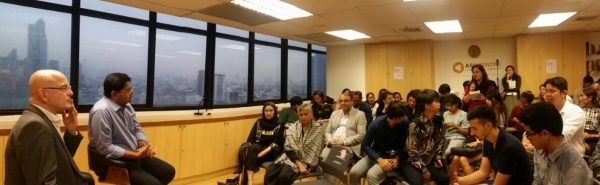
Violations by Businesses Against Human Rights Defenders An Emerging Trend
In addition to States, increasingly the office of the UN Special Rapporteur for the situation of human rights defenders (HRDs) is using its mandate to hold businesses accountable for human rights violations. States no longer are the only violators, around the world violations against HRDs are also being committed by companies in the areas of mining and forestry as well as other sectors. This was one of the key trends affecting the situation of human rights defenders Mr. Michel Forst highlighted during his public lecture at the Asia Centre. Over 70 people turned up to hear Mr. Michel Forst that included participants from academia, civil society, the UN, the Ministry of Foreign Affairs (Thailand) as well as Thai Human Rights Commissioner Mrs. Angkhana Neelapaijit. Mr Forst told the packed room that around the world human rights defenders face the following challenges: Judicial harassment through the passing of laws that criminalises the work of HRDs Non-state harassment by private security companies, religious groups, hate groups Vilification of HRDs over state-owned media and social media Harassment of women through gender specific attacks Surveillance and harassment of family members, friends and supporters of HRDs During the Q and A session moderated by Dr. James Gomez, Executive Director of the Asia Centre, members from the audience raised the issues of China’s influence on human rights in the region, the funding crunch faced by NGOs and the plight of human rights defenders working on refugee issues. Given the range of issues raised, Mr. Forst invited members of the audience to consult the reports submitted by reports of the Special Rapporteur on HRD for ideas. He also welcomed those in the region to be part of the 20th anniversary of HRD declaration in 2018 meetings to strategise a way forward for Southeast Asia. The Mandate for the situation of the human rights defender was established in 2000 following the Human Rights Defenders declaration in 1998. The role of the Rapporteur is to present Annual Reports to the Human Rights Council and General Assembly, undertake country visit and take up with States complaints of human rights violations Mr Forst has held the post of UN Special Rapporteur for the situation of human rights defenders since June 2014 and was travelling unofficially through Thailand on his way to Cambodia. His public lecture was jointed hosted by Forum-Asia and Asia Centre.
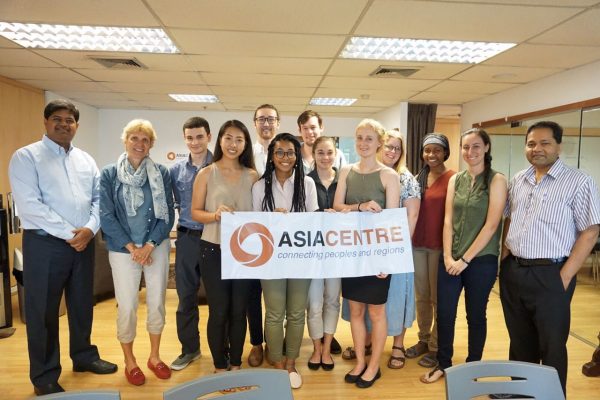
Asia Centre Human Rights Briefing for Georgia Tech, USA
Asia Centre held a briefing session on 22 May 2017, in Bangkok, for visitors from the Southeast Asia Study Abroad Program of the Sam Nunn School of International Affairs of Georgia Tech, which is based in Atlanta, Georgia, USA. Dr. Robin Ramcharan and Dr. James Gomez led the briefing and discussions. Dr. Katja Weber led the group from Georgia Tech. The session focused on challenges facing human rights protection and democratic transitions in ASEAN, and on contemporary governance challenges that affect human security including the difficulties of providing social protection. Institutional differences between ASEAN and other regional bodies were highlighted. The value of the Universal Periodic Review (UPR) of the UN Human Rights Council to human rights protection in the region was emphasized and appraised. The critical role and impact of civil society organizations highlighted. It was noted that their formal exclusion from ASEAN regional mechanisms rendered the UPR even more appealing since CSOs and other stakeholders are consulted in the UPR peer-review process. The study group were apprised of the capacity and need for the UPR dialogue process to tackle hard civil and political issues. One of those is the shrinking space for freedom of expression (FOE) across the region, which faces threats from the criminalization of political opposition, restrictive cyber and telecommunications laws, restrictions on social media and presidential decrees in one-man or one-party authoritarian States. Participants from the study group engaged in discussion on FOE challenges, ethnic conflict and problems of social inequality. The study group, which was touring several countries in Southeast Asia, stopped by Asia Centre to exchange views on challenges facing the region and to share their insights on the same. Asia Centre looks forward to continued interaction and future collaboration with the Sam Nunn School of International Affairs.
IFC #1: Asia Centre Launches International Faculty Club
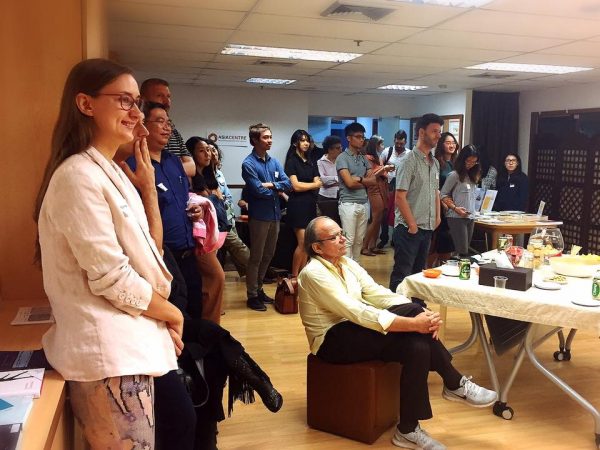
On 12 May 2017, Asia Centre launched the International Faculty Club (IFC) with some 40 academics, researchers and graduate students in attendance. The event filled a gap in the Bangkok social landscape that brought together people across different tertiary institutions allowing those from diverse academic disciplines to dialogue, share innovative ideas and forge friendships in a convivial setting. The evening turned out to be an engrossing academic networking event as the inaugural gathering saw a series of speakers taking to the floor to share their ongoing research and interests. These included: Evgeniia Sidorova, Thammasat University, who made a visual presentation about urban space and the importance of incorporating the human element in design. Mike Raomanachai, Voice TV, who spoke about press freedom and hands-on opportunities in New.Next.Now Media Conference on May 19-21 in Hong Kong. Jennie Williams, a human rights researcher and legal consultant, discussed the issue of consent and its implication on sex worker’s rights and women’s rights. Those present had plenty of questions and comments for the presentations, this was followed by an impromptu open mic session that saw several more speakers sharing their views. The next IFC gathering is on 4 August 2017 at 6pm at the Asia Centre and it welcomes participants and speakers. For those interested, the format of the event is very simple, you just need to prepare a short presentation and appear on the stated date at the Asia Centre’s premises to speak, meet and greet. Do not miss out – book your spot! Sign up for the next event here or email contact@asiacentre.co.th. Do tell your friends and colleagues about it. We look forward to seeing you at the next IFC!
Civil Society Needs to Innovate to Combat Shrinking Space in Southeast Asia
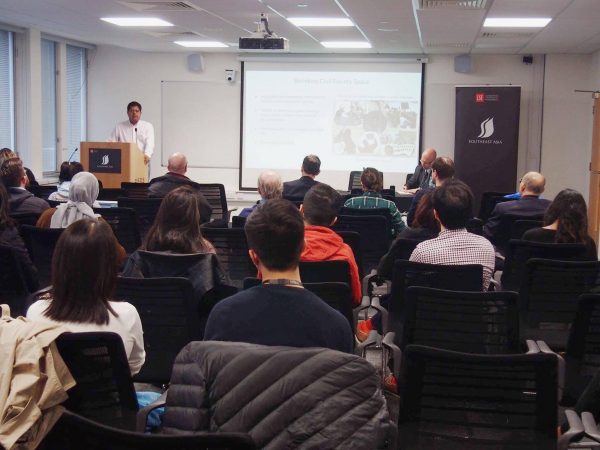
Civil society needs to innovate if it wants to step up to the challenges of shrinking space, this was the crux of Dr James Gomez’s vision for the future of human rights in Southeast Asia. Dr Gomez shared his perspective at a public lecture hosted by the Saw Swee Hock Southeast Asia Centre, London School of Economics and Political Science on 3 May 2017. Titled Civil Society and Shrinking Political Space: the future of human rights in Southeast Asia, the lecture attracted some 30 participants who were interested in the trajectory of human rights in a region that is slipping back into authoritarianism. In this presentation, Dr. Gomez outlined four key challenges facing civil society which stem from: pressures imposed by the state in the form of legislation and reporting measures to monitor and control civil society activities and funding sources; problems within civil society’s rank and file such as organisational structures, internal political divisions within organisations and cross organisational competition for limited grant resources; emerging trend in donor and grant funding adjusting their priorities to more politically conservative environments, both back home and in target countries in the region; and the impact of China on national governments in Southeast on human rights issues connected to Chinese engagement in the region. To illustrate the impact of these key challenges, Dr Gomez highlighted the workings of human rights mechanisms such as the UN’s Universal Periodic Review, ASEAN Intergovernmental Commission on Human Rights, national human rights institutions and cause lawyering in the region. Drawing from his years of experience working for international organisations as well as a well published human rights researcher, Dr Gomez argued that civil society needs to innovate if it wants to rise above these four key challenges. The counter-measures he proposed are as follows: engage with conservative governments in the region while at the same time advocating publicly for human right issues; operate civil society initiatives through new organisational structures and approaches that see smaller boards, more decentralisation and being closer to the ground; approach funding with an entrepreneurial vision where civil society goes beyond donor funding and grants, and generates income through consultancy and services; and build coalitions across national, regional and international lines to withstand and seek support against Chinese interference into regional human rights issues. To sum up, Dr Gomez emphasised that approaches to human rights advocacy needs to constantly be calibrated without compromising on principles. Innovation is especially needed at present times in Southeast Asia as countries in the region regress towards authoritarianism. A podcast of the full speech can be accessed here.
Russia’s Grand Strategy in the Asia-Pacific revealed at Asia Centre
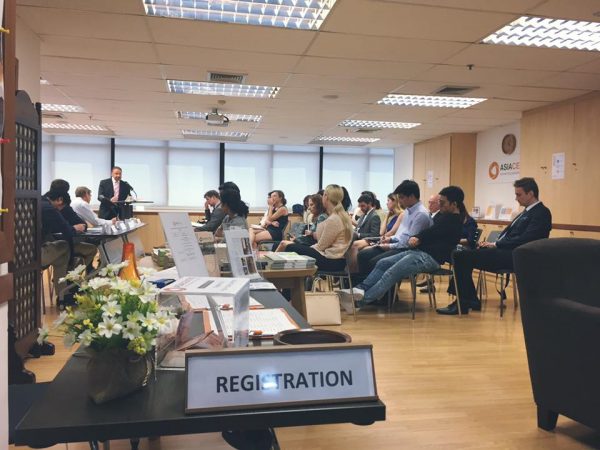
A rare public articulation of Russia’s grand strategy in the Asia-Pacific was expounded at Asia Centre by H.E. Kirill Barsky, Ambassador of the Russian Federation to the Kingdom of Thailand on 30 March 2017. Entitled “Russian Grand Strategy in the Asia Pacific: What Role for ASEAN?”, Asia Centre convened the roundtable to discuss Russia’s dramatic resurgence in international politics and explore its foreign policy goals in the region. Asia Centre’s moderator, Ms. Alexandria Demetrianova posed a key question to kick start the roundtable – Does Russia, a great power of the past few centuries, have a clear strategy for the Asia-Pacific region and for ASEAN in particular? Ambassador Barsky’s keynote presentation on the pillars of Russian foreign policy and its respect for international law and the principles of the UN Charter set the context. He went on to expound that Russia sought better economic and trade relations with ASEAN in order to cater to its domestic economic transformation. Ambassador Barsky noted that Russia’s ties with Southeast Asia preceded the formation ASEAN, as Cold War Russia supported various national movements in the region and provided security assurances at that time. Post-Cold War, he pointed out Russia has been engaged in a dialogue relationship with ASEAN over the past 20 years and seeks to expand its connectivity with the region. Dr Peter Shearman, an expert on Russian foreign policy from the Institute of International and Security Studies at Chulalongkorn University spoke on Russia’s role in light of an emerging multipolar structure and as a possible balancer between China and the USA. Dr Pavel Slutsky, Associate Professor at Chulalongkorn University, characterised the Russia-ASEAN relationship as unpredictable, lacking a clear strategy and largely shaped by external forces. Dr Takashi Tsukamoto, Associate Dean (International Affairs) Faculty of Political Science, Thammasat University provided insights into Russia’s role in shaping Japanese foreign policy on ASEAN. Collectively, the panel of experts raised a number of salient points, namely: the current ‘soft’ geopolitical footprint of Russia on Southeast Asia as countries continued to look to the American security umbrella; the modest economic engagement with the region – principally on military, energy (nuclear) and fossil fuels; a lack of clear strategy towards the region and a confusing articulation of the place that ASEAN occupies in Russian foreign policy; and the emerging diplomatic friendship between Japan and Russia that has emerged in light of structural realities: competition between China and the USA. The roundtable attracted an audience of 40 participants including representatives from the diplomatic corps. An active question and answer between the audience and speakers followed the presentation. It was an event that lasted well over two hours and Asia Centre was pleased to convene this public articulation of Russia’s long term goals in the region.
Asia Centre at Webster University’s Career Fair
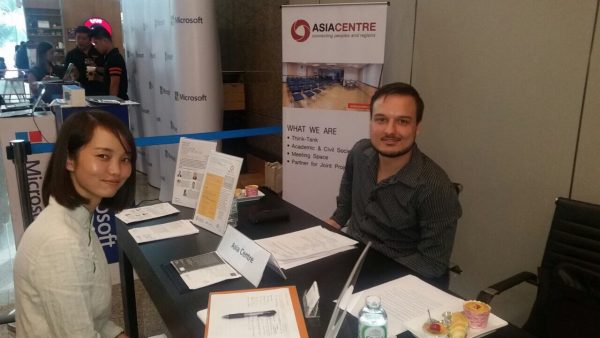
Asia Centre promoted its internship opportunities at Webster University’s Career Fair held on 29th March 2017. Asia Centre’s internships, which have been popular, attracted a flow of interested students from International Relations as well as from communication and business studies. Dr Robin Ramcharan and research intern Francesco Franzoi from Switzerland represented Asia Center at the Fair to introduce Asia Centre’s work, projects and activities. For example, our current interns assist with the preparation, research and marketing of the Centre’s upcoming International Conference on National Human Rights Institutions in Southeast Asia: Challenges of Protection in July 2017. Asia Centre’s had a busy day at the fair as many students gathered at the Centre’s desk to collect information. Starting the next day, several Webster University students applied for internships at the Asia Centre.
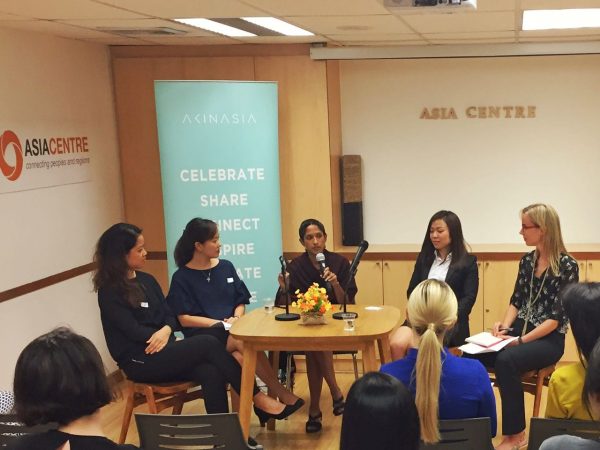
Celebrating Women in Law: Discussions on Access to Justice
A discussion on access to justice in Southeast Asia was undertaken by a panel of women lawyers on 29 March 2017 at the Asia Centre. The session, jointly organised by Asia Centre and Akin Asia, offered the opportunity to understand some of the systemic problems with regards to rule of law and access to justice that affect women in the region. It was also an opportunity to better understand the roles that different players in the legal process play. The event was attended by over 30 participants, many with a legal background, keen to engage with the panel of top female legal professionals. Celebrating Women in Law featured Emi Rowse, an Of Counsel at Herbert Smith Freehills; Sheila Varadan, a barrister/solicitor with over 12 years experience; Chayanich Thamparipattra, a social entrepreneur and a labour rights lawyer and Wipanan (Eve) Prasompluem, a Senior Associate at Allen & Overy and adjunct lecturer at Chulalongkorn University. The discussion was led by Emma Day, a human rights lawyer and co-founder of the International Child Redress Project (ICRP), a new startup non-profit organisation which is aiming to improve access to remedies for child victims of sexual exploitation The panelists discussed access to justice in the context of the domestic courts system and the international human rights framework. They shared their personal experience as well as expert opinion during the lively Q&A. The discussion touched on a range of issues including: Challenges to rule of law and a culture of impunity in many parts of Southeast Asia Alternative dispute resolution mechanisms Transitional justice Creating a culture where the notion of justice and the rights of the victim are valued Improvements in the law to enable access to justice The Q&A was followed by a networking session in which participants were able to interact with the panelists and further their discussions. Celebrating Women in Law was a platform to engage on critical issues impacting the region and showcase the role that women play advocating for justice. Asia Centre has organised a number of activities related to women’s rights such as Entering Femininity: Reporting Rituals and Violations and women’s political participation in A Political Utopia Called Singapore. The Centre will continue to convene activities on the role of women in law, human rights and development as a prelude to developing an Asia Centre gender programme.
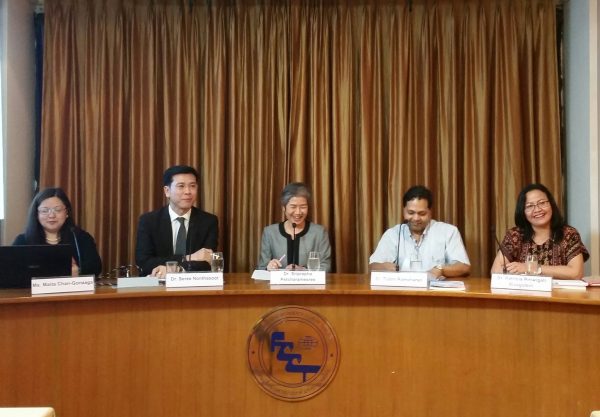
Asia Centre at FCCT discussion on Human Rights in Southeast Asia
Asia Centre’s Dr Robin Ramcharan was part of panel discussion on the topic Human Rights in Southeast Asia: Retrospect and Prospect at the launch of SHAPE SEA’s Human Rights Outlook in Southeast Asia 2014-2015. Held on the evening of 9 March at the Foreign Correspondents Club Thailand, the event attracted about 40 participants from international and regional organisations, members of civil society, journalists, academics and students. Dr Ramcharan’s address focused on the positive trajectories for the future of human rights in the region, pointing to, inter alia, State engagement on human rights issues through the Universal Periodic Review (UPR). He highlighted the need for more effective engagement with the UPR and a better understanding of how it can impact developments at the national and regional level, He pointed to Asia Centre’s forthcoming book on The Universal Periodic Review of Southeast Asia: Civil Society Perspectives which reviews civil society’s engagement with the UPR across two cycles, as an example of research that is filling a gap and supporting the work of civil society. Joining Dr Ramcharan on the panel were Dr. Seree Nonthasoot, Thailand’s representative to the ASEAN Intergovernmental Commission on Human Rights (AICHR), Ms Maita Chan-Gonzaga from Ateneo Law School Philippines, Dr Patricia Rinwigati Waagstein from Indonesia and Dr. Sriprapha Petcharamesree,Chair of the SHAPE-SEA programme. Programme Coordinator Michelle D’cruz and Research Intern Francesco Franzoi also represented the Centre at the event to introduce Asia Centre’s work, harness opportunities for collaboration with other institutions and organisations and raise awareness of upcoming projects such as the July 2017 International Conference on National Human Rights Institutions in Southeast Asia: Challenges of Protection, which builds on and extends the Centre’s research into the UPR.
Evaluating Competing “Democratic” Discourses: The Impact on Human Rights Protection in Southeast Asia
Gomez, James, and Robin Ramcharan (2014), Evaluating Competing “Democratic” Discourses: The Impact on Human Rights Protection in Southeast Asia, in: Journal of Current Southeast Asian Affairs, 33, 3, 49–77. Abstract This paper evaluates the impact of competing “democratic” discourses on human rights protection in Southeast Asia. The authors identify three key discourses emanating from a set of national governmental policies, advocacy positions promoted by both global and local civil society and international standards and procedures adopted by members of inter-governmental organisations. These discourses, the authors argue, are collectively shaping the emerging ASEAN inter-governmental human rights regime. The political impact of these competing “democratic” iscourses and their complex interactions bring a cultural dimension to regional human rights. The authors argue that observers seeking to understand the emergence of norms, the establishment of institutions and their capacity to collectively protect regional human rights, need to understand these competing discourses. [row] Full Text: PDF (ENGLISH)
Introduction: Democracy and Human Rights in Southeast Asia
Gomez, James, and Robin Ramcharan (2014), Introduction: Democracy and Human Rights in Southeast Asia, in: Journal of Current Southeast Asian Affairs, 33, 3, 3–17. Abstract Southeast Asia has been undergoing a transition to more democratic forms of governance over the last two decades. The 2007 Charter of the Association of Southeast Asian Nations (ASEAN) stated that henceforth ASEAN would pursue democratic forms of governance, the rule of law and the attendant fundamental human rights, which are the hallmark of liberal democratic states. This major normative evolution is one chapter of ASEAN’s post-Cold War efforts to deepen its members’ interactions in the economic, politico-security and socio-cultural realms. ASEAN has been engaging in “community-building” in these areas. A community presupposes the development of common values among its member-states and among all of their citizens. It has been argued by constructivist scholars, for example, that in the politico-security realm a security community has been forged via a diplomacy of accommodation, or the “ASEAN Way”, that respects the core principle of non-interference in the internal affairs of states. An ASEAN Economic Community (AEC) envisages a liberalised economic space through free trade and the creation of an integrated production platform. The new democracy and human rights order aims to create a more “people-centred” ASEAN. [row] Full Text: PDF (ENGLISH)
The Protection of Human Rights in Southeast Asia, Improving the Effectiveness of Civil Society. Asia-Pacific Journal on Human Rights and the Law
James Gomez & Robin Ramcharan, The Protection of Human Rights in Southeast Asia, Improving the Effectiveness of Civil Society. Asia-Pacific Journal on Human Rights and the Law (2) (2012) 27-43 1. Introduction A nascent human rights regime is emerging in Southeast Asia, one equipped with an institutional body, the ASEAN Inter-governmental Commission on Human Rights (AICHR) and a normative framework enshrined in the ASEAN Human Rights Declaration (AHRD). While advocacy Civil Society Organizations (CSOs) are playing a vital shadowing role that confronts ASEAN governments with the need to craft a credible protection mechanism, the lack of formal consultation with the current legal frameworks reflects the marginalization of CSOs within the member states. Beyond marginalization of CSOs in crafting the AICHR, States have sought to limit the impact of CSOs’ advocacy activities through selective engagement of government approved CSOs. The adoption of the AHRD on 18 November 2012 and the inability of civil society to effectively influence its drafting is the latest phase in the human rights story in Southeast Asia. It is symptomatic of the tension that has existed between civil society and States in this region since the end of the Cold War. [row] Full Text: PDF (ENGLISH)
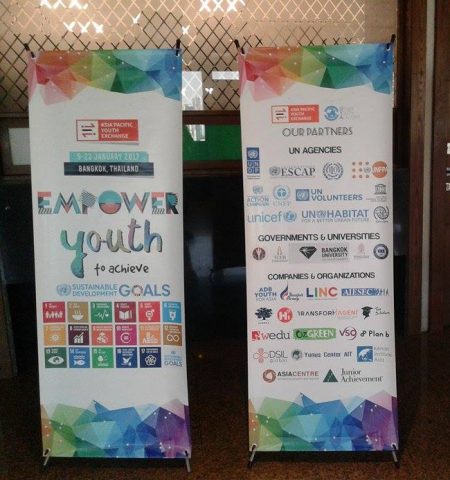
Asia Centre at the Asia Pacific Youth Exchange Career Fair 2017
Asia Centre’s operations as a social enterprise and its programmatic focus on education and human rights attracted considerable attention at the Asia Pacific Youth Exchange (APYE) Career Fair held on 20th January 2017 at Bangkok University. The fair was part of the 3rd APYE organised by the Urban Youth Academy in conjunction with the Asian Development Bangkok and multiple UN agencies, with the objective of empowering youth to achieve the Sustainable Development Goals.The career fair attracted some 130 international APYE delegates along with students from Bangkok based universities, keen to explore internship and career opportunities.
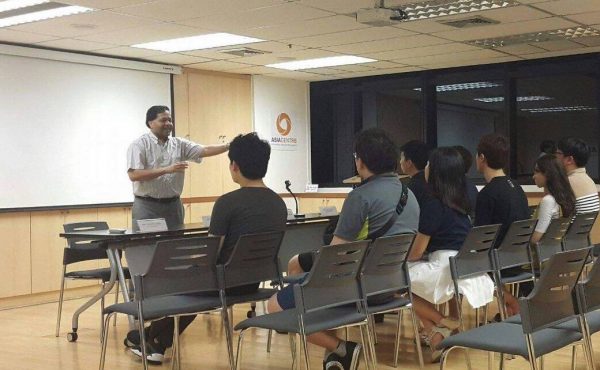
Briefing on ASEAN to Korea University Students
Students from Korea University received a briefing at Asia Centre on Tuesday, 17 January 2017, on contemporary challenges facing ASEAN. Dr. Robin Ramcharan lectured the undergraduates on regional geopolitical affairs, on ASEAN integration challenges and on the regional human rights mechanisms. The students were keenly interested in China’s engagement with ASEAN and in Thaland’s history, culture and political system. The students were accompanied Dr. Park Bun Soon of Korea University. Asia Centre welcomes such exchanges and looks forward to further exchanges with students and academics from Korea.
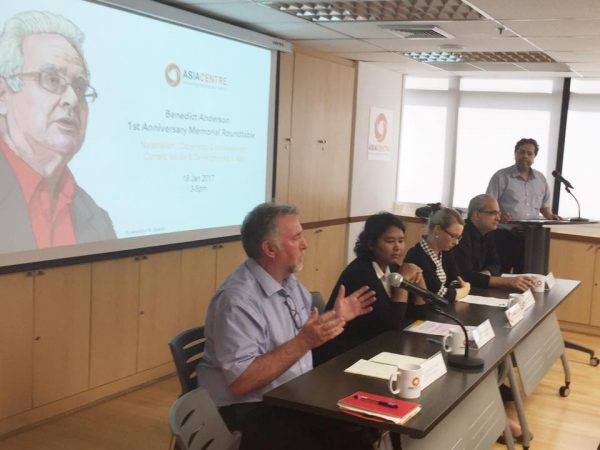
2nd Benedict Anderson Memorial Roundtable: Nationalism, Citizenship and Statelessness
The Benedict Anderson 1st Anniversary Memorial Roundtable was a tribute to the life and legacy of the late professor. Centring on the topic Nationalism, Citizenship and Statelessness: Current Issues and Developments in Asia, the discussion attracted an audience of some 65 people, and featured a panel of diverse expertise. This event follows our inaugural memorial Debating Imagined Communities: A Tribute to Benedict Anderson held on 30 January 2016, and will be an annual feature in the Asia Centre calendar. Professor Kenneth Christie of Royal Roads University in British Columbia, Canada, and an expert on peace, development and security, provided an overview of Anderson’s concept of “imagined communities”. The point was made that the nation-state and nationalism are modern constructions. Citizenship entailed a sense of shared community among diverse peoples with common values and rights. The construction of shared communities was a global phenomenon as Anderson sought to show in his comparisons of nationalist experiments around the world. Ms Chontida Auikool, a lecturer from Thammasat University’s ASEAN-China programme provided insight into the Indonesian Chinese community’s struggle for inclusion and integration, and how anti-Chinese sentiment plays out in contemporary developments. Maritime nomadic communities in the region who face inter-generational statelessness are often rendered invisible according to Asia Pacific Refugee Rights Network (APRRN) Senior Programme Officer Ms. Helen Brunt. Using a case study of the communities in the Sulu Zone, she argued that migration flows in the region predate the development of nation states, a legacy that contributes to statelessness. Their lack of documentation and being labelled ‘illegal migrants’ condemns them to continued discrimination. Dr. Kevin Downey, a lecturer at Thammasat University and expert on political development, identity, civil society, and democratization in South and Southeast Asia discussed the lack of causal explanations for negative views on immigrants, ‘the other side of statelessness’. He went on to offer a hypothesis premised on the notion of insecurity and precarity in the era of globalisation, which features many dislocations and rising economic inequality. In the question and answer period moderated by Asia Centre’s Dr. Robin Ramcharan, potential flashpoints were mentioned. The two that were highlighted are: Rakhine State in Myanmar and the rise of intolerance in Indonesia. These are areas to monitor going forward, despite progress in democratizing both countries. A Life Beyond Boundaries The event also saw the Bangkok launch of Anderson’s memoir A Life Beyond Boundaries. Anderson defied his contemporaries by “globalizing” the study of nationalism and engaging in comparisons of seemingly disparate nation-states. In this work he also critically assesses the nation-state as a unit of analysis, noting that people globally formed communities around a great variety of interests that transcended boundaries and nations. A limited number of copies is available at Asia Centre for 450 Baht, if you are interested in getting a copy you can drop us an email at info@asiacentre.co.th. You can view images from the event here.
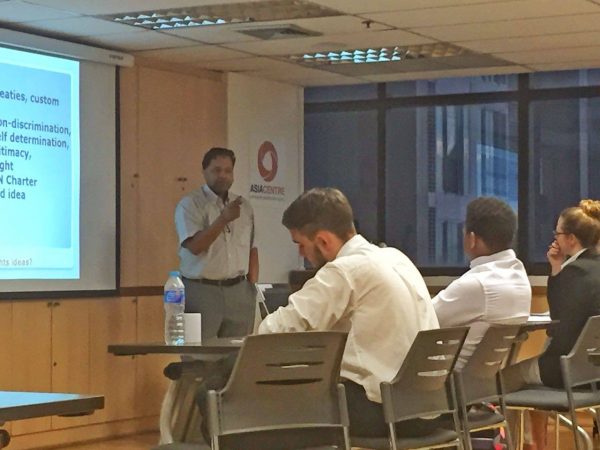
Asia Centre partners with Stenden University to teach ASEAN Studies
Asia Centre delivered a series of lectures on ASEAN and its international relations as the teaching partner of Stenden University’s, Thailand campus. Known as Stenden University of Applied Sciences, the Dutch university was created from the merger of CHN University Netherlands and Drenthe University, two premier institutions of higher education in the northern part of the Netherlands. The Thailand campus is part of Stenden’s overseas branches in South Africa, Qatar and Indonesia. The Asian Centre lectures complemented Stenden University’s ASEAN studies module in Thailand and were designed to provide a diverse class of international relations and business students with an introduction and insight to the regional association. The delivery of lecturers was part of Asia Centre’s education programme through which it partners with higher education institutions and think tanks to provide teaching services. These include specially designed curricula and tailored courses on a range of topics, from international relations to media and business and entrepreneurship. In total 3 lectures were delivered for Stenden and included in-class discussions, which allowed students to clarify their understanding of the issues and to attempt to critically analyse ASEAN’s security and human rights frameworks. Asia Centre and Stenden University are currently exploring further opportunities for educational partnership.
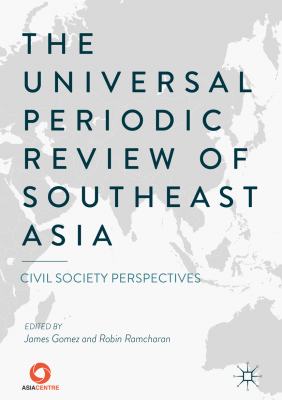
The Universal Periodic Review of Southeast Asia: Civil Society Perspectives
Buy Now Abstract The Universal Periodic Review of Southeast Asia: Civil Society Perspectives provides a stakeholder analysis of human rights protection on the ground. The book reviews Southeast Asia’s civil society engagement with the Universal Periodic Review (UPR) of the United Nations Human Rights Council during the first (2008-2011) and second (2012-2016) cycle. Through evidence-based research the book identifies gaps in human rights reporting and advocacy during the UPR, notably on civil and political issues such as the right to life, freedom of expression, freedom of religion and belief, extrajudicial killings, arbitrary detention, territorial autonomy and separation. The book highlights the need for more civil society engagement on civil and political issues during the third cycle of the UPR in 2017-2020. Failing which, the UPR process risks being reduced to a platform where civil society only engages on issues that States are willing to cooperate on. More pressure needs to be put on States to follow-up and implement recommendations. The book is the first regional appraisal of the UPR in Southeast Asia. It is based on the human rights programme of the Asia Centre. Table of Contents Introduction: The Universal Periodic Review of Southeast Asia: A Regional Mapping. James Gomez and Robin Ramcharan Chapter 1: Addressing Human Rights Protection Gaps: Can the Universal Periodic Review Process Live up to its Promise? Michael White Chapter 2: Universal Periodic Review on South East Asia Norm Building in Transition: A Hermeneutic Approach. Theodor Rathgeber Chapter 3: The Abolition of the Death Penalty in Southeast Asia: The Arduous March Forward. M Ravi Chapter 4: LGBTIQ Rights in Southeast Asia: Implementing Recommendations from the Universal Periodic Review. Destination Justice Chapter 5: Singapore’s Universal Periodic Review: Civil Society Perspectives. James Gomez and Michelle D’cruz Chapter 6: The Universal Periodic Review of Timor-Leste: Achieving Justice for Past Human Rights Abuses Under Indonesian Rule. Cristian Talesco and Brigette S. Valentine Chapter 7: Freedom of Religion and Belief in Indonesia: Raising Awareness through Universal Periodic Review. Hesty Dewi Maria Siagian Chapter 8: Non-Confrontational Human Rights Advocacy: Experiences from the UPR Process in Myanmar. Francesca P. Traglia Chapter 9: Can NHRis Bridge the Implementation Gap? Assessing SUHAKAM’s Effectiveness in Malaysia’s Universal Periodic Review. Khoo Ying Hooi Chapter 10:The UPR and Its Impact on the Protection Role of AICHR in Southeast Asia. Celine Martin Conclusion: Southeast Asia’s Third UPR Cycle: Moving from Process to Implementation. James Gomez and Robin Ramcharan