
Civil society needs to innovate if it 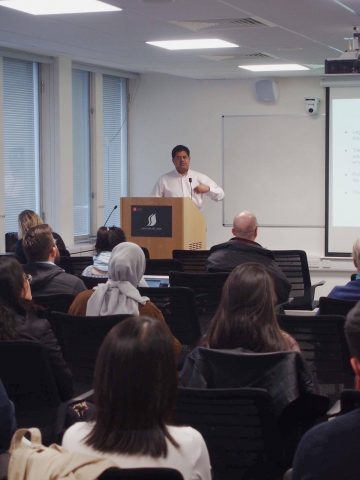 wants to step up to the challenges of shrinking space, this was the crux of Dr James Gomez’s vision for the future of human rights in Southeast Asia.
Dr Gomez shared his perspective at a public lecture hosted by the Saw Swee Hock Southeast Asia Centre, London School of Economics and Political Science on 3 May 2017. Titled Civil Society and Shrinking Political Space: the future of human rights in Southeast Asia, the lecture attracted some 30 participants who were interested in the trajectory of human rights in a region that is slipping back into authoritarianism.
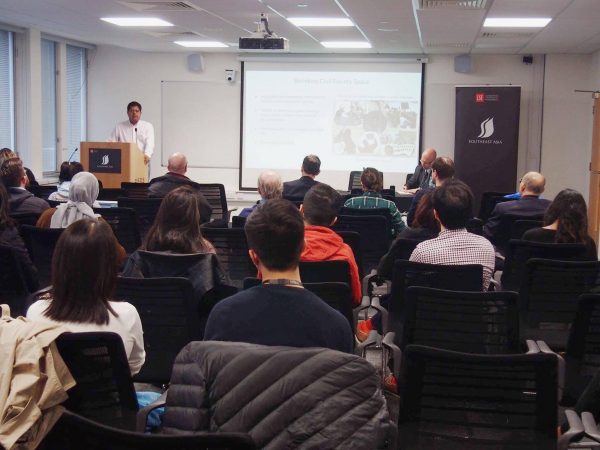
In this presentation, Dr. Gomez outlined four key challenges facing civil society which stem from:
- pressures imposed by the state in the form of legislation and reporting measures to monitor and control civil society activities and funding sources;
- problems within civil society’s rank and file such as organisational structures, internal political divisions within organisations and cross organisational competition for limited grant resources;
- emerging trend in donor and grant funding adjusting their priorities to more politically conservative environments, both back home and in target countries in the region; and
- the impact of China on national governments in Southeast on human rights issues connected to Chinese engagement in the region.
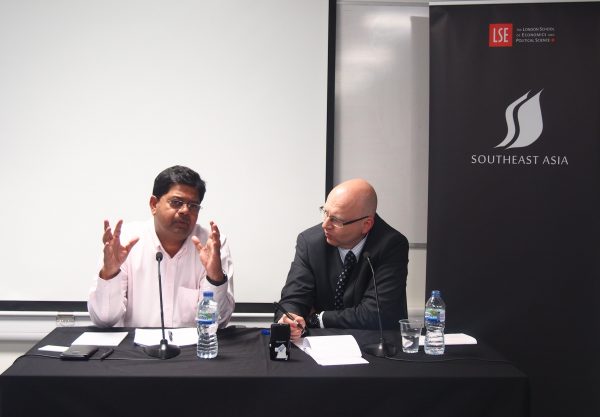
To illustrate the impact of these key challenges, Dr Gomez highlighted the workings of human rights mechanisms such as the UN’s Universal Periodic Review, ASEAN Intergovernmental Commission on Human Rights, national human rights institutions and cause lawyering in the region.
Drawing from his years of experience working for international organisations as well as a well published human rights researcher, Dr Gomez argued that civil society needs to innovate if it wants to rise above these four key challenges. The counter-measures he proposed are as follows:
- engage with conservative governments in the region while at the same time advocating publicly for human right issues;
- operate civil society initiatives through new organisational structures and approaches that see smaller boards, more decentralisation and being closer to the ground;
- approach funding with an entrepreneurial vision where civil society goes beyond donor funding and grants, and generates income through consultancy and services;
- and build coalitions across national, regional and international lines to withstand and seek support against Chinese interference into regional human rights issues.
To sum up, Dr Gomez emphasised that approaches to human rights advocacy needs to constantly be calibrated without compromising on principles. Innovation is especially needed at present times in Southeast Asia as countries in the region regress towards authoritarianism.
A podcast of the full speech can be accessed here.