
The Rohingya Crisis: Asia Centre Deliberates Solutions to the Crisis at Conference in Bangladesh
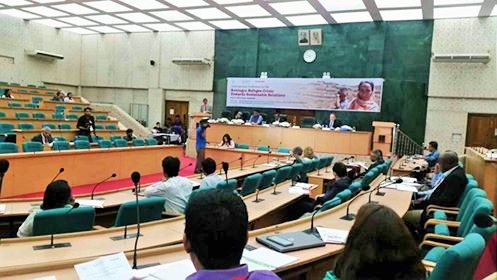
Asia Centre contributed to the search for solutions to the humanitarian crisis in Myanmar and Bangaldesh during the International Conference on the Rohingya Refugee Crisis: Towards Sustainable Solutions, held in Dhaka from 2-3 April 2018. The conference revealed Bangladesh’s pressing search for assistance with the humanitarian crisis, its concern over the implications – economic, ecological, political and social – of hosting over one million Rohingya for the long term, and its search for durable solutions (e.g. safe repatriation), which ultimately lie in Myanmar. In this context, Dr. Robin Ramcharan examined the role of ASEAN in the crisis. He noted the challenges for ASEAN in addressing the humanitarian tragedy that has unfolded as over 700,000 Rohingya have fled Myanmar into neighbouring Bangladesh since August 2017. He noted that while some ASEAN leaders were quite concerned with the plight of the Rohingya, ASEAN’s response has been timid, limited to statements at ASEAN Summits and hosting some of the refugees. He noted that for ASEAN to make more decisive contributions to resolving the crisis, it needed to overcome its adherence to non-interference, to move towards a new decision-making model for such crisis situations, and to live up to the norms adopted in the ASEAN Charter, namely, good governance, rule of law and human rights. The Bangladeshi government, think-tanks and civil society representatives at the conference all raised the issue of compensation to the host state occasioned by hosting large-scale refugee movements. One Bangladeshi legal scholar sought to make the case for ‘State responsibility for compensation’ to the host state resulting from such large scale refugee movements. Additional salient points made by participants at the conference were: 1) The right of return of the Rohingya will likely remain unfulfilled for a long time since the conditions for safe return to Myanmar are not present; 2) The Rohingya in the camps need full assistance from the international community; 3) Bangladesh also needs full support as they deal with the massive influx of refugees, their various needs and the environmental impact; 4) A full understanding of the crisis requires an appreciation of the geopolitics of the region, featuring competition between China and India for influence in Myanmar; 5) The need to address the root causes of the crisis, among which is the issue of citizenship for the Rohingya; and 6) The need for accountability for violations of human rights in Myanmar. Asia Centre contributed to the drafting of the Dhaka Declaration issued at the end of the Conference on 3 April, which was organised by the Centre for Genocide Studies of the University of Dhaka, the Centre for Peace and Justice at BRAC University and ActionAid Bangladesh. It called for, inter alia, the “UN and the international community to use diplomatic channels to provide sufficient humanitarian assistance and other support to ensure protection and rights of Rohingya women, children and other vulnerable groups”. The Declaration also called on the international community to comprehensively investigate the ongoing acts of genocide, mass atrocities, crimes against humanity and ethnic cleansing in Myanmar. It called for the prosecution and punishment of those offenders responsible for such violations. Asia Centre will continue to address the above issues during its forthcoming conference, The Rohingya Crisis: A Multidimensional Tragedy, on 24 August 2018. Researchers at this conference will examine the deeper roots of the current crisis in Myanmar.
Impact of the UPR on the Protection of Human Rights in Southeast Asia
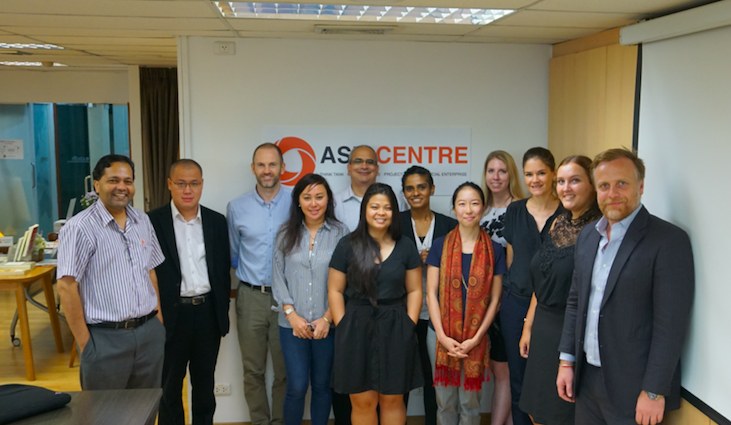
In its ongoing work on the impact of the Universal Periodic Review (UPR) of the Human Rights Council on the protection of human rights in Southeast Asia, Asia Centre convened a focus group to discuss its research findings for a baseline study on this mechanism. Held on October 6, 2017, the session was facilitated by Asia Centre’s Dr. Robin Ramcharan and it included participants from national, regional and international organisations. Civil society and other stakeholders noted during the discussions that since the UPR is a dialogue mechanism that States are comfortable with, it might be effectively harnessed as a platform for holding States accountable and keeping discourse on human rights issues alive. Key points raised by participants included the need for greater strategic engagement and coalition building by civil society, challenges in the follow up and implementation of recommendations and the need for capacity building on the UPR for civil society and government officials. The baseline study, conducted in partnership with the Heinrich Boell Stiftung, Southeast Asia, adds to the emerging evidence-based research on the impact of the UPR on human rights protection in Southeast Asia and seeks to enhance civil society’s advocacy strategies. The feedback and points raised during the discussion, echoed many of of the trends revealed in Asia Centre’s initial mapping of the UPR and its inaugural UPR conference over the period 2016 to 2017. The Centre’s evidence-based research on the UPR takes place in the context of its Human Rights Programme.
Freedom of Religion or Belief Threatened in Southeast Asia
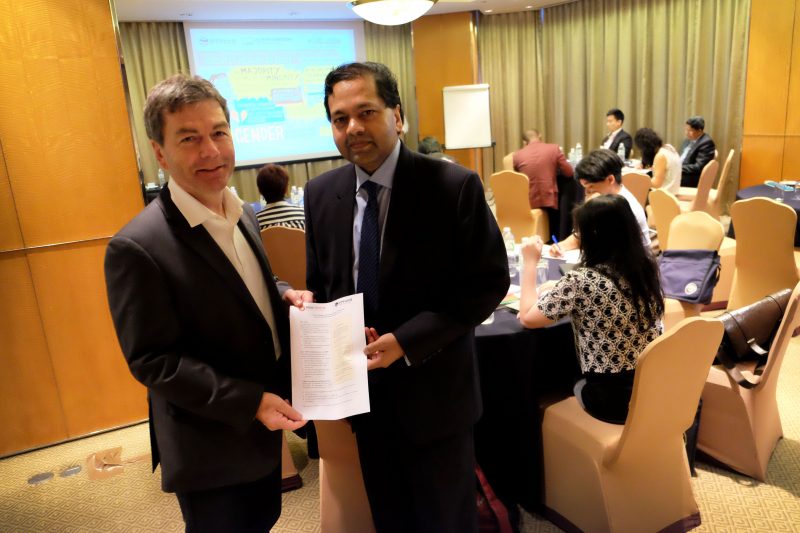
Reports jointly produced by Asia Centre and International Panel of Parliamentarians for Freedom of Religion (IPPFoRB) reveal serious challenges to religious freedom in Southeast Asia. The 11 country reports were released at IPPFoRB’s conference for ASEAN Parliamentarians held in Bangkok on 7th and 8th October 2017. Dr. Robin Ramcharan of Asia Centre coordinated the research on behalf of IPPFoRB. Looking at all the ASEAN countries, the research shows that religious freedom appears to be regressing in Southeast Asia. Serious challenges have arisen in recent years across the region, such as in Brunei, Indonesia and Malaysia, according to the reports. The country reviews of each of the 11 States of the region provide a toolkit for parliamentarians, civil society and other stakeholders who want to engage on FoRB, especially in the Universal Periodic Review (UPR) of the Human Rights Council. “The reports provide a valuable resource for parliamentarians and civil society organisations across South East Asia,” said David Anderson, member of the IPPFoRB Steering Group and Member of Parliament in the Canadian House of Commons. He added: “I encourage ASEAN parliamentarians to use these expert reports to press their respective governments for the legislative and policy changes necessary to secure religious freedom.” Asia Centre aims to continue its evidence based research on FoRB in Southeast Asia and its intersectionality with other fundamental rights, such as freedom of expression.
Engaging the Vietnamese Diaspora on Human Rights Issues
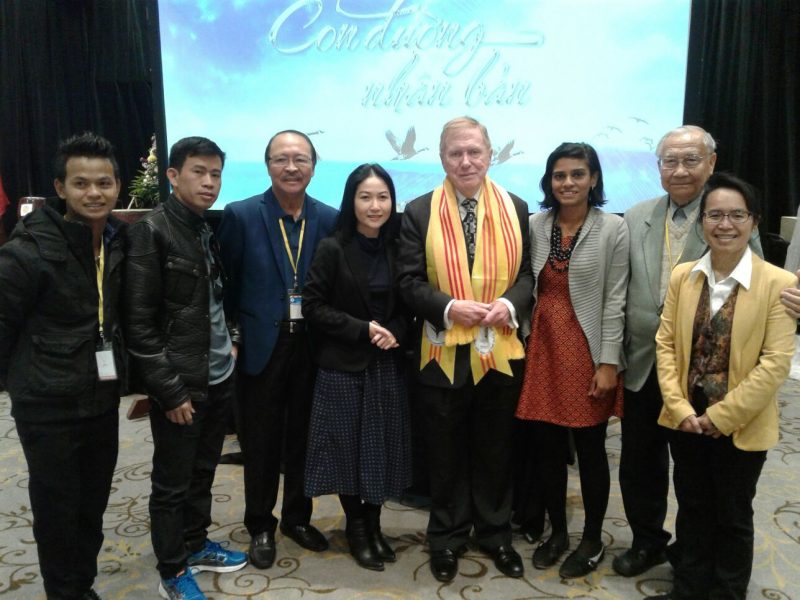
Asia Centre, a neutral and independent think-tank, participated in the “International Youth Conference, Vietnam: Pathway to Humanity”, held in Sydney, Australia from 7 to 10 September 2017. The Centre’s Programme Coordinator Michelle D’cruz exchanged views and ideas with diaspora communities on how they can bolster human rights activism and advocacy efforts within Vietnam. The conference discussions identified and unpacked three critical issues impacting the rights movement in Vietnam: challenges to FoRB, deaths in police custody, as well as the overarching issues of shrinking civil society space and the climate of fear this engenders for activists within Vietnam and their overseas counterparts. This inaugural youth conference attracted some 200 participants from the overseas Vietnamese community established across Australia, the US and Canada as well as noted international rights advocates and organizations. It inspired youth within the Vietnamese community to share best practices on the advancement of human rights in Vietnam, in light of their past experiences and challenges faced by their communities. Faith was an important connecting factor among participants, with many coming from church groups. Asia Centre’s Human Rights Programme examines freedom of religion and belief across Southeast Asia. It has produced regional country studies soon to be released by the Norwegian Helsiniki Committee. The Sydney youth conference provided an opportunity to engage with stakeholders from Vietnam who provided first hand knowledge of the role that diaspora communities play in supporting, funding and advocating for human rights issues in their countries of origin. Asia Centre will continue its engagement on FoRB through its evidence based research on this and other critical issues in the region for the benefit of civil society and other stakeholders.
China’s One Belt, One Road Initiative: What Role for Southeast Asia?
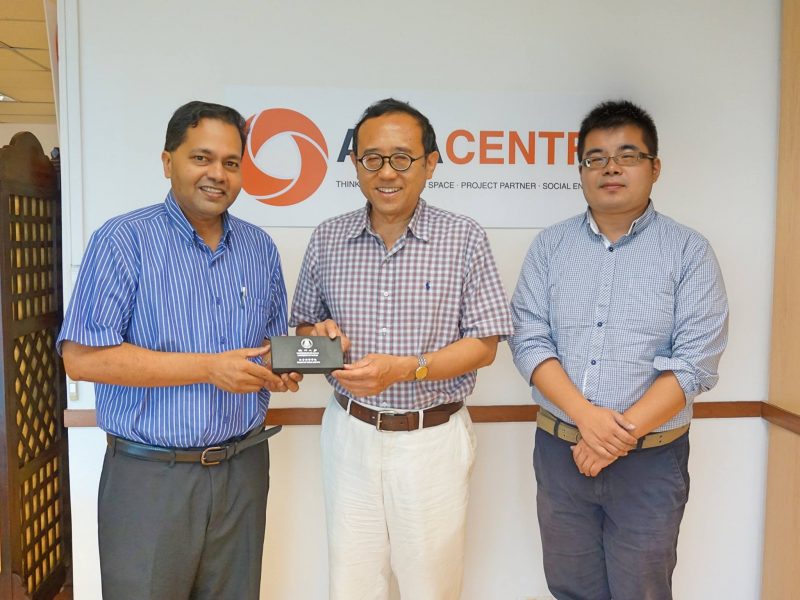
The role of Southeast Asia in China’s one belt, one road vision for its relations with Asia, Africa and Europe was the topic of discussion between Asia Centre and Dr. Wang Jianwei, Director of the Institute of Global and Public Affairs, University of Macau. China’s One Belt, One Road initiative was announced in 2013 by President Xi Jinping. It seeks to increase the connectivity between China and Asia, Africa, the Middle East and Europe. Major support mechanisms for this important initiative are China’s policy banks (China Development Bank and Exim Bank) that support a ‘going-out’ strategy, state-backed investment funds (including the 2013 China-ASEAN Infrastructure Investment Fund and the Silk Road Fund) and the Asian Infrastructure Investment Bank (AIIB). With these coordinated initiatives China has become a major player in global investment and finance. As with great powers in the past, China seeks to further integrate its own economy into the global economy and thereby increase its regional and global influence. Domestically, Southwest China becomes a gateway to the land and ocean “silk roads”. On route to connectivity between China and Africa and Europe, is Southeast Asia, which appears keen to serve as a springboard for China’s global presence. Nearly all ASEAN countries are keen to attract investments in the region’s large scale projects in areas such as transport and energy. China already has a significant presence in Cambodia, Laos, Myanmar and Vietnam. At ASEAN’s summit in Vientiane in 2016, the members were mindful of China’s growing economic presence in the region as they sought to diplomatically navigate thorny issues between China and the region, notably on the South China Sea conflict. Geopolitical issues aside, for its part, China must be mindful of local sensitivities as its economic presence is increasingly felt in places like Thailand. The latter country, for example, is the centre of the ASEAN Economic Community, where Chinese firms are exerting a solid footprint in areas such as e-commerce through companies like Baidu, Tencent, Alibaba and JD.com, in tourism through giant Chinese tour operators in places like Phuket, Chiang Mai and Pattaya that bring over 10 million Chinese tourists per year and in the real estate sector in which Chinese investors partnering with Thai companies will have invested well over 120 billion baht. Trade relations have increased with the China-ASEAN Free Trade agreement. The relationship must ultimately be mutually beneficial. Asia Centre highly appreciated the exchange of views with the University of Macau and with partner institutions in China and looks forward to continued discussions with universities and think tanks in China.
Nite for Rights: A Human Rights Open Mic Platform
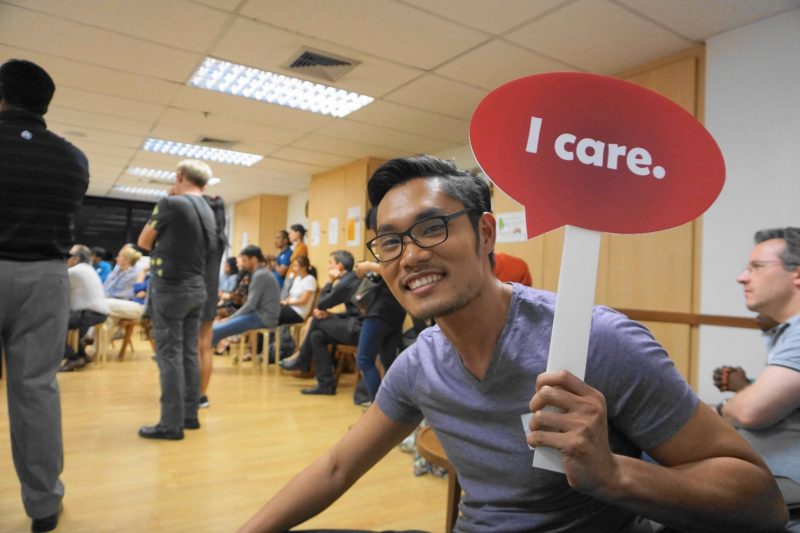
Asia Centre’s first human rights open mic night was held on the 30 June 2017 with an audience of about 35 from various backgrounds including academics, students, civil society representatives and media representatives. Nite for Rights was a celebration of human rights advocacy and activism in the region, with Asia Centre providing a platform for sharing and discussion into the critical human rights issues impacting the region as well as strategies for effective engagement. The event was opened with an overview of Asia Centre’s Human Rights Programme and sharing of key findings of our research into the Universal Periodic Review. This was followed by presentations from NGOs and individual presenters on topics ranging from the personal experiences of refugees in Thailand, accountability for human rights violations committed in Papua, the state of freedom of the press in 2017 and an overview of conflict and non-violent strategies for activism. Representatives from BPSOS and Asylum Access highlighted their work and some of their upcoming projects as well as key achievements in the year so far. Veerawit Tianchainan, founder of the Thai Committee for Refugees Foundation (TCR) shared his path to setting up TCR and its impact on changing mentalities. Sujit Peris, Head of Global Trusts and Foundations for Amnesty International (AI), shared insights from his years of expertise in fundraising and organisational development, while AI’s Regional Director for Southeast Asia and the Pacific, James Gomez, briefly outlined the focus of the newly set up AI regional office. The open mic was followed by networking and break out, informal discussions in which participants exchanged views on rights issues across the region. The event was held with the support of the Taiwanese Foundation for Democracy.
Asia Centre’s Second Anniversary
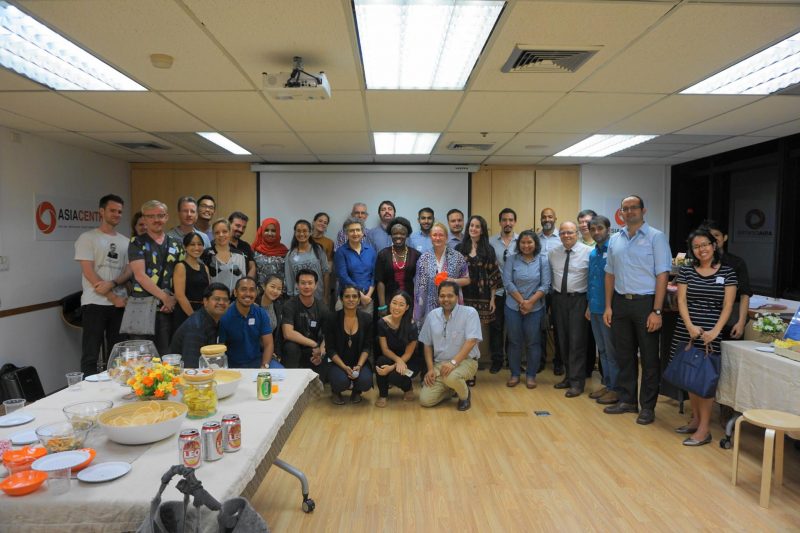
After two years of operations, Asia Centre cast a confident gaze at its steady growth, program development, outreach and presence in Bangkok. As a testament to the Centre’s community-building prowess the celebrations featured friends and associates from academia, local and international civil society organizations, international institutions, embassies, students and the media. Asia Centre provided a platform for sharing in the form of an open mic night dedicated to human rights in the region. Over the past year, the Centre focused on developing its role as a think tank and on its flagship Human Rights Programme, which carries out evidence-based research, policy oriented briefs and capacity building on key regional human rights mechanisms and issues. The Centre’s first book, title, (Gerak Budaya and Palgrave Macmillan) will be published later this year. Continuing with its examination of regional human rights mechanisms, the Centre’s second international human rights conference on national human rights institutions is set for July 13 to 14, 2017. The Centre has managed to attract new talent, adding to our Advisory Board and Centre Associates. It continues to attract a steady stream of interns. In 2017 we partnered with Forum Asia and hosted a public lecture by the UN Special Rapporteur on Human Rights Defenders, Mr. Michel Forst on the challenges faced by defenders in the region and beyond We also explored regional geopolitical issues, notably the implications of the US 2016 elections for America in Asia-Pacific and Russia’s engagement with the region. His Excellency, Mr Kirill Barsky, Ambassador of Russia to the Royal Kingdom of Thailand, made a keynote address at a Centre roundtable on Russia’s grand strategy in the Asia-Pacific. Later this year we will tackle Japan-ASEAN relations and it trajectory for the future. In this second year, Asia Centre also launched its Intellectual Exchange Programme which serves as a focal point for interdisciplinary exchange and discourse. The inaugural International Faculty Club (IFC) Night was also convened under the auspices of the new programme and it sparked great interest among Bangkok based academics, researchers and graduate students, who came to showcase their projects and research interests in a convivial and informal setting. The second IFC will take place on September 1, 2017. The anniversary celebrations saw a coming together of the community that the Centre has built and nurtured in its two years of operations from Bangkok. The Centre looks forward to continued community-building across the region and for 2017 to 2018 looks to explore projects and partnerships in Malaysia.
Asia Centre Leads Discussion on Human Rights and Conflict Prevention at ICIRD 2017
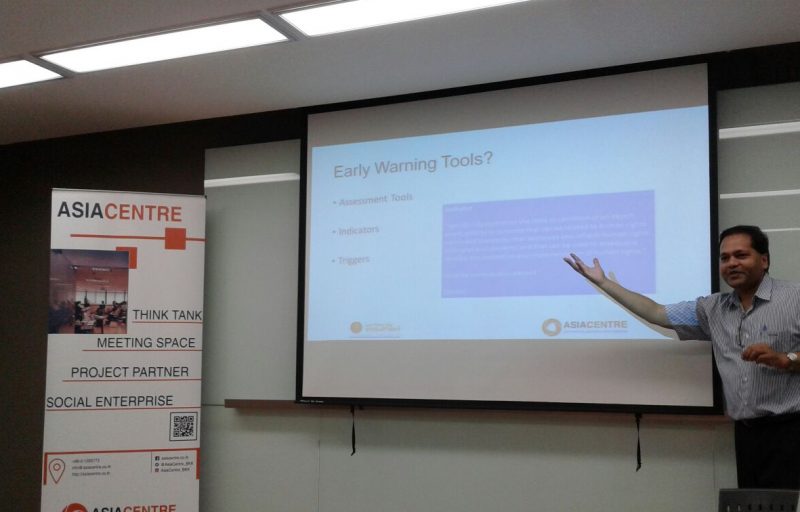
Applying human rights principles in the development of early warning systems and indicators can bolster internal – conflict prevention processes and mechanisms. This was the key discussion point at the Asia Centre-Thammasat University panel on internal conflict held at the International Conference on International Relations and Development (ICIRD) on 24 June 2017. The panel entitled, Human Rights Violations and Internal-Conflict in Southeast Asia: Identifying Conflict Prevention Processes and Mechanisms, looked at the challenges and opportunities for internal conflict prevention from conceptual and practical perspectives. Asia Centre’s Executive Director Dr Robin Ramcharan’s paper Human Rights and Conflict Prevention in Southeast Asia: The Protection Gap considered the degree to which violations of economic, social and cultural rights trigger conflict and how to identify those triggers. Dr Kenneth Houston, a lecturer with Webster University and Asia Centre Associate adopted a methodological perspective looking at how qualitative data analysis can provide monitor attitudes and thoughts that shape perceptions and consequently policies. The Proto-policy Domain as an Early Warning Resource: Options for Quantitative Data Analysis in Human Rights Monitoring in Southeast Asia considered how data can be used to take practical steps to institutionalise a more focused early warning system. Dr James Gomez, Regional Director of Amnesty International Southeast Asia and the Pacific and Asia Centre Advisory Board Member offered a practical perspective in his paper Human Rights Violations and Political Conflict in Southeast Asia: The UPR as a prevention mechanism? Dr Gomez presentation considered how human rights violations and conflict are inherently linked to conflict and considered how the UPR can address protection gaps. The panel was chaired by the Centre’s Programme Coordinator Michelle D’cruz who facilitated the ensuing discussion that covered the role of the media, integrating conflict prevention indicators into existing human rights mechanisms and processes as well as challenge in developing an early warning system. The panel attracted an audience of academics, NGO representatives and journalists who were keen to engage on the role of human rights in conflict prevention. The session builds on Asia Centre’s Human Rights Programme which focuses on evidence- based research on human rights mechanisms in Southeast Asia. The Centre is also developing a Conflict Prevention Programme.
Violations by Businesses Against Human Rights Defenders An Emerging Trend
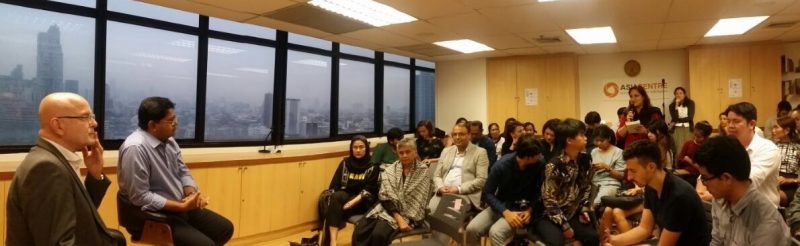
In addition to States, increasingly the office of the UN Special Rapporteur for the situation of human rights defenders (HRDs) is using its mandate to hold businesses accountable for human rights violations. States no longer are the only violators, around the world violations against HRDs are also being committed by companies in the areas of mining and forestry as well as other sectors. This was one of the key trends affecting the situation of human rights defenders Mr. Michel Forst highlighted during his public lecture at the Asia Centre. Over 70 people turned up to hear Mr. Michel Forst that included participants from academia, civil society, the UN, the Ministry of Foreign Affairs (Thailand) as well as Thai Human Rights Commissioner Mrs. Angkhana Neelapaijit. Mr Forst told the packed room that around the world human rights defenders face the following challenges: Judicial harassment through the passing of laws that criminalises the work of HRDs Non-state harassment by private security companies, religious groups, hate groups Vilification of HRDs over state-owned media and social media Harassment of women through gender specific attacks Surveillance and harassment of family members, friends and supporters of HRDs During the Q and A session moderated by Dr. James Gomez, Executive Director of the Asia Centre, members from the audience raised the issues of China’s influence on human rights in the region, the funding crunch faced by NGOs and the plight of human rights defenders working on refugee issues. Given the range of issues raised, Mr. Forst invited members of the audience to consult the reports submitted by reports of the Special Rapporteur on HRD for ideas. He also welcomed those in the region to be part of the 20th anniversary of HRD declaration in 2018 meetings to strategise a way forward for Southeast Asia. The Mandate for the situation of the human rights defender was established in 2000 following the Human Rights Defenders declaration in 1998. The role of the Rapporteur is to present Annual Reports to the Human Rights Council and General Assembly, undertake country visit and take up with States complaints of human rights violations Mr Forst has held the post of UN Special Rapporteur for the situation of human rights defenders since June 2014 and was travelling unofficially through Thailand on his way to Cambodia. His public lecture was jointed hosted by Forum-Asia and Asia Centre.
Asia Centre Human Rights Briefing for Georgia Tech, USA
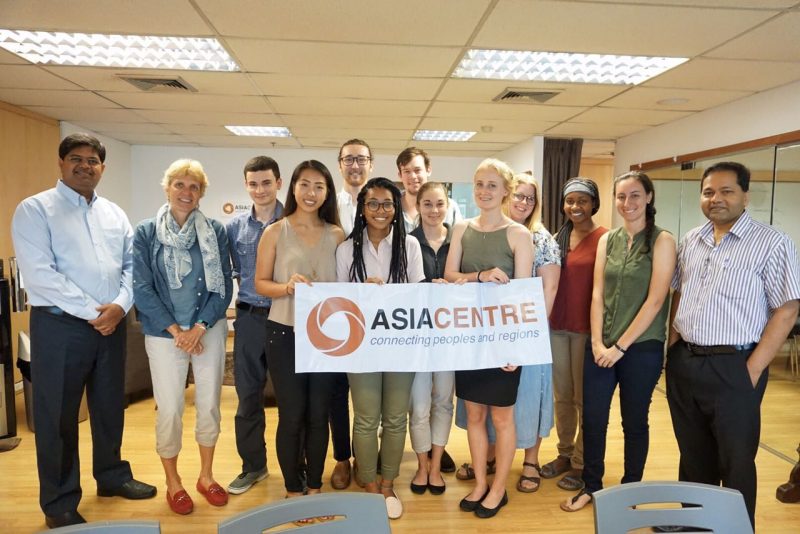
Asia Centre held a briefing session on 22 May 2017, in Bangkok, for visitors from the Southeast Asia Study Abroad Program of the Sam Nunn School of International Affairs of Georgia Tech, which is based in Atlanta, Georgia, USA. Dr. Robin Ramcharan and Dr. James Gomez led the briefing and discussions. Dr. Katja Weber led the group from Georgia Tech. The session focused on challenges facing human rights protection and democratic transitions in ASEAN, and on contemporary governance challenges that affect human security including the difficulties of providing social protection. Institutional differences between ASEAN and other regional bodies were highlighted. The value of the Universal Periodic Review (UPR) of the UN Human Rights Council to human rights protection in the region was emphasized and appraised. The critical role and impact of civil society organizations highlighted. It was noted that their formal exclusion from ASEAN regional mechanisms rendered the UPR even more appealing since CSOs and other stakeholders are consulted in the UPR peer-review process. The study group were apprised of the capacity and need for the UPR dialogue process to tackle hard civil and political issues. One of those is the shrinking space for freedom of expression (FOE) across the region, which faces threats from the criminalization of political opposition, restrictive cyber and telecommunications laws, restrictions on social media and presidential decrees in one-man or one-party authoritarian States. Participants from the study group engaged in discussion on FOE challenges, ethnic conflict and problems of social inequality. The study group, which was touring several countries in Southeast Asia, stopped by Asia Centre to exchange views on challenges facing the region and to share their insights on the same. Asia Centre looks forward to continued interaction and future collaboration with the Sam Nunn School of International Affairs.