
Climate Disinformation in Cambodia: Undermining Indigenous Peoples’ Agency
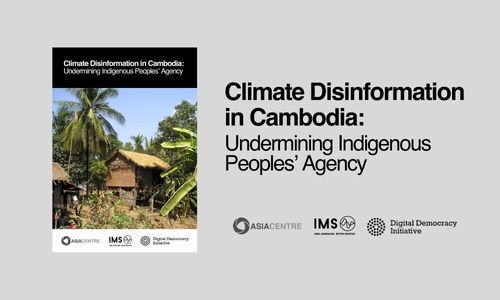
Download Full Report In Cambodia, the rise of digital media and social media platforms since the mid-2010s has intensified a surge in climate disinformation. It affects Indigenous Peoples (IPs), who make up about 3% of the population and live in forests highly vulnerable to climate change and deforestation. From false climate solutions to greenwashing and denial of deforestation, these narratives contribute to IPs’ exclusion from meaningful climate discussions, land dispossession and the criminalisation and silencing of environmental defenders. This report explores how both online and face-to-face climate disinformation – often state-aligned – restrains IPs’ voices, discredits Indigenous knowledge and legitimises harmful environmental practices, ultimately undermining IPs’ agency to take corrective action. The report offers concrete policy recommendations, urging governments, international and local actors to integrate climate disinformation into human rights monitoring, support Indigenous-led initiatives and strengthen digital access. Tackling climate disinformation is key to ensuring just, inclusive, and effective climate action in Cambodia and beyond.
10th International Conference (2025) AI and Governance in Asia: Civil Society, Democracy and Media

The discourse on AI governance has been dominated by governments and the private sector, leaving civil society sidelined. To build genuine AI Public–Private–People Partnerships, civil society organisations need to be accorded a seat at the table. But to do this, they need meaningful cross-sector support to develop the capacities and resources necessary to safeguard democracy and human rights in the era of AI. This was the main message from Asia Centre’s 10th International Conference, “AI and Governance in Asia: Civil Society, Democracy and Media”, held 21 to 22 August 2025 at the VIE Hotel, Bangkok, Thailand. The Conference convened 50 participants from 16 countries, comprising representatives from international non-governmental organisations (INGOs), civil society organisations (CSOs), diplomatic missions, policymakers, legal professionals, academia, and the broader private sector – the majority of whom were from the technology industry. Over two days, a total of seven panels and one “fireside chat” session were convened, featuring 38 speakers, with a gender balance of 50% men and 50% women. It fostered cross-sectoral dialogue on the opportunities and risks AI presents, highlighting the need for inclusive governance that empowers civil society and safeguards democratic values. Together, the stakeholders examined how artificial intelligence is reshaping civic engagement and its implications for democratic and human rights. This year’s conference was supported by three (3) title partners: Taiwan Foundation for Democracy (TFD) International Institute for Democracy and Electoral Assistance (International IDEA) The Asia Foundation (TAF) The Conference also featured two (2) partners: Eugene Thuraisingam LLP Global Democracy Coalition Day 1 | 21 August 2025 The programme opened with a pre-recorded message from Pita Limjaroenrat, former Prime Minister-designate of Thailand, who underscored the importance of ensuring that AI serves as an “equaliser” for society rather than a technology that fosters “exclusion”. View the message here. Dr James Gomez, Regional Director of Asia Centre, opened the Conference by framing it as a space to confront the pressing exclusion of civil society groups from discussions on AI. He highlighted how AI governance remains dominated by governments and the private sector, expressing concern that local civil society groups are being sidelined, which leaves them disadvantaged and limits their ability to contribute meaningfully to AI debates and ensure that AI can serve to promote democracy and human rights in the region. Dr Gomez also announced the launch of the AI Hub for Democracy and Human Rights to sustain these efforts beyond the Conference. The Hub will focus on three core areas: researching the ways AI has already – and will continue to – impact democracy and human rights; strengthening the capacity of civil society organisations through AI literacy and practical AI tool adoption; and advocating for democracy and human rights compliance with technology companies, governments and other stakeholders in an era of AI. Read more about the AI Hub here. This was followed by statements from Leena Rikkilä Tamang, Director for the Asia and the Pacific region at International IDEA and Thomas Parks, Vice President, The Asia Foundation. Three panels were convened on the first day, addressing a diverse range of topics, including the implications of AI for democracy in Asia, the future of tech-enabled governance in Southeast Asia, and strategies for building accountable AI through cross-sector collaboration. The panels were as follows: Panel 1: “AI and Democracy in Asia: Opportunities and Challenges”, hosted by International IDEA Panel 2: “Governance 4.0: What is the Future of Tech-Enabled Governance in Southeast Asia?”, hosted by The Asia Foundation Panel 3: “Public–Private–People Partnerships in AI: What Makes Cross-Collaboration for Accountable Technology Work?” A fireside chat entitled “A Dialogue for the Future: Technology, AI, Democracy and Peace”, was also held with Abhisit Vejjajiva, the 27th Prime Minister of Thailand and Dr. James Gomez, Regional Director, Asia Centre. Khun Abhisit shared his perspectives on the rapid advancement of technology and its far-reaching implications. The discussion also explored the role of technology in democracy and peace. Day 2 – 22 August 2025 The second day featured four additional panels on safeguarding media integrity in the age of AI, adapting AI technologies to regional contexts, developing trusted AI through innovation and regulation, and exploring the broader societal impacts of AI: Panel 4: “AI and Media Integrity, Resilience and Sustainability” Panel 5: “AI Adaptation in Asia and the Pacific” Panel 6: “Towards Trusted AI: Innovation Landscape and Regulatory Frameworks in Thailand ” Panel 7: “Rethinking Technology for Collective Impact: AI in Society and the Path Ahead” Dr Gomez officially closed the Conference by expressing Asia Centre’s appreciation to all speakers and participants. He also announced Asia Centre’s 11th International Conference, titled “Religious Freedom in Asia: Representation, Restrictions, Rights”, which will be held from 19 to 21 August 2026 The Conference concluded with a celebration to mark Asia Centre’s 10th anniversary. Speakers and participants congratulated the Asia Centre team for a successful first decade, expressing their confidence that Asia Centre will continue to do well in the coming years. Watch TikTok highlights of the event here. Several participants and organisations also wrote about Asia Centre’s 10th International Conference. On August 22, TaiwanICDF highlighted on its official website about AI-powered development initiatives in partner countries, emphasizing the importance of human-centered AI tailored to local conditions. On August 26, Fundasaun Hadomi Timor (FHT) shared on Hadomi Timor website, his reflections on the conference, outlining Timor-Leste’s digital challenges and aspirations for AI integration. On August 28, International IDEA published an article at its official website, by Billie Phillips, Communication and Outreach Officer, IDEA, discussing how AI is transforming democratic processes and advocating for ethical, inclusive electoral governance, highlighting the launch of Asia Centre’s new AI Hub for Civil Society Organisations to build capacity and strengthen engagement. Finally, on September 4, Aliran published an op-ed by Tan Wah Piow, critiquing AI discourse for sidelining the economic rights of the world’s poorest communities and calling for a broader, justice-oriented approach to human rights. These publications by participants and partnering organisations underscore the conference’s importance and reach across Asia and beyond. Asia Centre’s International Conference is its flagship
Climate Disinformation Brought Into Focus In Cambodia
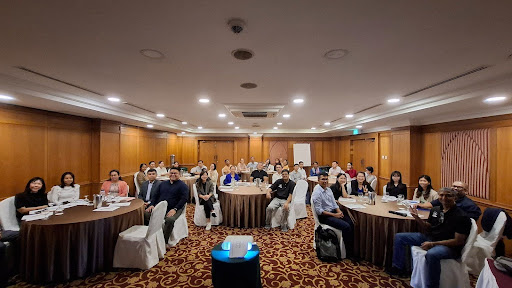
Initial findings from “Climate Disinformation in Cambodia: Undermining Indigenous Peoples’ Agency”, the first of seven reports, was discussed on 8 August 2025, with approximately 40 representatives from civil society organisations (CSOs), INGOs and the media sector. The event was held a day before the International Day of the World’s Indigenous Peoples. The discussion underscored the urgency of the findings and the need for a collaborative approach to protecting Indigenous rights ahead of this important day. Asia Centre, in partnership with the International Media Support (IMS), convened a national meeting where the key finding shows that in Cambodia, climate disinformation hinders Indigenous Peoples (IPs)’ agency to meaningfully take action against climate change and deforestation. Dr. James Gomez, Regional Director of the Asia Centre, delivered the opening remarks, highlighting the importance of jointly addressing disinformation, particularly climate disinformation from being normalised in Cambodian society. Miss Vanessa Chong, Programme Manager from International Media Support, in her remarks said the media’s role in safeguarding the circulation of accurate information can help mitigate climate disinformation. Following the opening remarks, the draft report’s key findings were presented by the Asia Centre’s Researcher, Miss Wen-Ling (Amy) Lai for the audience’s feedback and validation. First, she outlined the background information, centring Indigenous communities and the assessment of climate change and deforestation in Cambodia. She then outlined how the nation’s rapid digital transformation has fuelled the circulation of general disinformation, -which in turn has led to the specific dissemination of climate disinformation. Second, Miss Lai detailed the four forms of climate disinformation in Cambodia, which include state-aligned one-sided climate discourses, false climate solutions, corporate greenwashing stances and denial of deforestation narratives. Collectively, the climate disinformation reflects broader dynamics in which official messaging obscures the environmental and social consequences of development projects, suppresses critical debate and sidelines Indigenous and local community voices. Third, she made an assessment of the impacts of climate disinformation on IPs in Cambodia, including exclusion from climate discussions, forced displacements from ancestral lands, intimidation and criminalisation of environmental defenders. Jointly, these impacts deprive Indigenous voices and contribution within meaningful climate dialogue. Lastly, she presented the report’s key recommendations, which are aimed at a wide range of stakeholders including UN bodies, INGOs, government ministries, CSOs, media, technology companies and Indigenous communities. She particularly stressed the importance of tailoring these recommendations to the specific needs of each IP community. Following the presentation, the audience provided a range of feedback, centreing around methodology, definition, Indigenous communities’ input and tailoring some of the recommendations. Following the presentation, a roundtable discussion with six discussants was moderated by IMS’s Mr. Paco Pangalangan. Drawing from the report as well as their own experiences, all discussants engaged with the intersectionality between disinformation, IPs, and the media. Sao Phal Niseiy, Editor-in-Chief from Cambodianess, emphasised on the importance of empowering media professionals in reporting climate disinformation. He stressed that aside from sharing accurate information to the IPs, we also need to encourage IPs to proactively share Indigenous ecological knowledge to the general public. Seoung Nimol, Journalist from CamboJA News, saw climate disinformation as a tactic deployed against journalists to deter them from reporting on Indigenous issues. Hence, as journalists, she said it was crucial to ensure accurate information reaches vulnerable communities, including recognising IPs’ role in climate change mitigation efforts and in tackling deforestation. Yatt Malai, Journalist from Kiri Post, validated the observations made in the report by sharing with the audience her own reporting experience where she witnessed firsthand the attempts to only portray one-sided information. In her visits to the provincial areas, there were often efforts by company owners and local-level authorities who prevented her access to the other side of the story. Carlos Gallardo, Regional Representative from Cord, recommended the report also consider private sector accountability, the issue of building social cohesion among IPs and community-led environmental initiatives. He said the report has the potential to serve as the starting point for future conversations surrounding climate disinformation. Kuy Suyheang, Executive Director from Women Peace Makers (WPM), referring to the report’s title, said that climate disinformation not only undermines the agency of IPs from climate mitigation, but also takes away the agency of the Cambodian public to act on this issue. Vinh Socheata, Media Training Coordinator from Cambodia Center Independent Media (CCIM), said the report reflected the reality of Indigenous communities and their struggles in the face of climate disinformation. She said her organisation has organised training sessions for journalists to strengthen their capacity on climate reporting. Overall, the draft report was complimented as having captured the key issues, being well structured and bringing into focus the issue of climate disinformation. Asia Centre’s Dr. Gomez concluded the event by thanking IMS, all panellists and participants for their feedback. He said the feedback was well received and suggestions, where relevant, will be incorporated when finalising the report.
Asia Centre AI Hub: Supporting CSOs’ Digital Transformation

Unlike their prominent role in leveraging social media for advocacy in the early 2000s, human rights-based civil society organisations (CSOs) are now sidelined in discussions dominated by governments and technology companies. This exclusion limits their ability to ensure that Artificial Intelligence (AI) serves public interests, especially in areas related to democracy and human rights. To close this gap, Asia Centre has established the AI Hub for CSOs. Since 2024, Asia Centre has actively contributed to AI-related discourse across the region by engaging in collaborations with UN agencies, international NGOs and technology companies. These efforts include participating in high-level events and hosting discussions on AI literacy in electoral management, gender-sensitive AI policies and digital democracy. Through these activities, Asia Centre has built strong networks and developed expertise at the intersection of AI, governance and civil society. These experiences have directly informed the creation of the AI Hub, equipping the Centre with the insight and partnerships necessary to lead regional efforts that place CSOs at the heart of AI governance. The Asia Centre AI Hub for CSOs will officially launch on 1 September 2025 in Bangkok, Thailand, to address the lack of AI literacy among human rights-based civil society organisations. Strategically located in Phayathai Plaza Building in central Bangkok, the Hub offers a fully equipped, collaborative workspace that supports CSOs in adopting AI tools aligned with their missions. The facility includes a welcoming reception area with a pantry and lounge, a main workspace with modern workstations, a large meeting room, a discussion room and an administrative office, providing the environment needed to build digital capacity and foster innovation. Beyond physical infrastructure, the AI Hub is designed to ensure that human rights-based CSOs are meaningfully included in AI policy discussions and ethical frameworks. It will serve as a platform for inclusive dialogue by connecting tech experts, policymakers and civil society actors, enabling them to exchange ideas and co-develop rights-respecting AI solutions. The Hub also promotes responsible AI use that upholds human rights principles and democratic values. By empowering CSOs to lead in AI-driven advocacy and governance, the AI Hub strengthens their role in shaping a digital future that is inclusive, ethical and just. Its central location in Bangkok, with easy access to public transport and regional networks, makes it an ideal base for collaboration and outreach across the Asia-Pacific region. AI is transforming societies across the Asia Pacific, but this progress remains uneven. Despite AI’s increasing influence on governance, the voices of CSOs are notably absent from policy and development processes. Asia Centre is pleased to step in to help bridge this gap. The Asia Centre AI Hub is one of four specialised hubs that comprise the wider Asia Centre network in the region. There is the Research Hub in Bangkok, Thailand, the Media Hub in Johor Bahru, Malaysia, and the Training Hub in Phnom Penh, Cambodia. Together, the Asia Centre Hubs each serve a distinct function to advance the Centre’s mission to support CSOs across Asia and beyond. If you are interested in collaborating with Asia Centre, please send us an email query at contact@asiacentre.org or make an appointment to visit us at our office. You can also reach us through Facebook, Instagram or LinkedIn. Asia Centre is a civil society research institute in Special Consultative Status with the United Nations Economic and Social Council. It serves as a knowledge partner and undertakes evidence-based research as well as provides capacity-building training for end beneficiaries. If you would like to collaborate with the Centre on AI Hub for CSOs, please send an expression of interest to.ai@asiacentre.org Follow Asia Centre’s social media channels for more information.
Asia Centre Research Hub: Advancing Evidence-Based Civil Society Research

In April 2022, Asia Centre launched its Research Hub in Bangkok to consolidate its role as a civil society research institute and publisher of all the Centre’s knowledge products in the Asia-Pacific region. The establishment of the Hub reflects the Centre’s commitment to strengthening its role as a producer of evidence-based knowledge, particularly in the areas of democracy and human rights. The Research Hub focuses on delivering a range of knowledge outputs, including baseline studies, policy briefs, needs assessments, strategic plans, perception studies, programme evaluations and submissions to UN human rights mechanisms, among others. The Research Hub undertakes one-off research projects as well as engages in multi-year, multi-country studies with regional overviews. Often, research outputs are re-packaged into smaller content capsules such as op-eds, podcasts, short videos, infographics, and disseminated via the Asia Centre’s social media channels. The Centre’s research team members also write commentaries and provide expert interviews to established media outlets in the region, such as ABC Australia, Bangkok Post, Jakarta Post, Nikkei Asia, The Rappler, to name a few. Due to the Research Hub’s strategic location in Bangkok, Thailand, the Asia Centre is well-positioned to coordinate and implement projects beyond Southeast Asia. In recent years, the Centre has implemented projects in South Asia, including India, Sri Lanka and Nepal, as well as in East Asia, including Taiwan, Japan, and South Korea. Located just 200 metres from Bangkok’s Rama 9 MRT Station, the Research Hub is designed to foster productivity, collaboration, and innovation. The Hub features an open plan work area with eight desks, a 5-seater meeting and 2 x 2 seater discussion rooms, and an administration and finance room, all enhanced by natural lighting, modern furniture and electronic equipment. The meeting and discussion rooms are all equipped with a whiteboard, a TV console and video conference systems for presentations as well as cross-border team and partner meetings. There are ample built-in cabinets and shelves throughout the Research Hub that offer organised storage for office supplies and research materials. The Asia Centre Research Hub is one of four specialised Hubs that make up the Asia Centre group of offices in the region. There is the Media Hub in Johor Bahru, Malaysia, and the Training Hub in Phnom Penh, Cambodia. In August 2025, AI Hub will be the second Hub in Bangkok, Thailand. Together, the Asia Centre Hubs each serve a distinct function and together serve to advance the Centre’s mission across Asia and beyond. If you are interested in collaborating with Asia Centre, please send us an email query at contact@asiacentre.org or make an appointment to visit us at our office. You can also reach us through Facebook, Instagram or LinkedIn. Asia Centre is a civil society research institute in Special Consultative Status with the United Nations Economic and Social Council. It serves as a knowledge partner and undertakes evidence-based research as well as provides capacity-building training for end beneficiaries. If you would like to collaborate with the Centre please send an expression of interest to. contact@asiacentre.org Follow Asia Centre’s social media channels for more information.
Asia Centre Launches Report on Digital Security For High-Risk Users in the Asia-Pacific

On 10 December 2024, the Asia Centre hosted the online launch of its latest report, Digital Security for High-Risk Users in the Asia-Pacific: Needs Assessment Report. The event attracted about 50 participants and featured insights from experts in digital security, citizen participation, and technology. Dr James Gomez, Regional Director of the Asia Centre, delivered the opening remarks, highlighting the crucial importance of digital security for rights defenders. He also addressed the growing role of artificial intelligence (AI) in human rights advocacy, noting its potential to enhance the digital knowledge and operations of civil society organisations (CSOs). To this end, he announced the theme for the Asia Centre’s annual conference, “AI and Governance in Asia: Civil Society, Democracy and Media” scheduled for 20-22 August 2025 in Bangkok, Thailand. The conference aims to bring together key stakeholders from the region and beyond, including international non-governmental organisations (INGOs), local civil society organisations (CSOs), technology companies, development agencies, and other relevant actors, to engage in discussions around AI’s impact on democracy and human rights sectors and CSOs response to it. Additionally, Dr Gomez introduced Asia Centre’s newly established AI Hub for Civil Society Organisations, located in Bangkok, Thailand. The AI Hub is designed to serve as a resource and focal point for CSOs both in Asia and beyond to provide support for their digital transformation by incorporating AI as a central tool in their operations. Through its research, capacity-building initiatives, and advocacy efforts, the Hub will also support CSOs in understanding and leveraging AI in ways that align with their mission and contribute positively to democracy and human rights. Following the opening remarks, the report overview and its key findings were presented by the Asia Centre’s Research Manager, Dr Marc Pinol Rovira. He identified three critical elements affecting digital security in the Asia-Pacific region. First, while digital transformation has provided significant benefits to actors such as rights defenders and journalists in promoting public accountability, emerging threats—including government misuse of legal frameworks, online surveillance, and information operations—undermine the potential of these internet-based tools. These challenges are further exacerbated by limited digital literacy and a relative lack of skills and resources necessary to effectively counter these threats. Second, Dr Pinol Rovira highlighted the diversity and sheer volume of threat sources as a key challenge, adding complexity to the development of effective solutions against digital security threats. He noted that many high-risk users tend to adopt a reactive approach to digital security threats rather than a proactive one. Although awareness of the importance of digital security is increasing, limited resources and rapidly evolving technologies often hinder the implementation of proactive measures. Third, he emphasised key recommendations from the report. He stressed the importance of creating tailored digital security training programmes for specific contexts, underscoring the need for comprehensive, evidence-based research to inform curriculum development. For such initiatives to succeed, he called on government agencies, organisations, and individual high-risk users to prioritise digital security in their strategies, advocating for increased training opportunities and resources. Following the report presentation, a discussion on the key findings ensued, featuring four commentators who provided additional insights into the report while drawing from their own experiences in the digital security sector. Micheline Rama, Social Behavior Change Advisor at The Asia Foundation, emphasised the importance of inclusive digital security mechanisms, advocating for security measures tailored to local contexts. She stressed that such measures should be affordable and accessible to local organisations, adding that effective security measures require collaboration between digital experts and local organisations to ensure relevance and practicality. Marc Howard, Founding Engineer of Project Shied at Google highlighted the shared responsibilities between platform owners and users in ensuring digital security. He noted that users should adopt protective measures such as VPNs and two-factor authentication. Meanwhile, platform owners must ensure the safety of their platforms, taking proactive measures to prevent potential data breaches that could compromise users’ data. Nenden S. Arum, Executive Director at SAFEnet focused on the psychological impact of digital threats on users and their overall well-being. She suggested that training modules should address these aspects and reiterated Micheline’s recommendation for localised and tailored training. She also advocated for using simpler language in the modules to enhance accessibility and comprehension. Lastly, Takaya Terakawa, CEO of Technica Zen Ltd., emphasised the critical role of the private sector and corporate entities in advancing digital security. He advocated for businesses to assume responsibility by organising training programmes aimed at equipping users with the essential skills and knowledge needed to navigate the digital landscape securely. The event concluded with a Q&A session that addressed pressing topics, including the lack of specific data on digital security attacks targeting different groups, the limitations of existing security tools, and strategies to counter government restrictions on social media access. Participants provided several key suggestions to tackle these challenges. They highlighted the importance of using services like AccessNow to provide specific support for high-risk users. Additionally, they emphasised the need for tailored tools and solutions to address the unique risks faced by various groups. Furthermore, the panelists agreed on the value of a multistakeholder approach, involving governments, civil society organisations, and the private sector, to enhance digital security training. This event underscores the Asia Centre’s commitment to exploring how the opportunities presented by internet-based digital technologies can be harnessed for the greater good, benefiting all sectors of society. The Centre is dedicated to ensuring that this process remains inclusive and multi-stakeholder-focused, fostering collaboration among various groups. Looking ahead to 2025, with the Asia Centre’s annual conference on AI and Governance and the operations of the AI Hub for Civil Society Organisations, the Centre aims to strengthen existing partnerships while establishing new ones. This strategic direction seeks to ensure that internet-based tools, particularly those involving AI, are used responsibly and for the benefit of society as a whole. The International Conference is Asia Centre’s annual event where it brings together its partners to share the outcomes of their programmes and network for future collaborations. Over the years, the conference has become
Asia Centre Media Hub: Driving Civil Society Organisation (CSO) Advocacy in the Region

Launched in 2018, the Asia Centre Media Hub was established to enhance the visibility of the Centre and its partners’ work by producing and disseminating digital content that highlights their activities and research outputs. As a dedicated media unit, the Media Hub plays a vital role in amplifying the voices of civil society, particularly amid limited mainstream media coverage and an increasingly crowded digital landscape. The Media Hub’s wide range of digital content includes podcasts, videos, infographics, and written commentaries, as well as tools that not only support the Asia Centre’s advocacy work but also empower CSOs to promote their issues effectively. Over time, the Hub has become a vital resource for coordinating multimedia campaigns that bring sustained attention to key civil society issues. Campaign-based content development is a core function of the Media Hub. By producing and strategically disseminating curated content over media platforms that target specific audiences during a set time frame, the Hub raises awareness and reinforces the importance of key democracy and human rights issues. These campaigns are tailored to highlight ongoing challenges faced by youth, women, indigenous people, sexual minorities, ethnic and religious groups, and encourage policy reforms that will empower these communities. The Asia Centre Media Hub operates from a dedicated three-storey building, with each level serving a specific function. The first floor houses a gallery that showcases the Centre’s history since 2015 and also serves as a venue for exhibitions, launches, and public dialogues; it includes a pantry and a space used for meetings and training sessions. The second floor functions as the main workspace, featuring open workstations, two meeting rooms, and an administrative room to support daily operations. The third floor is a fully equipped media studio with professional-grade equipment, such as cameras, microphones, tripods, teleprompters, and lighting systems, enabling comprehensive media production for both internal projects and partner collaborations. Situated in the Iskandar Puteri region of Johor Bahru, Malaysia, the Media Hub also serves as Asia Centre’s base for outreach across the Malay-speaking region of Nusantara, including Brunei, Indonesia, Malaysia, and Timor-Leste. This strategic location supports the Centre’s efforts to strengthen partnerships and expand programming within the subregion. The Asia Centre Media Hub is one of four specialised offices that comprise the wider Asia Centre network. There is the Research Hub in Bangkok, Thailand, and the Training Hub in Phnom Penh, Cambodia. In August 2025, AI Hub will be the second Hub in Bangkok, Thailand. Together, the Asia Centre Hubs each serve a distinct function to advance the Centre’s mission across Asia and beyond. If you are interested in collaborating with Asia Centre, please send us an email query at contact@asiacentre.org or make an appointment to visit us at our office. You can also reach us through Facebook, Instagram or LinkedIn. Asia Centre is a civil society research institute in Special Consultative Status with the United Nations Economic and Social Council. It serves as a knowledge partner and undertakes evidence-based research as well as provides capacity-building training for end beneficiaries. Follow Asia Centre’s social media channels for more information.
Call for Partnership: Asia Centre Digital Security Training Programme 2025 Kicks Off
From June 2025 to May 2026, Asia Centre, with the support of Google, will begin its Digital Security Training (DST) programme aimed at mitigating the negative impact of misinformation, digital threats and cybersecurity risks within the Asia-Pacific region. This training programme is designed for high-risk users and digitally vulnerable communities in the Asia Pacific region. The training is targeted at youths, women, government officials, people with disabilities, marginalised communities and community leaders. Under this project, Asia Centre offers two types of training activities: 1. End Beneficiaries Training Interested organisations that agree to partner with Asia Centre will need to jointly identify a tentative date and recruit a minimum of 30-40 participants for a 90 to 180-minute session. long training session. Partners provide the venue and facilitate venue management. 2. Training of Trainers (Master Trainers) Interested organisations that agree to partner with Asia Centre will need to jointly identify a tentative date and recruit a minimum 30-40 participants for a 180 minutes long training session. Partners provide the venue and facilitate venue management. Identified trainers agree to meet all post-Training of Trainers (TOT) requirements to become digital security Master Trainers and receive their trainer certification. Asia Centre will undertake curriculum development, provide trainer(s) and cover the trainers’ travel and logistical costs to deliver the above training. At the end of the training sessions, end beneficiaries will learn about different types of cybersecurity attacks, scams and frauds and how to protect themselves against them. The digital security trainers will be equipped with knowledge and materials to conduct their own peer-to-peer end-beneficiary (P2PEB) training within their network and improve community awareness on digital security. Together, both trainers and end beneficiaries will be able to build resilience and curb disinformation, spam, online fraud and other types of digital security threats in their respective countries. This training will build upon Asia Centre’s partnership with Google to deliver digital security training to high-risk users in 2024 to 2025. During this period, Asia Centre successfully conducted 42 training sessions in 15 Asia-Pacific countries, engaging 1,225 people with diverse gender and professional backgrounds as direct beneficiaries. If you are interested in partnering on either the End Beneficiaries or Training of Trainers (Master Trainers) programme, please email training@asiacentre.org to set up a call OR register your interest directly in the “form” for us to contact you. Visit our social media posts from previous training cycles: Nepal: Child Safe Net, Digital Rights Nepal Sri Lanka: Hashtag Generation India: Association for Democratic Reform (ADR), Association for Democratic Socialism Thailand: National Human Rights Council South (NHRC South), Phue Thai Party, Democrat Party Thailand Indonesia: Indika Foundation, Social Movement Institute Malaysia: Suara Rakyat Malaysia (SUARAM) Taiwan: European Values Centre for Security Policy (EVC) Cambodia: KiriPost
Red-Tagging and Foreign Interference in the Philippines
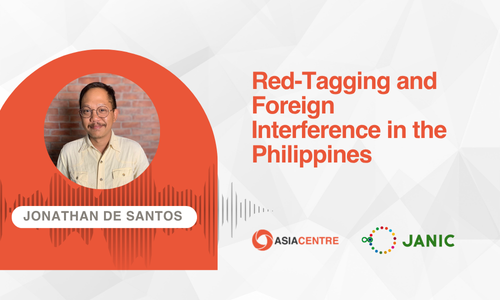
In the Philippines context, red-tagging refers to individuals and organisations that are black-listed because they do not fully support the views or actions of the government. Red-tagging consequences may include vilification, surveillance, harassment, unlawful arrests, enforced disappearance, and even killings. Often, the red-tagging rhetoric incorporates the idea of foreign interference and civil society organisations are accused of subverting Filipino society for the benefit of foreign agents. This way, the Philippines government uses national security as the argument to red-tag members of CSOs, journalists, and activists. In this podcast episode, Jonathan De Santos discusses how the Philippines government incorporates the rhetoric of foreign interference to red-tag CSOs. Jonathan De Santos is the chairperson of the National Union of Journalists of the Philippines. This podcast episode is part of the Foreign Interference Laws in Southeast Asia series, in partnership with the Japan NGO Centre for International Cooperation. To learn more about foreign interference laws, read Foreign Interference Laws in Southeast Asia: Deepening the Shrinkage of Civic Space.
Technology-Facilitated Gender-Based Violence in Cambodia: Impact on the Civic Freedoms of Women Journalists and Human Rights Defenders
Download Full Report The increasing use of digital platforms for advocacy by women in Cambodia has been accompanied by a rise in technology-facilitated gender-based violence (TFGBV), a form of harassment perpetrated online. While all women and girls are at risk, those highly visible in the public sphere – such as women human rights defenders (WHRDs), Indigenous advocates, journalists, and civil society leaders – face heightened exposure. Despite its severity, TFGBV remains poorly documented in Cambodia. This report examines TFGBV targeting high-profile women in advocacy and argues that it is an extension of gender-based violence (GBV), sustained by patriarchal structures and a fragmented protection ecosystem spanning multiple sectors. The findings highlight three primary forms of TFGBV: (1) online harassment aimed at discrediting women, (2) online sexual harassment, and (3) the manipulation of digital content to misrepresent or vilify survivors. Although legal mechanisms, CSO-led reporting channels, and awareness raising strategies and public education exist, to a certain extent, as key defences, they remain largely ineffective due to the absence of survivor-centred approaches. Addressing TFGBV requires a multistakeholder response, involving government reforms, CSO-led monitoring and awareness initiatives, technology sector accountability, and responsible media practices. Without action, TFGBV will continue to drive women out of public spaces, reinforcing the silencing effect of TFGBV.