
From Conference to Summit: The Evolution of Asia Centre’s Annual Conference
Over the past decade, from 2016 to 2025, Asia Centre’s annual conferences have evolved from a modest gathering of researchers and civil society actors into one of the region’s regular convening platforms on democracy and human rights. Having completed 10 impactful years of conference convening, the Asia Centre annual conference now enters a new chapter. Beginning with its 11th edition, the annual Conference will be rebranded as the Asia Centre Summit – marking a significant step forward in institutionalising the annual Conference as a leading regional forum for dialogue and collaboration. Needless to say, the Summit will remain guided by a consistent objective: to provide a credible forum to discuss Asia’s complex and intersecting challenges, while facilitating meaningful engagement among international non-governmental organisations (INGOs), civil society organisations (CSOs), the diplomatic community, parliamentarians and other key stakeholders. In ten years, the Asia Centre has convened 754 participants and speakers from INGOs, civil society organisations, political parties and parliaments, media and technology companies and other entities across its annual Conferences. They achieved close to gender parity with a nearly equal gender ratio of speakers, reflecting a strong commitment to gender inclusivity. Geographically, participants represented over 40 countries and regions worldwide. Today, as Asia Centre navigates an across-the-board reduction in development aid funding, it’s now a good opportunity to reflect and rethink the modalities of the annual Conference beyond its 10th year. To start off … How did we get here? Asia Centre’s annual Conferences can be traced across four distinct evolutionary phases, each reflecting shifts in scale, partnership models and focus. In the first phase, between 2016 and 2018, Asia Centre’s 1st (Universal Periodic Review in Southeast Asia: An Evidence-Based Regional Assessment), 2nd (National Human Rights Institutions in Southeast Asia: Challenges of Protection) and 3rd (Business and Human Rights: Holding Governments Accountable in Asia) annual Conferences were positioned as research-oriented convenings, bringing together scholars and civil society practitioners to strengthen analytical depth on democracy and human rights in the region. Conferences were designed to bridge evidence-based inquiry with policy-relevant dialogue. Given their modest scale, they were held entirely at Asia Centre’s Phayathai Building premises in Bangkok, Thailand. These early convenings gradually strengthened the Centre’s visibility and credibility within civil society, INGOs, diplomatic and donor communities. As Asia Centre’s regional profile expanded, the Conference entered a second phase, between 2019 and 2021, with the 4th (Fake News and Elections in Asia), 5th (Hate Speech in Asia: Challenges and Solutions) and 6th (COVID-19 in Asia: Communication, Nationalism and Technology) annual conferences – notable for their growth in size, diversity and partnership arrangements. The 5th and 6th conferences were held in a hybrid format as a result of the pandemic. Civil society-led panels gradually became a focus and a defining feature, enabling INGOs to support their CSO partners to curate discussions aligned with respective conference themes. Participation at the Conferences broadened to include representatives from the media, technology companies, national human rights institutions and parliaments. Across the first two phases, a major output was the publication of conference proceedings, which consolidated panel papers and articles. These publications remain among Asia Centre’s most accessed knowledge products, forming a lasting repository of regional analysis. The conference proceedings can be accessed here. Due to strong interest, selected contributions were further consolidated into standalone edited volumes and formally published. These include: The Universal Periodic Review of Southeast Asia: Civil Society Perspectives (2018), National Human Rights Institutions in Southeast Asia: Selected Case Studies (2020), Business and Human Rights in Asia: The Duty of the State to Protect (2021) and Fake News and Elections in Southeast Asia: Impact on Democracy and Human Rights (2023). From 2022 to 2024, the Conference entered a third phase of consolidation, moving into a policy and practice trajectory, with a strategic emphasis on networking and a more structured partnership scheme. This phase encompassed the 7th (Freedom of Expression in Asia), 8th (Democracy and Elections in Asia), and 9th (Shrinking Civic Space in Asia: Stories of Resistance and Pushback) annual Conferences. During this period, Asia Centre introduced a title partner model, under which INGOs and development partners could support between one and three panels, in addition to other partners who convened their respective panels. This approach enabled deeper collaboration, clearer partner visibility and the production of dedicated partner write-ups capturing key discussions and outcomes. Following the pandemic, the Conferences also returned to in-person formats, reinforcing networking, coalition-building and cross-sector exchange. This period represented the high point in terms of scale, international reach, partnership density and the signing of several MoUs. It also included a growing number of side events, with partners convening their own meetings on the day before or immediately following a Conference, leveraging the concentration of regional and international participants already gathered in Bangkok. In this way, the Conferences evolved into both a platform for dialogue and a mechanism for INGOs to build activities and meetings around. In 2025, the Asia Centre’s annual conferences entered the fourth and current phase, marked by a sharp reduction in global funding for civil society and a hard technology shift. The 10th International Conference “AI and Governance in Asia: Civil Society, Democracy and Media”, held 22-23 August 2025, felt the brunt of the funding cuts with a drop in the number of title partners and participants. Although interest in the conference and topic remained strong, the financial limitations kept the number of title partners and participants small. Moving forward, the learnings suggest a need to adopt a more condensed and regionally grounded model, sourcing newer partners and in-kind support, and with a stronger emphasis on participant-driven dialogue and regional expertise.Taking into account the changing landscape, Asia Centre, as it convenes its 11th Asia Centre Summit “Religious Freedom in Asia: Representation, Restrictions, Rights” on 20-21 August 2026, will be mindful of the new environment as it engages with prospective partners. In ten years, the Asia Centre annual Conference has become a regional convening platform that brings together civil society, policymakers, diplomats, researchers and international partners to address democracy, human
Climate Disinformation in Indonesia: Prioritising Development Over Indigenous Peoples’ Vulnerability
Download Full Report In Indonesia, climate disinformation is being used by state and corporate actors to justify the prioritisation of “national development” interests over Indigenous Peoples’ (IPs) vulnerabilities. This developmentalist approach relies on the deliberate undermining of Indigenous practices as “obsolete” in favour of state-led “modern” development narratives, in particular through National Strategic Projects. As a result, climate disinformation leads to IPs’ marginalisation from environmental decision-making, the undermining of their traditional knowledge systems, as well as forced displacements and criminalisation of IPs. Collectively, these factors endanger IPs’ rights, identities, livelihoods and resilience. This report advances key recommendations directed at government institutions, international bodies, civil society, media organisations and technology companies to address climate disinformation in Indonesia. Tackling climate disinformation is key to ensuring the vulnerabilities of Indigenous are not exploited instead they are included as partners for advancing informed and inclusive climate action in Indonesia
National Convening on Climate Disinformation in Indonesia: Prioritising Development Over Indigenous Peoples’ Vulnerability
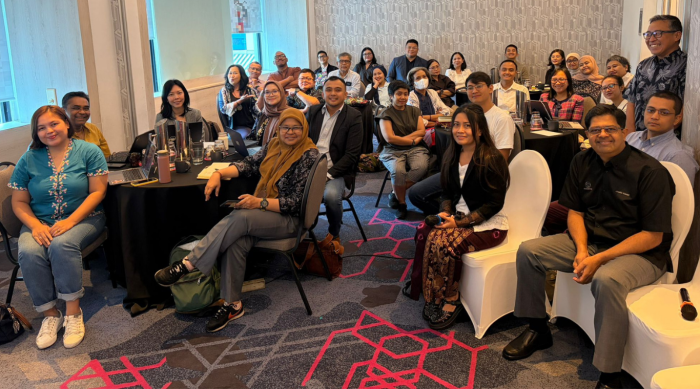
Indigenous Peoples’ (IPs) vulnerabilities in Indonesia are being exacerbated by climate disinformation that prioritises national development narratives over Indigenous rights and knowledge systems. This was the central finding presented at a national convening reviewing the preliminary outcomes of Asia Centre’s forthcoming report, “Climate Disinformation in Indonesia: Prioritising Development Over Indigenous Peoples’ Vulnerability”. Attended by nearly 40 people, the event took place on 21 January 2026 at Aloft Jakarta Wahid Hasyim Hotel, Jakarta. The convening was organised by Asia Centre in partnership with International Media Support (IMS) and brought together journalists, civil society actors, Indigenous rights advocates, and policy experts. The event examined how climate disinformation operates in Indonesia, assessed its impact on Indigenous communities, and gathered expert feedback to strengthen the report prior to its finalisation and publication. The session opened with welcoming remarks by Dr James Gomez, Regional Director of Asia Centre, who said the Indonesia report is the 5th in a series of 6 country and 1 regional report led by Asia Centre with the support of IMS. Vanessa Chong, Programme Manager from International Media Support went next and expressed thanks to everyone and introduced the work of IMS in the region. The session then moved on with Kartini Sunityo, Partnership Manager at Asia Centre, who presented the key findings from the draft Indonesia report. Her presentation highlighted three interlinked issues in Indonesia. First, the state’s official stance which does not recognise Indigenous Peoples as distinct rights holders, departing from the UN framework by treating all citizens as the same. Second, national development plans prioritise economic growth while overlooking the social, environmental, and rights-based costs to Indigenous communities. Crucially, these dynamics are amplified by climate disinformation, which frames development as inherently beneficial and casts Indigenous claims as obstacles. The discussion featured contributions from Nany Afrida, President of Aliansi Jurnalis Independen (AJI), who highlighted that Indigenous Peoples are often portrayed by journalists as victims, obstacles to development, or through cultural exoticism, and framings shaped by heavy reliance on official sources and limited understanding of Indigenous rights and laws. She pointed to structural challenges such as restricted access to Indigenous communities, language barriers, fear linked to criminalisation and past violence, shrinking newsroom resources, and declining public trust in the media. Sandra Winarsa, Climate and Energy Advisor at the Humanis Foundation, argued climate disinformation in Indonesia is deliberate, political, and structural, rather than accidental. She said, often developmental projects are “being presented as caring” while masking social and environmental harms. Sandra went on to emphasise that many so-called “green” projects, such as geothermal and renewable energy initiatives, are top-down, gender-blind, and rushed, resulting in misplaced blame on communities for project failures. Following that, Haeril Halim, Media Manager at Amnesty International Indonesia, shed light on the criminalization of Indigenous Peoples (IPs) and the role of disinformation in Indonesia. He noted that the report is timely amid deadly floods, rising attacks on human rights defenders, and growing threats to IPs. Haeril highlighted how government-led disinformation often labels NGOs and activists as foreign agents or anti-development, undermining human rights campaigns. He continued that media coverage is frequently one-sided, reporting arrests without civil society perspectives, which can mislead the public into seeing environmental defense as criminal activity. Finally, Devi Anggraini, President of PEREMPUAN AMAN (Association of Indigenous Women of The Archipelago) in Indonesia, said that the government recognition of Indigenous rights remains fragmented across ministries. She pointed out key legislation, including the Indigenous Peoples’ Rights Bill, are yet to be fully implemented. She also highlighted challenges posed by climate disinformation, green energy projects, and language barriers, which often prevent Indigenous women from understanding or participating in decisions affecting their land. An open discussion with participants followed, during which questions were raised about the research methodology, media responsibility, platform governance, and the need for stronger collaboration between Indigenous communities, journalists, and policy actors. Among the questions, Intan Febriani, Director International Education and Outreach Pulitzer Center, raised a query about examples of effective collaborations between Indigenous communities and journalists, seeking insight into what an ideal partnership looks like. The question was answered by Devi, who said that the collaboration between Indigenous Peoples and journalists has been ongoing since the beginning when the PEREMPUAN AMAN was set up. By way of example, she shared that PEREMPUAN AMAN has worked with media platforms such as Tempo, Kompas, and Antara to train Indigenous youth, particularly women, to act as credible sources and report directly from their communities. As part of this initiative, mainstream journalists have also been invited to visit Indigenous communities, conduct interviews, and produce feature stories, thereby ensuring that Indigenous voices are represented accurately in the news. The convening concluded with closing remarks by Dr James Gomez, who expressed his gratitude to the panellists and participants for their valuable insights and contributions. He added that the feedback collected during the convening would help strengthen the upcoming report and foster ongoing collaboration among research institutions, civil society, and media actors both in Indonesia and in the region. He invited the participants to review the reports published thus far in the series. For highlights of the National Convening on Climate Disinformation in Indonesia: Prioritising Development Over Indigenous Peoples’ Vulnerability, visit Asia Centre’s TikTok channel. The published reports on this series thus far includes: Climate Disinformation in Cambodia: Undermining Indigenous Peoples’ Agency “Climate Disinformation in Thailand: Negating Indigenous Peoples’ Identity” “Climate Disinformation in India: Subverting Indigenous Peoples’ Rights” “Climate Disinformation in Malaysia: Appropriating Indigenous Peoples’ Entitlements” Collectively, these reports examine how misleading narratives distort public understanding of climate issues, undermine Indigenous rights, and shape policy debates, highlighting the regional and cross-cutting nature of climate disinformation. Upcoming reports include: “Climate Disinformation in the Philippines: Legitimising Attacks on Indigenous Peoples” “Climate Disinformation in Asia: Trends and Challenges” These reports will continue this focus, highlighting the challenges faced by Indigenous communities and further shedding light on the dynamics of climate disinformation.
Climate Disinformation in Malaysia: Appropriating Indigenous Peoples’ Entitlements
Download Full Report In Malaysia, climate disinformation aids the appropriation of Indigenous Peoples’ (IPs) entitlements. Although IPs are legally classified as “Bumiputera”, this category centres Malay-Muslim dominance by conflating the broad national category of Malay-Muslim as “Indigenous” with the international human rights concept of “Indigenous Peoples” reserved for non-dominant groups. This reinforces and intensifies the appropriation of IPs’s entitlements – who make up 11% of the population and largely reside in climate-vulnerable forested areas. Climate disinformation reinforces this identity hierarchy by falsely legitimising state control over IP territories and portraying extractive development as environmentally or socially beneficial. Amplified by the rapid expansion of digital media since the early 2000s, such disinformation manifests in greenwashing, narratives of false climate solutions, the denial of deforestation and the appeal to “wellbeing” in order to justify continued carbon-intensive business practices. Such impacts include their exclusion from decision-making processes, forced evictions from ancestral lands, large-scale deterritorialisation and the criminalisation of those calling for accountability. Together, these dynamics result in the cyclical impoverishment and cultural erosion of IPs. The report advances targeted recommendations for government institutions, international bodies, civil society, the media and technology companies. Ultimately, addressing climate disinformation is essential for ensuring the entitlements of Indigenous communities and safeguarding inclusive, rights-based and effective climate action in Malaysia.
National Convening on Climate Disinformation in Malaysia: Appropriating Indigenous Peoples’ Entitlements
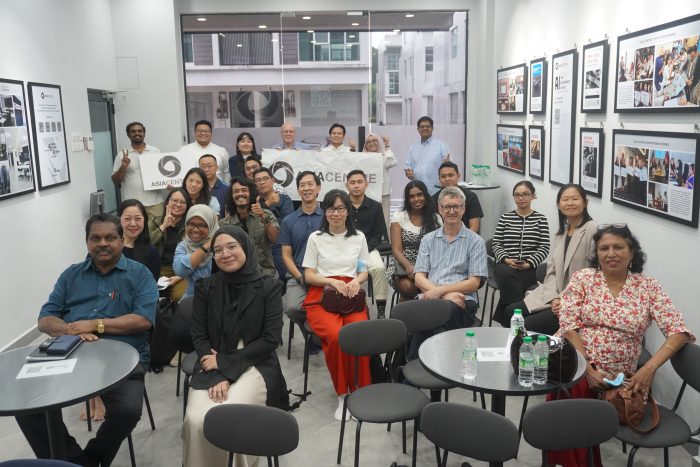
Misleading climate narratives that support the appropriation of Indigenous Peoples entitlements and distort public understanding of land rights have become a growing concern in Malaysia. These dynamics are captured in the initial findings of “Climate Disinformation in Malaysia: Appropriating Indigenous Peoples’ Rights”, which were shared during a national convening held on 7 January 2026 in Asia Centre Media Hub, Iskandar Puteri. The convening brought together approximately 30 Indigenous representatives, civil society groups, journalists, and academics to unpack how climate disinformation is affecting Indigenous communities in Malaysia and to explore collective strategies for addressing its impact. The event began with opening remarks by Dr. James Gomez, Regional Director, Asia Centre, where he explained that the Malaysia research is part of a wider regional series spanning multiple Asian countries. He said the findings disseminated through reports, media coverage, public events, and policy engagement, allows the research to reach the ground in local contexts while contributing to broader regional and international human rights discussions. IMS Disinformation & Tech Policy Adviser, Paco Pangalangan was next, he emphasised that the research on climate disinformation provides language to identify and interrogate the systems behind false climate narratives. He said this enables deeper reflections about how technology, accountability, participation, and power interact between indigenous people and climate change. The opening remarks set the background for the presentation of the report’s key findings. Asia Centre’s Azieqa Aiin, highlighted indigenous people’s exclusion from decision-making, how they experience forced conversions, displacement, land rights violations, as well as suffer the criminalisation of their resistance to climate change. All of which exacerbate structural inequalities and leave communities vulnerable to climate disinformation. Thereafter she presented some targeted recommendations for governments, NGOs, media, technology companies, and Indigenous communities, focusing on the recognition of customary lands, integration of traditional ecological knowledge, and meaningful participation in climate governance. An active roundtable discussion and Q&A session, moderated by Paco Pangalangan, followed. The panel featured 4 speakers: Shakila Zen, Environmental Activist from KUASA, highlighted the ongoing challenges facing indigenous people such as superficial public hearings, limited access for Indigenous participants, and misleading government claims climate, which mask the true extent of misinformation. Wan Khuzairey, researcher and postgraduate at Universitas Indonesia explained that land grabbing and development projects, often justified as modernization, erase Indigenous history, collective identity, and cultural continuity, while greenwashing and misleading narratives obscure the social and environmental costs. He added that these impacts are rarely reflected in public discourse or media coverage. Rhema from the Orang Asli Welfare Ministry of Rhema City Church Johor, drew attention to the real-life social and economic costs of climate misinformation and development projects. She described how landfilling and relocation of villages disrupted traditional livelihoods and drastically reduced income and eroded cultural practices, with little media coverage or public awareness of their struggles. Prof. Dr. Andrew Harding, University of Reading Malaysia, outlined Malaysia’s legal framework, particularly the National Land Code and the Bumiputera classification, which creates blind spots that allow climate disinformation to persist without accountability. The panel then explored key issues and engaged participants in an interactive question answering session. Among the questions raised were, “Where does Malaysia’s legal and policy framework fall short in protecting indigenous entitlements from being overridden by climate related agendas?”, “Why do the authorities provide basic necessities to the majority population, yet withhold them from Indigenous communities?” along with several other questions were addressed by the panelists. Overall, the discussion highlighted the consistent absence of Indigenous peoples in Malaysia’s historical narrative, from the colonial period to the present day. They are not recognized with a special category, instead they are lumped together under the broad label of ‘others’ (lain-lain), and the speakers agreed that Indigenous communities continue to have very little visibility in Malaysian history. This to some extent explains their marginalised nature in Malaysian society and how any discussion of indigenous peoples rights is often considered “sensitive”. In closing, Dr. James Gomez expressed the gratitude to the panellists and participants for their valuable insights and contributions. He added that the feedback collected during the convening would help strengthen the upcoming report and foster ongoing collaboration among research institutions, civil society, and media actors both in Malaysia and in the region. He invited the participants to review the reports published thus far in the series. The published reports is this series published to date includes: Climate Disinformation in Cambodia: Undermining Indigenous Peoples’ Agency “Climate Disinformation in Thailand: Negating Indigenous Peoples’ Identity” “Climate Disinformation in India: Subverting Indigenous Peoples’ Rights”. Collectively, these reports examine how misleading narratives distort public understanding of climate issues, undermine Indigenous rights, and shape policy debates, highlighting the regional and cross-cutting nature of climate disinformation. Upcoming reports include: “Climate Disinformation in Malaysia: Appropriating Indigenous Peoples’ Entitlements” “Climate Disinformation in the Philippines: Legitimising Attacks on Indigenous Peoples” “Climate Disinformation in Indonesia: Prioritising Development Over Indigenous Peoples’ Vulnerability” These reports will continue this focus, highlighting the challenges faced by Indigenous communities and further shedding light on the dynamics of climate disinformation. Coverage of the event and the report by various media outlets are available here: “When Progress Speaks Loudest, Indigenous Voices Fade”, Apa Khabar TV, January 8, 2026 “Asia Centre Report Warns Climate Disinformation In Malaysia Undermines Indigenous Peoples’ Rights”, TNS News, January 15, 2026 “Privilege over Rights: Appropriating Indigenous Peoples’ Entitlements in Malaysia”, The Diplomat, January 16, 2026
M Ravi: A Decade of Regional Human Rights Advocacy
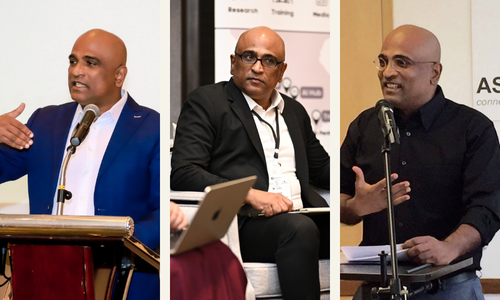
When Asia Centre announced its opening in 2015, M Ravi was one of the very first people from Singapore to reach out. He said the Centre’s human rights mission aligned with his own, and wanted to engage with the Asia Centre’s regional approach to democracy and human rights. At the time, Ravi was facing intense legal pressure, negative media publicity, internal tensions within the local death penalty movement and challenges to his law practice – all contributing to mixed public opinion on the death penalty in Singapore. In Asia Centre, he sought a respite, an opportunity to extend his networks to the regional level and regain the self-esteem he saw being denied to him in Singapore. Here is a list of his contributions to commemorate his work through the Centre. On 14 May 2016, he spoke at Asia Centre’s seminar “Cause Lawyering: Advocating for Justice”. He urged young lawyers to see legal practice not as technical work alone, but as a public responsibility rooted in ethics and courage. The event also marked the Bangkok launch of his book “Kampong Boy”, a personal account that connected his lived experience with the pursuit of justice in Singapore. Later in the same year, he returned on 15 September 2016, to Bangkok to speak at Asia Centre’s 1st International Conference “UPR in Southeast Asia”. There, he argued for the need to strengthen regional engagement with international human rights mechanisms such as the Universal Periodic Review (UPR). Using the arguments of his presentation at the conference, he contributed a chapter, “The Abolition of the Death Penalty in Southeast Asia: The Arduous March Forward”, in Asia Centre’s edited volume “Universal Periodic Review of Southeast Asia: Civil Society Perspectives” (2018). The chapter provides a comparative analysis of death penalty laws and practices across five Southeast Asian countries through the lens of the Universal Periodic Review, highlighting legal frameworks, state justifications and reform trajectories. It examines how international human rights mechanisms, civil society engagement and domestic legal reforms shape the arduous path toward abolition in the region. M Ravi returned for Asia Centre’s 5th International Conference “Hate Speech in Asia”, 7 October 2020, where he moderated a panel on hate speech regulation and moderation. He noted how laws in the region are often used to suppress expression rather than protect communities. His engagement with Asia Centre continued, this time as a trainer for the 2022 regional programme for parliamentarians entitled “Business and Human Rights in Southeast Asia”. During his session, Ravi worked to equip parliamentarians with practical tools to align national policies with international standards on Business and Human Rights, believing structural change required informed lawmakers. 21 August 2025 was to be M Ravi’s last formal engagement with Asia Centre. He spoke on the panel “Rethinking Technology for Collective Impact: AI in Society and the Path Ahead” during the Centre’s 10th International Conference “AI and Governance in Asia”. He presented his paper, “Southeast Asia’s AI Boom: A Human Rights Perspective”, which called for technology to serve and push the cause of human rights rather than deepen inequality. Before his sudden demise, Ravi had registered to attend Asia Centre’s National Convening on “Climate Disinformation in Malaysia: Appropriating Indigenous Peoples’ Entitlements”, at Asia Centre Media Hub, Iskandar Puteri, Malaysia, 7 January 2026. Over a period of nearly ten years and through his different engagements with Asia Centre, Ravi sought to share his expertise in a regional setting – an opportunity that was not available to him in Singapore. Even with his death, controversy continues to surround his anti-death penalty legacy. Nevertheless, Asia Centre is proud to have supported M Ravi in a small way and recognises his contributions.
Climate Disinformation in India: Subverting Indigenous Peoples’ Rights
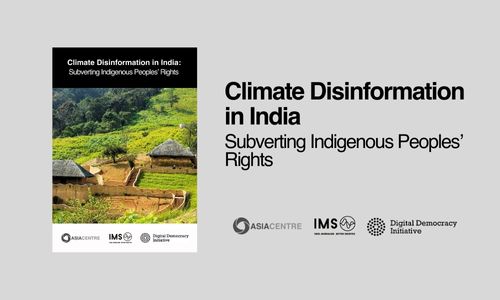
Download Full Report In India, both online and offline climate disinformation stands to dispossess the protected rights of Indigenous Peoples (IPs) who constitute 8.6% (104 million) of the population. False narratives in the media and social media legitimise the subversion of laws like the Forest Rights Act (FRA) intended to protect IPs, their lands and their livelihoods; and, instead, justify extractive projects in the name of national development. From one-sided positive presentation of environmental statistics and false climate solutions to strategic denialism and greenwashing, these narratives directly contribute to the criminalisation of IPs as “encroachers”, their forced eviction from ancestral lands, and the systemic repression of environmental defenders. The report offers concrete policy recommendations for the government, international bodies, civil society, indigenous communities, media sector and technology companies, urging them to integrate disinformation monitoring and factual reporting into rights oversight, legally centre Indigenous knowledge in climate policy, and enforce existing legal safeguards. Countering climate disinformation is fundamental to securing effective climate solutions and protecting the rights of IPs in India.
SEAFORB Emerges As A Key Platform for Rights-based Religious Freedom Advocates
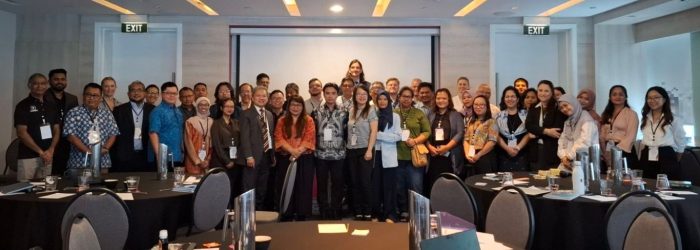
With the 9th Southeast Asia Freedom of Religion or Belief (SEAFORB) Conference, which took place from 27 – 28 November 2025 in Jakarta, Indonesia, the Network continues to serve as a key regional mechanism for coordination, knowledge-sharing and joint advocacy. Guided by its 2024–2026 Strategic Plan, the SEAFORB Conference brought together 48 members and partners from across the Southeast Asian region and also from certain countries beyond the region to examine emerging FoRB challenges, develop collective strategies, and reinforce solidarity in an increasingly restrictive environment. The SEAFORB Conference is the annual regional gathering of the SEAFORB Network, a civil society–led platform established to promote and protect freedom of religion or belief across Southeast Asia. Since its inception in 2017, the SEAFORB Network have served as a platform to strengthen the capacity of human rights defenders, document FoRB violations, and build cross-border alliances to address rising threats to religious and civic freedoms. The conference program commenced with welcome remarks by Dr. James Gomez of Asia Centre, who also serves as a member of the SEAFORB Network Steering Committee (SC) and Head of Secretariat. During his remarks, Dr Gomez informed that Asia Centre began participating in SEAFORB conferences in 2016, became a Steering Committee member in 2020 and was appointed as SEAFORB’s first Secretariat in 2024. As the Secretariat, Asia Centre supports the Steering Committee to realise the SEAFORB Network’s mission across Southeast Asia and beyond. This was followed by the opening remarks by other SC members, Dr. Nguyen Dinh Thang and Eugene Yap, who both set the FORB context and scene in the region. Dr. Nguyen Dinh Thang reflected on the origin of the SEAFORB Conference, recalling its first convening in Bangkok a decade ago that concluded with the Bangkok Declaration committing advocates to defend individuals and communities facing discrimination or persecution based on religion or belief. Eugene Yap traced SEAFORB’s evolution from a fully sponsored conference in 2015 to an established regional network by 2018, and eventually to a Secretariat structure to ensure better coordination, information-sharing, and support for members, noting that a network cannot function effectively without a dedicated coordinating body, which led to the appointment of Asia Centre as the Secretariat. Prof. Nazila Ghanea, UN Special Rapporteur on Freedom of Religion or Belief, emphasized the vital role of civil society in supporting the UN FoRB mandate, noting that it relies on civil society for reality checks, reporting, and submitting allegations. She stressed that freedom of religion or belief is a core human right, saying it “gives meaning; it’s worth sacrificing everything else for it,” and highlighted the importance of coordination among UN agencies, governments, and civil society, as well as recognizing and accommodating diversity in religious practices. The opening session set the tone and shaped the momentum for the two-day discussions. The first day of the conference featured two panel discussions, two workshops, and group sessions addressing key FoRB issues in Southeast Asia. The day began with the “Reality Check for 2025 & Beyond” workshop, where participants mapped trends and identified the top five thematic priorities. The first panel discussion focused on constitutional, legal frameworks, and extra-judicial measures in Cambodia, Laos, Myanmar, Thailand, and Vietnam, followed by a second panel covering Brunei, Indonesia, and Malaysia, with open Q&A sessions highlighting national and regional FoRB concerns. After lunch, the “People on the Move & Transnational Repression” session examined vulnerabilities of displaced persons, refugees, and diaspora communities, while the “National ID Cards and FoRB Restrictions” session explored exclusion and discrimination arising from national ID systems. In the afternoon, participants engaged in group discussions on thematic issues at country and regional levels, followed by consolidations presenting national trends, regional challenges, and strategic priorities. On the second day of the conference, 28 November 2025, participants engaged in four main sessions addressing key FoRB issues and strategic actions. The day began with a Recap and Guidance session, followed by the first session, “How do Blasphemy Laws Implicate FoRB and Freedom of Expression? An Indonesian Case Study,” which examined blasphemy laws, proselytisation, hate speech, and digital restrictions on FoRB. After the tea break, the “Intersectoral Engagements: Building Partnerships for Advancing FoRB” session explored practical approaches to engage religious leaders, media, political representatives, academia, students, and technology partners, identifying opportunities for collaboration and sustainable advocacy. Following lunch, “Action Planning: Identifying Future Actions in the Region” involved group discussions to review past FoRB actions, address gaps, and develop action plans for national, regional, and international advocacy, networking, and capacity building. After a short tea break, the Open Plenary on International & Regional Advocacy Engagements focused on leveraging international and regional mechanisms to inform SEAFORB’s future programming. The Conference concluded with a Summary delivered by Birgitte Moe Olsen, Steering Committee Member. She highlighted key insights, outcomes, and next steps for advancing FoRB in the region. Birgitte reflected on the need to balance universal rights language with local contexts, noting, “Those who are mostly in need of FoRB are those who will kind of lose out if we divert away from using FoRB and the rights language.” She also emphasized that adopting a human rights–based approach is essential to effectively protect the rights of minorities, ensuring that advocacy for freedom of religion or belief remains inclusive, equitable, and grounded in internationally recognized standards. The point being, “if we do not stand for the human rights, the first victims are the minorities”. In the Closing Remarks Dr. James Gomez of Asia Centre, Steering Committee Member and Head of Secretariat, thanked everyone for making the 9th SEAFROB conference productive. He then proceeded to have a conversation with UN Special Rapporteur for Freedom of Religion or Belief, Prof. Nazila Ghanea, asking for her key takeaways. She highlighted that this year’s SEAFORB Conference was energetic, realistic, and creative, with participants proposing imaginative ways to mainstream freedom of religion or belief across society. She added that the discussions left her feeling highly energised. Watch the conversation between Prof. Nazila Ghanea and Dr James Gomez about the 9th SEAFORB Conference 2025 here. Attendees
National Convening on Climate Disinformation in India: Subverting Indigenous Peoples’ Rights
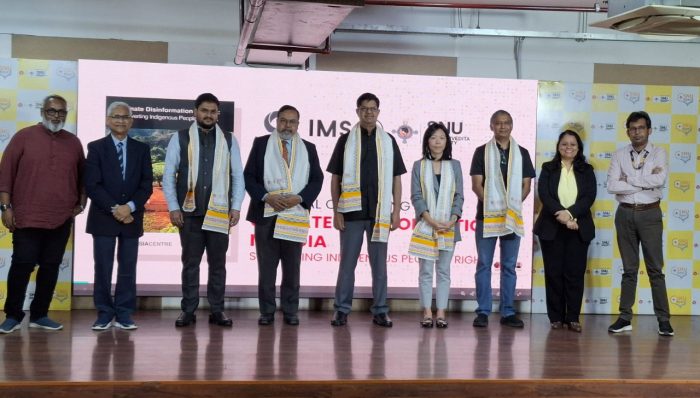
Indigenous Peoples’ (IPs) rights in India are being subverted and this is aided by climate disinformation. This was the thrust of the findings communicated at the national convening that reviewed the preliminary outcomes of Asia Centre’s forthcoming report, “Climate Disinformation in India: Subverting Indigenous Peoples’ Rights”. The meeting, organised in partnership with International Media Support (IMS) and School of Communication, Fine Arts and Design, Sister Nivedita University (SNU), took place on 9 December 2025 at the SNU Auditorium, Kolkata. The convening brought together journalism students, media academics and journalism professionals to discuss how climate disinformation intersects with national development narratives and the rights of Indigenous communities in India. The event began with welcome remarks from Prof. Dhrubajyothi Chattopadhyay, Pro-Chancellor, SNU. Dr. Snehasis Sur, President of the Kolkata Press Club. Prof. Chattopadhyay fondly recounted the 10 year engagement he had with Asia Centre and announced the MOU signing between the two organisations after the event. Dr. Sur focused on explaining how climate disinformation, especially regarding the rights of Indigenous Peoples in India, undermines their livelihoods and well-being, and that awareness of this misinformation is the first step to addressing it. The welcome session established the tone and programme for the day. Following this, Sanjay Gathia, Programme Manager at Asia Centre, presented the key findings of the draft India report, outlining how climate disinformation spread through both online and offline channels. He explained that such disinformation undermines the existing rights and legal protections of Indigenous Peoples in India. As the country prioritises development, it criminalises communities as “encroachers,” fuels forced evictions and represses environmental defenders. His presentation provided the basis for the discussions and Q & A session. The convening then moved into a Roundtable Discussion, moderated by Vanessa Chong, Programme Manager, IMS. She kicked off the session by highlighting IMS’s collaboration with Asia Centre on climate disinformation, which forms part of a broader global programme focused on amplifying Indigenous voices to counter climate disinformation worldwide. Discussants included Dr. Minal Pareek of SNU, who saw the report as highly relevant for raising awareness among media students and journalists. She said, compared to some other countries, media literacy efforts in India are lagging behind. Given the rise of AI and the increasing exposure of young people to digital media, she emphasised the urgent need to prioritize media literacy in India to better equip students and society to navigate information critically. Dr James Gomez, Regional Director, positioned the report as a practical “toolbox” for journalists and media students. He said the report featured case studies and guidance on countering disinformation which can be used to generate story ideas. He also noted that disinformation has evolved from entirely false information to manipulations and half-truths. While fact-checking and media literacy were necessary to respond to false news, Dr. Gomez noted these actions took up resources, resources that can be used to shore up the truth instead. Mr. Debajyoti Chakravarty, Research Assistant at the Observer Research Foundation, Kolkata, emphasized on the report’s value in examining the impact of climate disinformation on Indigenous Peoples and the limitations of existing laws in addressing it. He emphasized the need for AI-driven solutions tailored to Indian and Indigenous languages. Among a range of ideas, he also stressed the potential of local, context-specific solutions to combat disinformation effectively, highlighting innovative initiatives like multilingual apps that provide real-time, trustworthy information. The day moved on with a brief interaction with the participants. In one intervention, a media student shared that climate misinformation and broader social injustices are causing entire Indigenous groups in India to disappear, along with their culture, knowledge systems, and languages. In another interaction, the question centred on how young people, students, or content creators can contribute to debunking climate disinformation on social media platforms like YouTube, Instagram, and Twitter. The discussants emphasized that awareness, fact-checking, and responsible sharing are key, advising that users verify information through certified portals, avoid sharing content impulsively, and use constructive formats to engage audiences effectively. They also highlighted the importance of creating catchy, targeted content that translates in-depth research into formats suitable for different audiences. A final question regarding the role of local and community-based media, was answered by several discussants. Dr. Gomez stressed the need to empower Indigenous media to report the truth about their communities while providing them with skills, resources, and training. Mr.Chakravarty highlighted the role of mainstream media in amplifying local stories, showing that Indigenous peoples are not just victims of climate change but also contributors to climate action through good practices on the ground. Ms Chong responded by suggesting that constructive journalism, focusing on solutions practiced by Indigenous communities, can safely engage audiences while showcasing effective, on-the-ground practices. Following the event an MOU between Asia Centre and Sister Nivideti University was signed. The formalisation of the partnership is expected initially to yield more joint activities and pave the way for SNU students to apply for internships at Asia Centre. Asia Centre’s next report is on climate disinformation in Malaysia, “Climate Disinformation in Malaysia: Appropriating Indigenous Peoples’ Rights”. The findings will be presented at a dedicated national convening on 7 January, where stakeholders will once again gather to review the report, validate insights, and discuss collaborative actions moving forward. For highlights of the National Convening on Climate Disinformation in India: Protecting Indigenous Peoples’ Rights, visit Asia Centre’s TikTok : https://tinyurl.com/jbtnwa9s
Asia Centre Delivers Digital Security Training in Bangladesh
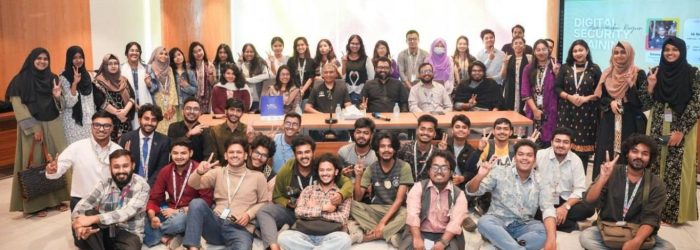
From 10 to 16 November 2025, Asia Centre, in collaboration with educational institutes, civil society organisations and media groups, conducted a series of Digital Security Trainings for End Beneficiaries (DST-EB) and Training-of-Trainer (DST-TOT) in Dhaka. The series of 14 training sessions were attended by a total of 570 participants where a total of 148 participants took part in the Train of Trainer (DST-TOT) sessions and 422 participants attended the DST-EB sessions. Of these, 8 sessions were conducted as End Beneficiary (EB) training and 6 sessions were held as Train of Trainer (TOT) training, all designed to equip participants with the knowledge and skills necessary to identify digital threats, enhance online safety, sharing of lived experiences on scams and frauds, and strengthen digital resilience by understanding the online safety, privacy and protective digital tools available by Google. Starting on 10 November 2025, three inaugural DST-EB sessions were conducted. The first DST-EB session with the Department of Journalism Communication and Media Studies at the State University of Bangladesh (SUB) was attended by 50 youths and educators, while the second and third session with the General Education Department at the University of Liberal Arts Bangladesh (ULAB) was attended by at total of 90 youths and educators during the two consecutive sessions held back-to-back. The fourth DST-EB session was held at the Bangladesh Supreme Court premises on 12 November, in partnership with Legalised Education Bangladesh Ltd. (LEBL), attended by 34 legal fraternity members from the Attorney General’s Office, Supreme Court of Bangladesh, High Court and other interested lawyers. On 14 November 2025, the fifth DST-EB session were conducted combined with Views Bangladesh (English & Bengali language media) and The Daily Times of Bangladesh (Bengali language media) – bringing together around 20 of their media participants. Asia Centre’s Programme Manager was also interviewed by Views Bangladesh regarding online scams and frauds after delivering the digital security training at their venue. YouTube video link here. The sixth and seventh DST-EB sessions were held on 15 November, with The Daily Kaler Kantho and Bangladesh Pratidin, both Bengali-lanuage media publications, belonging to the East-West Media Group – a media conglomerate. The session with The Daily Kaler Kantho was attended by 44 participants, while the session with Bangladesh Pratidin was joined by 38 participants. All of the participants were from print and online media backgrounds, with the group consisting of journalists, editors, reporters, photographers, and content creators. Asia Centre’s Programme Manager was also given a brief tour of the premises and studio of Bangladesh Pratidin and News 24 Television. The eighth DST-EB session was held on 16 November with the Department of Journalism, Media and Communication at Daffodil International University (DIU), attended by 64 youths and educators, including media practitioners who were studying at the university. Asia Centre also conducted several DST-TOTs with other interested partners. On 11 November the first DST-TOT session was held with ActionAid Bangladesh with 24 participants working on information technology, child-safety and community development joining the training as a hybrid, with the majority joining from Dhaka and others from field offices. On 11 November, the second DST-TOT session was held with the Policy Analysis and Research Initiative (PARI), which was joined by 24 participants belonging to the student leaders, youths, civil society, researchers and media. On 12 November, the third DST-TOT session was held with Legalised Education Bangladesh Ltd. (LEBL), engaging representatives from the public, business and private sector, media and youths. On 13 November, the fourth and fifth DST-TOT sessions were held, the fourth with the Department of Computer Science and Engineering at University of Liberal Arts Bangladesh (ULAB), engaging 58 youths and educators. And the fifth with the Center for Peace and Justice at BRAC University, engaging 32 participants belonging to peace practitioners, civil society, educators, community leaders and youths. The sixth DST-TOT was held with the Department of Media and Mass Communication at the American International University Bangladesh (AIUB) where 58 youths, educators, multi-media and media practitioners joined the session. The collaboration with many of the educational institutions in Dhaka was a result of the engagement and partnership between the Communication and Journalism Educators’ Networking (CJEN) Bangladesh of which University of Liberal Arts Bangladesh (ULAB) is part of, and CJEN was interested in conducting a series of onsite training workshops on digital security in Dhaka, Bangladesh. Across all the 14 DST sessions (EB and TOT), participants engaged in interactive discussions, group exercises, and simulations designed to build their capacity to identify and mitigate online threats. Through these initiatives, Asia Centre reaffirmed its commitment to promoting digital literacy, online safety, and freedom of expression for many of the high-risk users, while supporting the development of a more resilient and informed digital community.